Rotating toys works best when the available selection is small enough for each item to stand out, while the rest stay stored out of reach. The goal is not to make an old toy magically new, but to change access, variety, and play opportunities without constantly buying more. A useful routine also turns each changeover into a chance to inspect, clean, and retire worn toys. The right pace depends on the dog’s actual interest, play style, and safety needs rather than a fixed calendar.
Reduce what is available before buying another toy
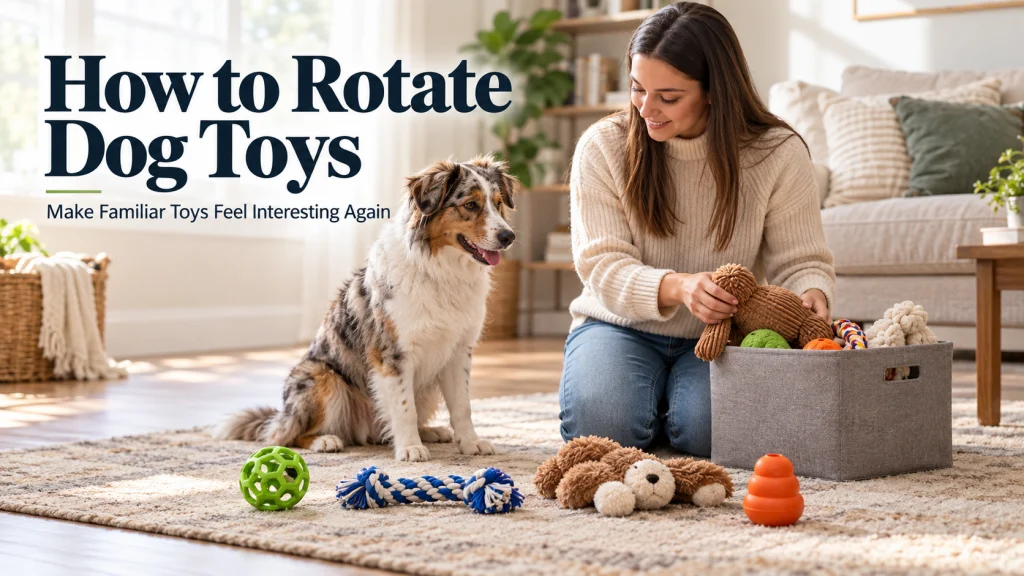
Learning how to rotate dog toys starts with a simple change: stop leaving the entire collection available at once. A smaller active set makes individual toys easier to notice and gives stored toys a real break from constant access. This fits into a broader approach to keeping a dog mentally stimulated, where variety matters more than clutter. It also keeps the routine connected to the practical choices covered in the main dog toys guide rather than turning rotation into an excuse to keep adding more items.
Start by separating toys that are currently safe to use from toys that need cleaning, repair assessment, or retirement. Then choose a manageable mix for the active group and place the rest somewhere the dog cannot simply retrieve them whenever interest dips. The active set does not need a universal number because a calm dog with a few clear favorites may use a different amount than a highly playful dog that switches between tug, carry, fetch, and food based play. What matters is that the available group stays easy to inspect, easy to use, and varied enough to support more than one kind of play.
Build rotation groups around play jobs, not just appearance
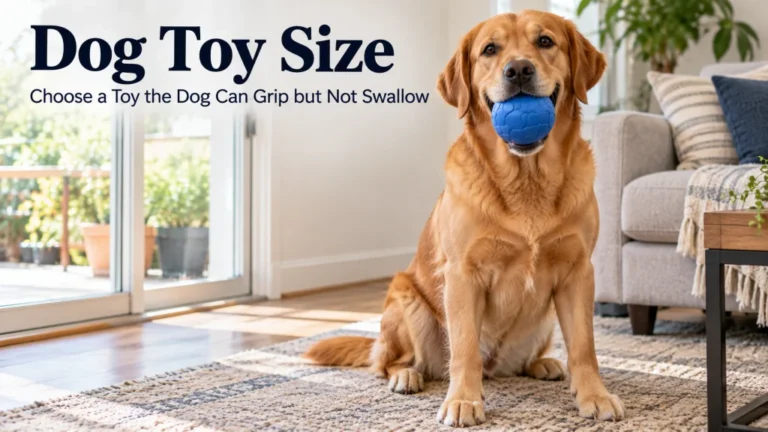
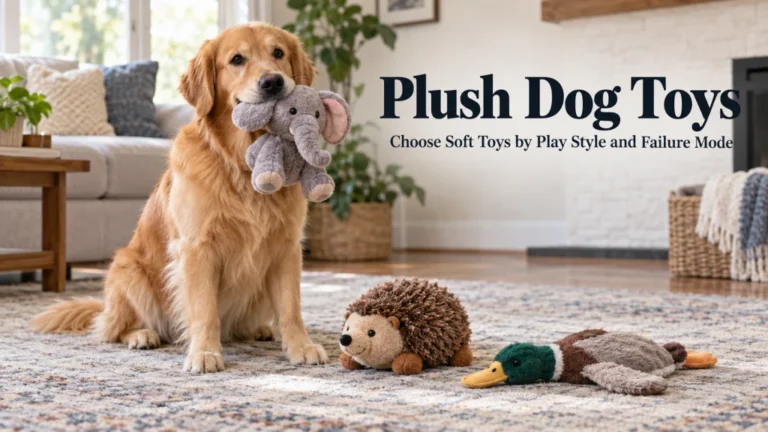
A useful rotation group should change what the dog can do, not merely swap one color or shape for another. If every group contains nearly identical plush toys, the routine may look organized to the owner while feeling almost unchanged to the dog. Include different play jobs such as carrying, tugging, chasing, chewing, sniffing, or working for food when those activities fit the dog’s size, play style, and supervision needs. Texture can add variety too, but the toy still has to be appropriate for the way that particular dog mouths, shakes, pulls, or dismantles objects.
One simple approach is to build several balanced sets and keep each set internally varied. The example below is a routine model, not a prescription for how many toys every household should own. A dog that ignores one category can have less of it, while a dog that uses a certain toy only with a person can keep that item reserved for shared play. The point is to create meaningful contrast between sets so bringing a stored group back changes the experience rather than only changing the visible pile.
| Example set | Possible mix | Why it feels different |
|---|---|---|
| Set A | Carry toy, tug toy, rolling toy, supervised food toy | Mixes movement, social play, and problem solving |
| Set B | Soft comfort toy, fetch toy, suitable chew, sniffing activity | Changes both texture and play job |
| Set C | Different carry toy, supervised tug, food puzzle, durable play toy | Reintroduces familiar categories in a different combination |
Use the sets as a starting framework and adjust them from what the dog actually uses safely. If one set repeatedly gets ignored, change its mix instead of adding more toys to the total collection. If one type consistently holds attention, keep that preference in mind when building the next group. A rotation is successful when it creates useful contrast without creating unnecessary purchases.
Use variety that changes the experience
Variety is easiest to judge by looking at both material feel and play function. A rubber item and a fabric item can offer different mouth feel, but they still may serve the same basic job if both are only carried around the room. Likewise, two toys made from the same general material can feel very different if one is for tugging with a person and the other is for independent rolling or food seeking. Thinking in these layers helps prevent a collection from becoming six versions of the same activity.
Dog preference matters more than completing every box in a matrix. Some dogs are enthusiastic about chase and retrieve games but show little interest in soft comfort toys, while others prefer carrying or gentle interaction. Age, body type, chewing intensity, and household setup can also change which categories make sense. Use the table to spot repetition in the current collection, then build contrast only where that contrast leads to safe, realistic play.
| Play job | What changes the experience | What to check |
|---|---|---|
| Carry | Shape, softness, weight, mouth feel | Dog can pick it up comfortably without loose parts |
| Tug | Grip, length, flexibility, human interaction | Condition remains suitable for supervised pulling |
| Chase or fetch | Roll, bounce, flight path, retrieval pattern | Size and condition fit the dog and play area |
| Chew | Resistance, texture, chewing feedback | Item remains appropriate for the individual chewing style |
| Puzzle or food play | Search, movement, manipulation, food access | Difficulty and supervision fit the dog |
A balanced set does not need every possible category. It only needs enough contrast to make the active selection useful for the dog’s real play habits. If a category never gets used, leave it out rather than treating the matrix like a checklist. The useful mix is the one that matches the dog rather than the one that fills every row.
Change the set when interest fades instead of following a rigid schedule
Rotation guidance often becomes too mechanical when an example interval is repeated as though it were a rule. A better signal is what happens when the dog sees and uses the active set. If several toys are being ignored while stored toys have been out of sight long enough to feel different again, a changeover makes sense. If the dog is still choosing, carrying, chasing, or engaging with the current set appropriately, there is no practical reason to swap everything just because a calendar says so.
Watch for patterns across several play opportunities instead of reacting to one quiet session. For example, suppose a dog still chooses the tug toy and rolling toy but repeatedly ignores the plush toy; at the first changeover, replace only the plush toy with a stored carry toy and leave the two active favorites in place. At the next changeover, if the dog is still using the tug toy but now ignores both the rolling toy and carry toy, swap those two categories while keeping the tug toy available. That two-step pattern shows why partial rotation can follow observed interest without replacing a set that is still partly working.
| What you observe | Reasonable response |
|---|---|
| The dog still chooses several active toys | Keep the set in place and continue observing |
| Only one type is being ignored | Swap that category rather than replacing the full set |
| Most active toys are repeatedly bypassed | Bring back a stored group with different play jobs |
| A returned toy gets brief interest and is ignored again | Change the play context or accept that the toy may not be a strong preference |
Cadence should come from observed use, not from a universal countdown. A dog that stays engaged with the same mix can keep it longer, while a dog that loses interest quickly may benefit from an earlier partial swap. The household can also rotate one play job at a time instead of changing the entire set. The routine stays simpler when changeovers happen for a reason.
Keep a favorite available when constant removal would make the routine worse
Not every toy needs to disappear when a set changes. A familiar comfort item may remain useful even when the rest of the collection rotates, and a favorite interactive toy may be worth reserving for supervised play with a person. The useful question is whether constant access supports the toy’s role or makes it less effective for the way the household uses it. Rotation should serve the dog and routine, not force every item into the same storage rule.
High value toys also deserve a different approach if the dog becomes tense around removal. Do not reach in, grab, or hide an item while the dog is actively guarding it just to stay on schedule. Rotation is an access management routine, not a treatment plan for resource guarding or other serious behavior concerns. If removing an item is not straightforward and calm, stop treating the changeover as a simple toy organization task and address the behavior concern through appropriate professional guidance instead.
Inspect every toy before it returns to the active set
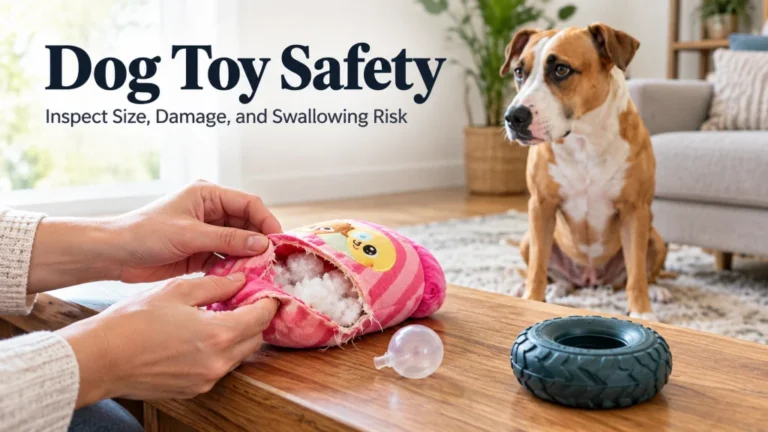
Changeover is a convenient inspection point because every stored toy passes through your hands before it goes back into use. Look for tears, loose parts, exposed stuffing, damaged seams, cracks, pieces that are separating, or other wear that could change how safely the toy can be used. A toy that was acceptable during its last rotation should not automatically be treated as safe now. The broader dog toy safety guide covers the safety checks in more depth, but rotation should never bypass them.
The decision is simple when damage creates an obvious swallowing, choking, or breakage concern: do not return that toy to the active set. Borderline wear should be judged against the exact toy design and the dog’s chewing style rather than repaired with a casual household fix that changes the product. This is also a good moment to notice whether the dog repeatedly destroys one material or toy format faster than others. That pattern should change future selection and supervision, not merely increase how often the same type is replaced.
- Check seams, edges, openings, attachments, and moving parts.
- Look for missing pieces, cracking, tearing, or exposed internal material.
- Compare wear with the dog’s usual chewing and play style.
- Set aside anything dirty enough to need cleaning before storage or reuse.
- Retire toys that no longer have a safe use in the household.
Inspection is not a separate chore added to rotation. It gives the household a predictable point to notice wear before an item quietly returns to regular use. It also makes repeated damage patterns easier to recognize across different materials and play styles. That is one of the main reasons a rotation routine can make a toy collection easier to manage.
Clean dirty toys before storage or reintroduction
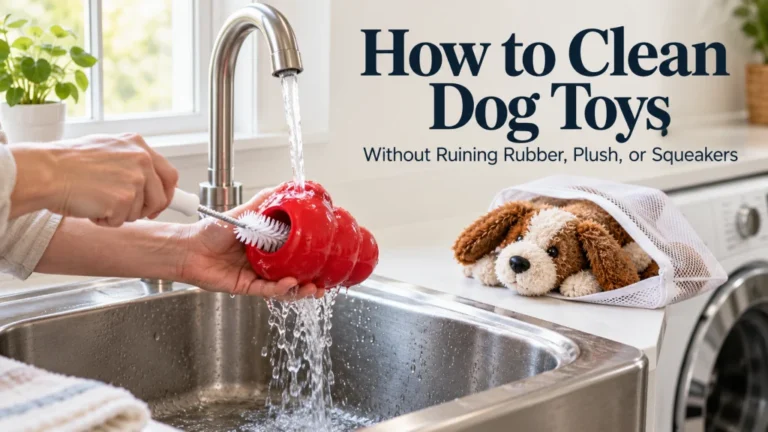
Putting dirty toys straight into a closed storage bin can carry saliva, food residue, dirt, and odor into the next rotation. Cleaning during changeover keeps stored items easier to inspect and prevents the inactive group from becoming a forgotten pile that only looks organized from the outside. The correct method depends on the material, construction, and manufacturer care instructions, so one cleaning routine should not be applied to every toy. Use the step by step guidance in how to clean dog toys when a toy needs more than a simple surface check.
Let cleaned toys dry fully before they go into storage, especially when fabric layers, seams, cavities, or food contact areas can hold moisture. Keep food residue out of storage containers and avoid returning an item to play while it still has cleaner residue or trapped moisture. If a toy cannot be cleaned effectively because it is damaged or its care instructions are unclear, replacing access with a safe alternative may be more sensible than forcing it back into rotation. Storage should preserve a safe inactive set, not hide maintenance problems until the next changeover.
Include chews and puzzles without changing their own safety rules
Chew items and puzzle toys can add useful variety to a broader rotation because they create different kinds of engagement from carry, tug, or fetch toys. They should not lose their specialized rules just because they are being grouped with other items. Chewing intensity, size, material, and supervision still matter for choosing and using dog chew toys. A chew that is unsuitable for a particular dog does not become appropriate because it spent time in storage.
Puzzle toys need the same separation between rotation and proper use. Changing access can renew interest, but difficulty still needs to fit the dog so the activity remains workable instead of frustrating or trivial. The dog puzzle toys guide covers those selection decisions in more detail. Rotation can change when a puzzle appears in the routine, while the dog’s size, skill, food use, cleaning needs, and supervision still determine whether that puzzle belongs in the routine at all.
Final thoughts: rotation should make a smaller collection more useful
A good rotation routine does not need a large collection, a strict calendar, or constant replacement purchases. Keep a smaller active selection, create real contrast between groups, and let observed interest guide when a change actually helps. Preserve a favorite when its role makes sense, and treat every changeover as an inspection and cleaning opportunity. That makes the collection easier to manage while keeping the focus on useful play rather than novelty for its own sake.
The best next step is to look at the toys already in the home and sort them by play job, condition, and current interest. Build a few different groups from what is already safe and useful before deciding anything is missing. If one category repeatedly gets ignored, stop forcing it into the rotation simply to create variety. A smaller system that matches the dog’s real preferences is more useful than a bigger system that exists only on paper.
Frequently asked questions
🐾 How often should I rotate my dog’s toys?
Use interest rather than a fixed schedule. Change part or all of the active set when the dog repeatedly ignores it, while leaving the set alone when engagement is still good.
🧸 Should I put away my dog’s favorite toy?
Not necessarily. A comfort favorite can stay available, while a highly exciting interactive favorite may be reserved for supervised play if that better fits how the household uses it.
🎾 How many toys should be out at once?
There is no universal number that fits every dog. Keep the active set small enough to notice, inspect, and use easily, while still offering more than one useful play job.
🔄 Can rotating toys help an old toy feel interesting again?
Yes, a familiar toy may regain interest after a period without constant access. That does not mean every returned toy will become a favorite, so use the dog’s actual response as the test.
🧼 Should toys be cleaned before I store them?
Clean dirty toys according to their material and care instructions, then let them dry fully before storage. This also gives you a chance to inspect them before they disappear into the inactive set.
References and sources
- AAHA indoor enrichment guidance: Supports dividing toys into groups, rotating access, offering varied toy types, and removing damaged toys.
- AAHA home enrichment guidance: Supports toy rotation and variety in textures and toy types as forms of sensory enrichment.
- AKC boredom guidance: Supports rotating toys to renew interest in familiar items rather than continually adding new ones.
- PetMD toy interest and inspection guidance: Supports regular rotation and checking toys for tears, loose parts, or damage before play.