Dog toys should be cleaned by material and construction, not by one household routine for everything in the toy bin. Start by inspecting for torn seams, exposed stuffing, broken rubber, loose parts, or damaged sound components, because washing cannot make structural damage safe again. Check the manufacturer’s care instructions before choosing the sink, dishwasher, or washing machine, then remove trapped debris, rinse away cleaning residue, and dry the toy completely before reuse. The right method depends on the exact toy, especially when rubber, fabric, adhesive, stuffing, rope, or squeakers are combined in one item.
Start by deciding whether the toy should be cleaned or retired
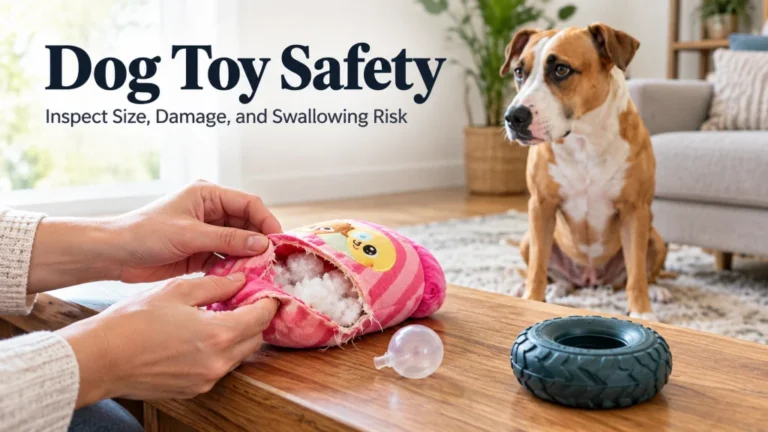
Knowing how to clean dog toys starts with a safety check, not with filling the sink. A toy covered in saliva, dirt, or dried food may simply need cleaning, while a toy with an opened seam, exposed stuffing, split rubber, or a loose squeaker may need to leave circulation instead. Cleaning and inspection belong in the same routine because a clean surface can hide a structural failure that still matters when the toy goes back into a dog’s mouth. If the larger goal is keeping a dog mentally stimulated, the toy still has to be usable for the kind of play your dog actually does.
That first distinction also prevents cleaning from becoming a false repair step. A dog that mouths toys gently may leave a plush item intact for a long time, while a strong chewer may expose a seam or remove rubber much sooner, so the same cleaning routine does not create the same decision for every household. Before washing, compare the current condition with how the toy was designed to be used and remove anything that has clearly changed shape, opened, cracked, or shed parts. For broader decisions about material, size, use, and play style, the guide to choosing and using dog toys provides the wider context without turning cleaning into a buying exercise.
Read the manufacturer’s care instructions before choosing a cleaning method
The care label, product page, or manufacturer support page should decide whether a toy belongs in a sink, dishwasher, washing machine, or hand cleaning routine. Material names alone are not enough because two rubber toys can use different compounds, two plush toys can use different stitching or internal parts, and mixed material toys can contain adhesives or sound components that change the safe method. If the instructions are missing, use the least aggressive practical method rather than assuming that heat, a machine cycle, or a stronger cleaner is automatically better. The purpose is to remove soil without creating new cracking, warping, loose seams, trapped residue, or damage to internal components.
It helps to sort the toy by what can actually fail during cleaning. A simple solid rubber shape may tolerate a method that a rubber and rope combination does not, and a fabric shell with no electronics still may not tolerate the same heat as another plush toy. We would prioritize the exact care instructions whenever a product includes multiple materials, glued details, internal squeakers, or cavities that are difficult to inspect. That keeps the cleaning decision tied to the real construction instead of a generic label such as rubber, plastic, or plush.
| Toy condition | What to check before cleaning | Practical next step |
|---|---|---|
| Solid rubber or hard toy | Care instructions, cracks, deep tooth damage, openings, and heat limits | Use only a cleaning method approved for that exact product |
| Plush or fabric toy | Wash label, seam condition, stuffing exposure, glued details, and internal sound parts | Choose hand washing or a machine method only when the label supports it |
| Mixed material toy | Rope, rubber, fabric, adhesive, stuffing, and removable or fixed components | Let the component with the strictest care limit set the method |
| Structurally damaged toy | Tears, loose pieces, exposed filling, split rubber, or accessible internal parts | Retire it instead of trying to wash it back into service |
The table is a sorting tool, not a replacement for the label or manual. Once the method is clear, clean only as aggressively as needed to remove the actual soil or residue present. A muddy surface, a dried food pocket, and a plush toy that only smells stale are different cleaning problems, even if they all came from the same toy basket. Matching the method to the condition reduces unnecessary wear and makes the later rinse and drying steps easier to verify.
Wash rubber and hard toys only by methods approved for that exact product
Rubber, nylon, and hard plastic should not be treated as one universal dishwasher category. Some manufacturers explicitly allow certain rubber products on the top rack of a dishwasher and may also warn against heated drying, while other toys require hand washing or have parts that should not go through a machine cycle at all. Check the exact product instructions before using heat, detergent, or a dishwasher setting. If the manufacturer does not approve a method, the fact that another toy of similar material tolerates it is not enough reason to copy that routine.
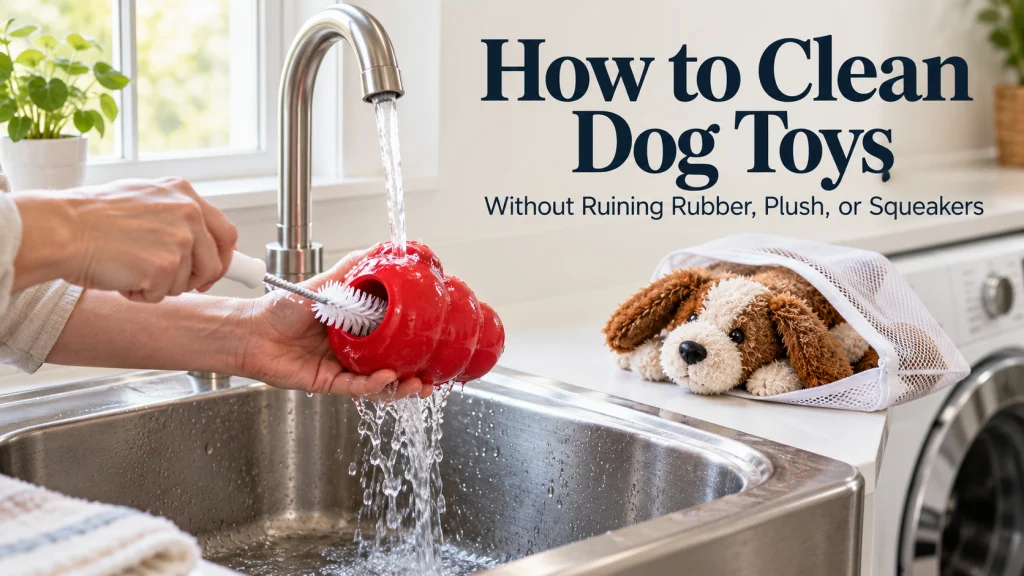
For hand cleaning, start by removing loose dirt and visible residue so the wash water is doing useful work instead of moving debris around the surface. A small soft brush can help reach grooves, textured rubber, or narrow openings without relying on a sharp object that could score the material. Pay attention to tooth marks that have become cuts, flaps, or missing pieces while you scrub because those are condition changes, not cleaning challenges. After washing, rinse the entire surface and any openings thoroughly so the toy is not returned with soap sitting in crevices.
Clean crevices and food pockets before residue hardens inside
Stuffable and textured toys need more than a quick wipe across the outside because food can remain where the dog cannot easily remove it. Look through openings under good light and check the bottom of cavities, narrow channels, ridges, and corners before deciding the toy is clean. Dried food may need soaking in a method permitted by the manufacturer so it can loosen before brushing. The useful test is not whether the exterior looks clean, but whether you can inspect the food contact areas and see that residue has actually been removed.
A bottle brush or soft toothbrush sized for the opening can make this easier when the product design allows access. Work from the opening inward, then check the deepest point, the underside of internal ridges, the edge around the opening, and any corner where softened food can collect before rinsing again. Use good light and rotate the toy so each accessible surface can be seen rather than assuming one pass reached everything. Avoid knives, metal picks, or other sharp improvised tools that can gouge the material, and replace the toy if its interior cannot be inspected or cleaned adequately under the approved care method.
Wash plush toys without sacrificing seams, stuffing, or squeakers
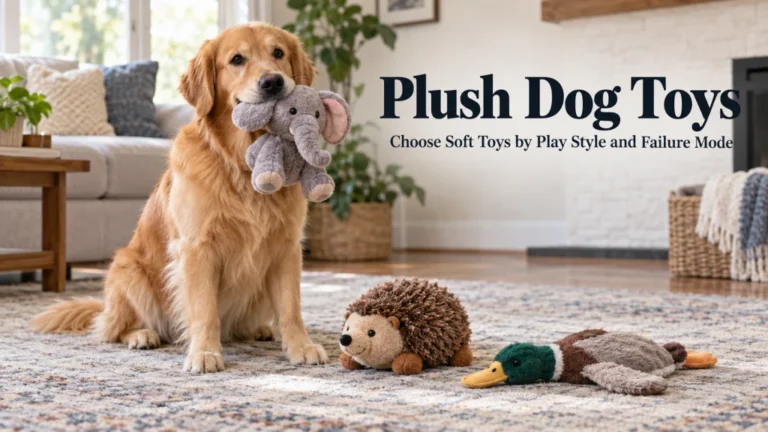
The wash label matters most with plush dog toys because fabric is only one part of the construction. Stitching, stuffing, glued details, crinkle material, and internal squeakers can all respond differently to heat, agitation, and drying. Before washing, press along the seams and around attachments to find loose stitching or places where filling is already visible. If the shell is open or an internal component is accessible, the toy has moved from a cleaning task to a retirement decision.
When the label allows machine washing, use the cycle and water conditions the manufacturer specifies instead of applying one laundry rule to every stuffed toy. A mesh laundry bag can reduce snagging for some washable items, but it does not override a label that says to hand wash or spot clean. Toys with sound components deserve extra care because squeaky dog toys may contain internal plastic parts that can be damaged by heat or exposed if stitching loosens. After washing, inspect the toy again because agitation can reveal weak seams that were not obvious while the fabric was dry.
- Confirm whether the label allows hand washing, machine washing, or spot cleaning.
- Check seams, attachments, stuffing, and sound components before the toy gets wet.
- Use only the water temperature and drying method supported for that toy.
- Inspect again after washing before returning the toy to play.
This checklist is deliberately short because the exact label should remain the controlling instruction. If a favorite plush toy needs frequent cleaning, condition checks matter more than trying to preserve it indefinitely. A toy can look much better after washing and still have a seam that is no longer secure. Clean appearance and safe construction are separate judgments.
Rinse away soap and cleaning residue before the toy returns to the dog’s mouth
Rinsing deserves its own step because dog toys are mouthed, licked, carried, and chewed after cleaning. Use enough clean water to remove visible suds and any slick or soapy feel from surfaces, grooves, fabric, and cavities that were washed. For hollow toys, rinse through the openings rather than only running water over the outside. If residue remains difficult to remove, the better response is more rinsing or a simpler approved cleaning method, not a stronger mixture added on top of the first cleaner.
This is also why a universal disinfectant recipe does not belong in an ordinary dog toy cleaning routine. Different materials and products can have different chemical and heat limits, and concentration or contact instructions should come from the exact product label or authoritative guidance when disinfection is actually necessary. For routine household soil, the practical goal is to remove debris and cleaning residue without inventing a chemistry procedure the toy was never designed to tolerate. If contamination raises a health concern beyond normal cleaning, follow veterinary or manufacturer guidance for that specific situation rather than improvising.
Dry toys completely, including hidden cavities and fabric interiors, before storage or reuse
A toy that feels dry on the surface can still hold moisture inside stuffing, folds, rope, seams, or a hollow cavity. Before returning it to the dog, check the areas that dry more slowly and make sure water is not trapped where you cannot easily see it. For hollow toys, orient openings so water can drain instead of collecting at the bottom. For washable fabric toys, use the drying method permitted by the label and allow extra air drying when the center still feels cool, heavy, or damp.
Storage is the point where incomplete drying becomes easy to miss because the toy may disappear into a closed bin with other items. Before storage, check three things: the exterior no longer feels damp, fabric or rope does not feel cool or heavy with retained moisture, and hollow areas do not release water when the toy is turned or gently shaken. Give cleaned toys open airflow until those checks are clear, and reconsider toys with cavities that cannot drain or dry under the approved care method. Complete drying is not a cosmetic finishing step, it is the final verification that the cleaning process is finished.
Discard structural damage instead of washing it back into circulation
Washing cannot restore missing rubber, close a torn seam, secure a loose squeaker, or make exposed stuffing inaccessible again. If a toy has started shedding pieces, has a split that opens under light pressure, or has internal parts the dog can reach, cleaning should stop and the toy should be removed from use. This is especially important for dogs that actively dissect toys because a small weakness can become an accessible part during the next play session. The broader dog toy safety guide covers the fit and play considerations that go beyond the cleaning decision.
Retirement does not need a dramatic threshold such as a toy breaking completely in half. A plush seam that will not stay closed, a frayed section that releases material, or rubber with a loose flap can be enough to change how the dog interacts with the item. VCA guidance similarly advises removing damaged toys when stuffing is showing, rope is frayed, or rubber is broken because pieces can be swallowed. Treat condition as the deciding factor, not how new the toy looks or how much the dog still likes it.
When a damaged toy needs replacement, cleaning practicality can be part of the next choice without turning the decision into a product hunt. Look for clear care instructions, construction that is easy to inspect, openings or cavities you can actually reach when food is used, and a design that can drain and dry completely after washing. Those features matter most for toys that regularly collect saliva, dirt, or food residue. A simpler toy that you can inspect and maintain reliably may fit the household better than a more complicated design that is difficult to clean.
Clean during rotation so stored toys do not disappear dirty into the bottom of the bin
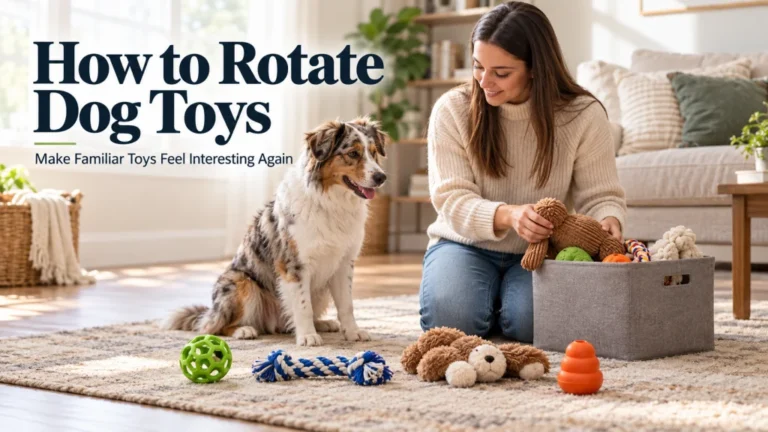
Toy rotation creates a useful moment for cleaning because the item is already leaving active play. Instead of dropping a damp toy, a toy coated with food, or a muddy toy directly into storage, inspect it, clean it by the approved method, dry it fully, and only then move it into the inactive group. That sequence keeps old residue from becoming a surprise when the toy comes back out. It also makes damage easier to notice because you are handling the toy before it disappears under the rest of the collection.
A simple rotation routine does not require cleaning every toy on the same schedule. Clean based on what the toy contacted, whether it held food, how the dog used it, and what the material can tolerate. The guide to rotating dog toys can help organize active and stored items without turning the toy bin into a complicated inventory system. The practical goal is simply that a toy leaves rotation clean, dry, intact, and ready for its next use.
Final thoughts: clean by material, dry completely, and retire damage
The safest cleaning routine begins with inspection, follows the exact care instructions, and ends only after the toy is fully rinsed and dry. Rubber, hard plastic, plush, rope, and mixed material toys can require different methods even when they sit in the same basket. Keep the process simple enough that you can repeat it without guessing about heat, dishwasher use, or chemical concentrations. When the manufacturer gives a specific care limit, that instruction should outrank a generic household cleaning habit.
Most importantly, do not let a successful wash hide a failed toy. Cleaning removes soil and residue, but it does not rebuild seams, replace missing material, or make loose internal parts safe again. If the toy is intact, clean it according to its construction and return it only when it is dry. If it is structurally damaged, retire it. Let the cleaning routine do what it is supposed to do: keep usable toys clean rather than extend the life of toys that are no longer sound.
FAQs
🧼 Can I put dog toys in the dishwasher?
Only if the exact manufacturer instructions say that product is dishwasher safe. Material alone is not enough because heat limits, added fabric, rope, adhesives, and internal parts can change the correct method.
🧸 Can I wash plush dog toys in a washing machine?
Some plush toys are machine washable, while others should be hand washed or spot cleaned. Check the label first, inspect the seams and internal parts, and follow the stated water and drying instructions.
🔊 How do I clean a dog toy with a squeaker?
Follow the care instructions for that exact toy because squeakers and their surrounding seams may not tolerate the same heat or agitation as the outer fabric. Retire the toy if the squeaker becomes exposed or the shell opens around it.
🫧 Do I need to disinfect dog toys every time I clean them?
No universal disinfectant routine fits every toy. For ordinary cleaning, remove soil and residue with a method approved for the product, then rinse and dry completely; use authoritative guidance for unusual contamination or health concerns.
💧 Why does a toy need to be completely dry before storage?
Moisture can remain inside stuffing, seams, rope, or hollow cavities even when the surface feels dry. Check hidden areas and allow airflow before placing the toy back in a bin or closed storage space.
🗑️ Should I wash a torn toy before giving it back to my dog?
No. If the toy has exposed stuffing, loose pieces, broken rubber, an open seam, or accessible internal parts, cleaning does not repair the structural problem and the toy should be retired.
References and Sources
- KONG care FAQ: Supports product specific cleaning limits for rubber and plush toys, including checking the exact care instructions and avoiding heated drying where the manufacturer warns against it.
- Preventive Vet dog toy cleaning guidance: Supports checking manufacturer instructions, cleaning by material, rinsing thoroughly, drying completely, and inspecting toys before and after washing.
- VCA chew toy safety guidance: Supports retiring toys when stuffing is exposed, rope is frayed, rubber is broken, or pieces could be swallowed.