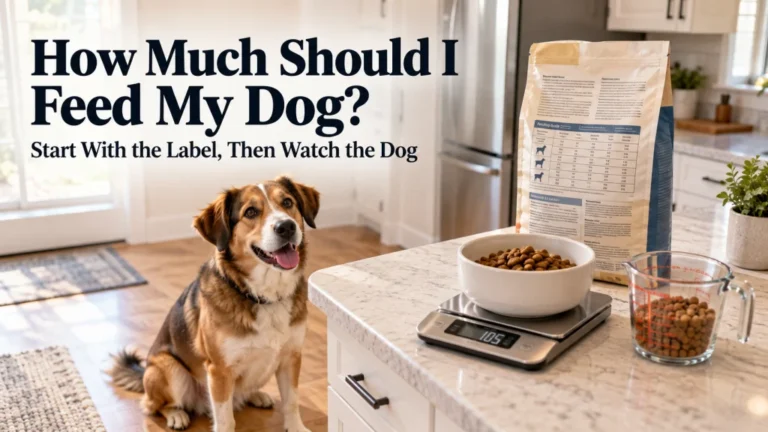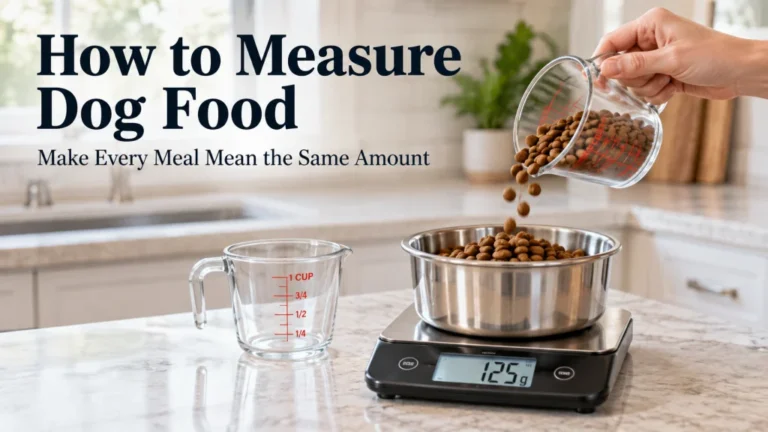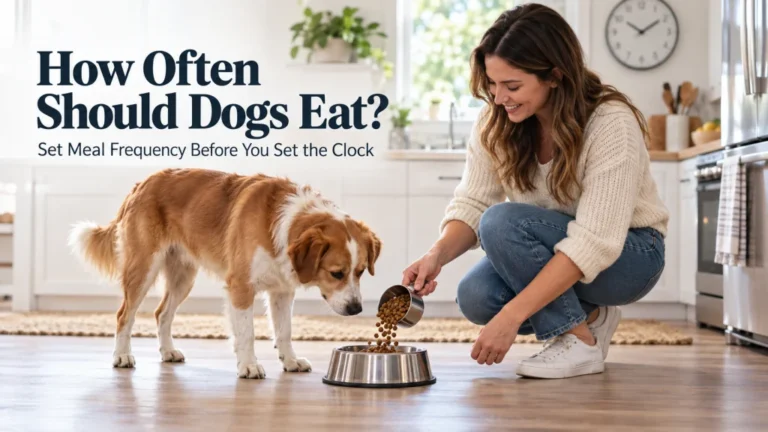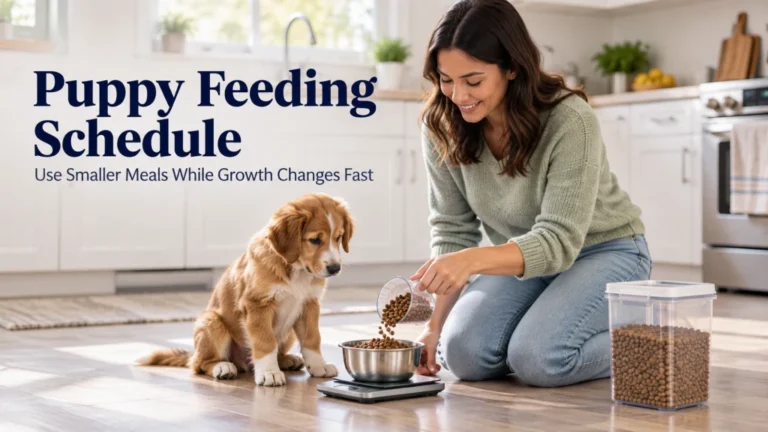
Free feeding can work for some dogs that regulate their own intake and maintain an appropriate body condition, but it becomes a poor fit when the household cannot tell how much an individual dog is eating. Scheduled meals make portions and appetite changes easier to see, while time limited access can suit dogs that prefer some flexibility without keeping food available continuously. The practical choice depends on the individual dog, food type, household access, routine, and any veterinary feeding requirements. The best method is the one that keeps intake visible enough to manage while still fitting normal life.
Start with what the household can actually measure
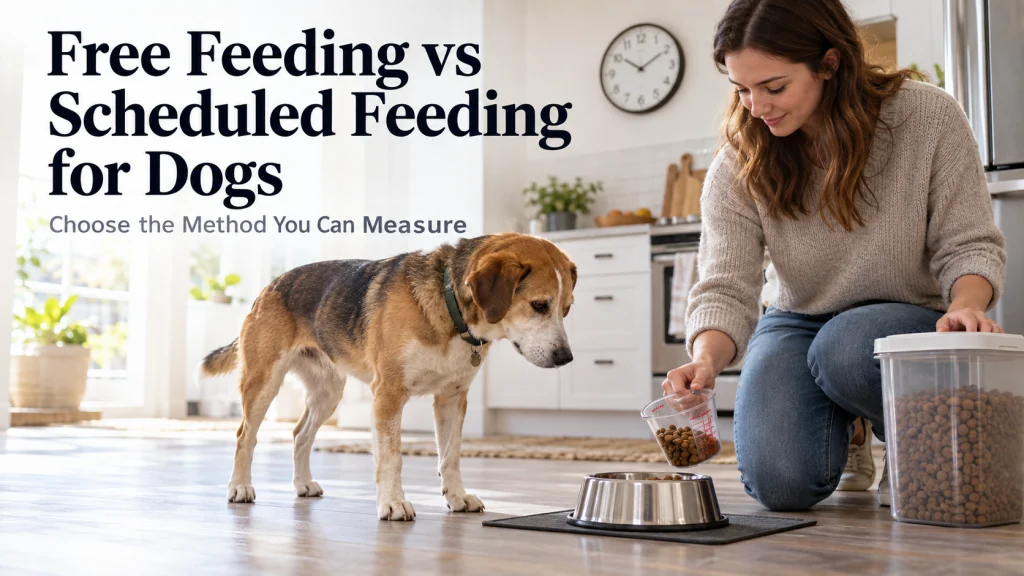
The useful difference in free feeding versus scheduled feeding is not whether one owner seems more disciplined than another. It is whether the household can tell what the dog ate, notice when that pattern changes, and keep the dog in an appropriate body condition. A bowl that stays available may be convenient for a reliable grazer, but the same setup can hide extra intake or a drop in appetite when nobody knows what was in the bowl to begin with. That measurement question should come before any argument about which routine sounds more natural.
Start with the broader principles of feeding a dog according to individual needs, then use a dog feeding schedule that fits the household routine if predictable meal events make tracking easier. A single adult dog that calmly grazes from a measured daily amount presents a different problem from two dogs sharing the same bowl or a puppy with specific growth needs. Work schedule matters too, but convenience should not erase the ability to see intake. The decision gets easier once access, measurement, and body condition are treated as separate checks instead of one moral judgment about feeding style.
Define the three feeding methods before comparing them
Free choice feeding means food remains available so the dog can decide when to eat, but that does not require an endlessly refilled bowl. A household can still measure the amount offered and compare what remains later, which makes the method more useful than simply topping off food whenever the bowl looks low. Time limited feeding means food is offered during a planned eating opportunity and then removed, giving the dog some choice within that opportunity while keeping access from being continuous. Amount limited scheduled feeding means the household serves measured portions at recurring meal events and can directly observe what is eaten at each one.
These methods overlap more than their labels suggest, so the practical differences are access and visibility rather than a rigid set of rules. A measured daily ration left out for one self regulating adult dog is still different from an unmeasured bowl that several pets can visit. A scheduled meal can also be flexible around an irregular workday as long as the total amount and the dog’s response remain clear. Comparing the methods this way keeps the article focused on household control rather than pretending every healthy dog needs an identical routine.
| Method | What the dog controls | What the household can track | Typical weak point |
|---|---|---|---|
| Free choice feeding | When to eat from available food | Total intake only if the offered amount is measured and access is individual | Changes can be hard to notice when food is topped off or shared |
| Time limited feeding | Whether and how much to eat during an offered meal opportunity | What was offered and what remains after access ends | A grazer may eat less than intended if the access window does not fit that dog |
| Measured scheduled meals | Whether and how much to eat from each measured portion | Portion offered, portion eaten, and appetite pattern by meal | The routine requires someone or a suitable device to serve food consistently |
Use the table as a tracking comparison, not as a ranking. First identify what information the household loses under each method, then decide whether that missing information matters for this dog. A method that looks convenient but hides intake may create more work later when appetite or body condition changes. The method that gives the clearest information with the least unnecessary household burden is usually the most workable starting point.
Use free choice only when intake and body condition stay understandable
Free choice feeding can be reasonable for an individual dog that reliably regulates intake and maintains an appropriate body condition. WSAVA nutrition guidance specifically recognizes that some dogs can maintain good body condition with free choice feeding, while others need meal feeding with appropriate measured amounts. That distinction matters because it rules out both extremes: free feeding is not automatically irresponsible, and a dog that cannot self regulate should not keep unlimited access just because the routine is convenient. The method needs evidence from the dog in front of you, not a slogan.
The cleanest version of free choice feeding still starts with a known amount rather than an always full bowl. Measure what is offered, avoid casual top offs, and keep an eye on body condition and weight trends so gradual change does not disappear into the background. Also ask whether anyone else can reach the food, including another dog that eats faster or a cat with different food. If the household cannot answer who ate what, the method has stopped being measurable even if one pet appears to graze politely.
- The dog has a stable pattern of self regulated intake rather than repeatedly emptying whatever is available.
- The household measures the food offered instead of refilling by eye.
- Only the intended dog has routine access to that food.
- Body condition and weight trends remain appropriate rather than drifting unnoticed.
- The food itself is suitable for the way it will be handled and stored.
If several items on that checklist are uncertain, scheduled measured meals usually restore useful information faster than trying to guess which part of free access is going wrong. That change can be temporary while the household learns how much the dog actually eats and whether another pet is interfering. If the dog remains stable and measurable, the routine can be reassessed instead of treated as a permanent rule. The point is not to punish a grazer, but to make intake visible enough to manage.
Use measured scheduled meals when clearer intake tracking matters
Measured meals are useful when the household needs a cleaner answer to a simple question: how much did this dog actually eat? Serving a known portion makes it easier to notice a repeated decrease in appetite, adjust the offered amount with veterinary guidance, and prevent another pet from quietly consuming part of the ration. VCA guidance also emphasizes measured meal feeding as a way to improve portion control and make changes in food intake more visible. That does not make scheduled feeding medically superior for every healthy adult dog, but it does make measurement easier.
This method can also work better when the owner has an irregular schedule, as long as recurring meal opportunities remain realistic rather than perfectly clock based. For example, on a day the owner leaves early, one measured portion can be served before departure and the rest of the daily ration can stay measured for later. On a day the owner returns late, another household member or a suitable feeder can serve the later portion without changing the total daily ration. The burden is consistency, not precision to the minute. If the routine is so rigid that the household regularly misses it, a more flexible measured setup may be more reliable than an ideal schedule that exists only on paper.
Let food type limit how long access can stay open
Food type changes the decision because convenience cannot override storage and handling requirements. Dry kibble is commonly used in free access setups because it is easier to portion and handle, but it still needs clean storage, a clean bowl, and protection from pets that should not reach it. Moist or perishable food creates a different problem because an owner should not simply leave it available indefinitely and assume the same rules apply. Follow the product label and manufacturer handling directions for the exact food being served, especially after opening.
The FDA recommends storing pet food in ways that preserve product information and reduce unwanted access, including keeping original packaging information available. That matters in a feeding method article because an open bowl is also a storage and access point inside the home. If the food requires refrigeration or other handling after opening, build the feeding method around that requirement rather than stretching the food to fit a preferred routine. A feeding style is only practical when the food remains suitable for the way it is offered.
Separate pets when shared access hides individual intake
Multiple pets can make an otherwise workable feeding method impossible to evaluate. If two dogs visit one bowl throughout the day, the household may know how much food disappeared but not which dog ate it. A fast eater can also consume part of a slower dog’s ration without obvious conflict, so the problem is not limited to dramatic guarding or fights. Once individual intake becomes invisible, the first fix is access control rather than arguing about free feeding itself.
Use separate feeding areas, supervised access, or another setup that makes each dog’s portion identifiable, and see the broader guidance on feeding multiple dogs without losing track of individual intake when shared access is the real issue. Do not treat resource guarding as a simple scheduling problem, because conflict around food can require a different behavior management plan. In a calm multi dog home, the practical goal is simply to know which ration belongs to which dog. If that cannot be verified, measured meals in separate spaces are usually easier to audit than a shared open bowl.
Use an automatic feeder when serving time is the obstacle, not when access is uncontrolled
An automatic feeder can solve a narrow household problem: nobody is available to serve a measured portion at a recurring meal event. It can be useful for owners with changing work hours when the dog’s feeding plan still benefits from measured portions. The feeder does not decide the correct amount, diagnose appetite change, or guarantee that the intended dog is the one eating. It only helps with delivery when the rest of the feeding setup is already sensible.
If that is the actual obstacle, compare the practical requirements in the guide to choosing an automatic dog feeder for measured meal delivery. Check portion control, food compatibility, power needs, cleaning, and whether another pet can reach the dispensed food before assuming automation fixes the routine. A simple bowl and household handoff may be better when someone is already present and measurement is easy. Automation is most useful when it removes a real scheduling bottleneck without making intake harder to observe.
Change methods according to the dog, not a generic adult routine
A healthy adult grazer, a growing puppy, and a dog with a medically managed feeding plan should not be forced through the same transition. If a dog has been free fed, the first step is to measure the current food offered and learn the existing eating pattern before tightening access. That gives the household a baseline instead of abruptly removing food and guessing whether reduced intake reflects preference, confusion, or a health problem. Changes in food itself may also need a gradual transition according to the food and veterinary guidance.
For a healthy adult dog moving toward meals, make the new routine predictable enough to observe while allowing the dog time to learn that food access now occurs at planned opportunities. Do not use hunger as a contest of will, especially with puppies, very small dogs, medically vulnerable dogs, or any dog whose health status changes how meals should be managed. If the dog consistently fails to eat enough under the new method, the method needs reassessment rather than stricter enforcement. A feeding routine should improve visibility and control, not turn normal household management into a standoff.
Let veterinary needs override household convenience
Repeated food refusal, an unexpected increase or decrease in appetite, or unexplained weight change should not be solved only by switching between free feeding and scheduled meals. Those changes can have many causes, and a feeding method article cannot determine which one applies to an individual dog. AAHA advises veterinary evaluation for meaningful appetite or weight changes because they can accompany health problems that need assessment. The practical step for the owner is to record what has changed and bring that information to the veterinarian.
Medical conditions can also make meal amount, timing, food type, or medication coordination more important than convenience. In that situation, follow the veterinarian’s feeding plan rather than adapting it to a general routine from the internet. The same boundary applies to puppies with specific growth needs and dogs already being managed for weight or another health concern. Once meal timing or portioning becomes part of medical management, individualized veterinary direction owns the decision.
Veterinary override: If appetite, weight, food tolerance, medication timing, growth needs, or another health factor changes the feeding plan, use the veterinarian’s instructions even when a different household routine would be easier. Record what food was offered and whether the dog ate less, more, or differently than usual. Keep medication and diet instructions tied to the individual plan rather than a general feeding rule. Household convenience comes after the medical requirement.
That boundary keeps a practical comparison from becoming a medical protocol. It also gives the household a clearer reason to track intake in the first place because good records make a real change easier to describe. If the current method hides those records, simplify access until the pattern becomes visible again. Then the veterinarian can work from clearer information instead of estimates.
Final Thoughts: choose the method that keeps intake visible
Free feeding is not automatically wrong, and scheduled feeding is not automatically right for every healthy dog. A self regulating dog with individual access and stable body condition may do well with a measured amount available more freely, while another dog may need measured meals because open access hides intake or encourages overeating. Food type, other pets, work routine, and the ability to notice appetite changes all shift the decision. The method should fit the dog and household while preserving enough information to know whether it is still working.
If the current setup makes it hard to answer who ate, how much disappeared, or whether the dog’s body condition is changing, simplify the access pattern until those questions become easier. That may mean separate feeding spaces, measured meal portions, a more deliberate free choice setup, or automation for a genuine scheduling problem. Keep the routine practical enough to maintain rather than choosing a system that looks perfect but fails in ordinary life. When health needs enter the picture, let veterinary guidance take priority over convenience.
Frequently asked questions
🐕 Is free feeding bad for every dog?
No. Some dogs can regulate their intake and maintain an appropriate body condition with free choice feeding, while others do better with measured meals. The method becomes a poor fit when intake, body condition, or individual access cannot be tracked reliably.
🥣 Can I free feed if my dog is a grazer?
Possibly, if the dog is healthy, the offered amount is measured, body condition remains appropriate, and no other pet is stealing food. A grazer still benefits from a known ration rather than an endlessly topped off bowl.
📏 Why are measured meals easier to monitor?
You know what was offered and can see what remains after the meal. That makes changes in intake easier to notice and gives the household cleaner information if portions need adjustment.
🏠 What if two dogs share the same food bowl?
Shared access makes individual intake difficult to verify even when there is no obvious conflict. Separate the dogs or control access so each ration can be tracked independently.
🍲 Can wet dog food stay out for free feeding?
Do not assume wet or other perishable food can stay available the way dry kibble sometimes can. Follow the exact food label and manufacturer storage directions, including any refrigeration instructions after opening.
⚕️ When should a feeding pattern change go to the veterinarian?
Contact the veterinarian when food refusal keeps recurring, appetite changes meaningfully, weight changes unexpectedly, or a health condition affects meal amount or timing. Bring notes about what was offered and what the dog actually ate when possible.
References and Sources
- WSAVA nutritional assessment guidelines: Supports individualized feeding assessment and the distinction between dogs that can maintain good body condition with free choice feeding and dogs that need measured meal feeding.
- VCA feeding your young adult dog: Supports the practical value of measured meals for portion control and clearer monitoring of food intake.
- PetMD feeding method comparison: Supports the basic distinction between free feeding and access organized around meals and describes common household tradeoffs.
- FDA pet food storage guidance: Supports safe pet food storage, retaining original package information, and controlling unintended access to food.
- AAHA signs that deserve veterinary attention: Supports veterinary follow up when appetite or body weight changes unexpectedly.