Dog travel works best when the transport setup, operator rules, and government requirements are treated as separate decisions. A safe plan starts with how the dog will physically move, then checks the exact vehicle, carrier, crate, airline, lodging, and destination constraints that apply. This approach keeps packing gear from taking priority over fit, restraint, paperwork, or a dog’s ability to handle the trip. Medical fitness, motion sickness, sedation, and significant travel fear belong with the appropriate veterinarian or behavior professional rather than a travel checklist.
Identify the transport system before building the packing list
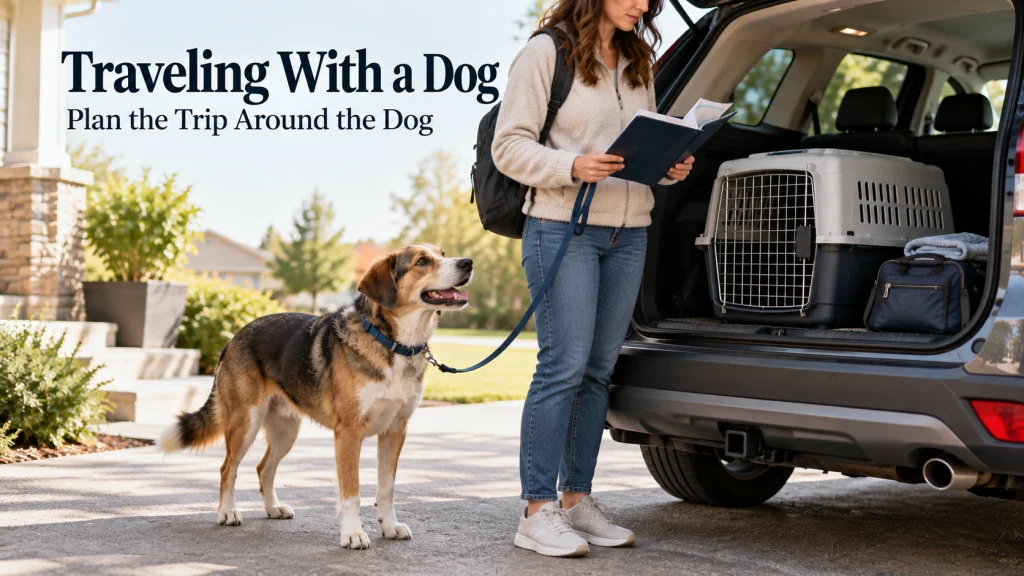
Traveling with a dog should begin with one question: how will the dog physically move from the starting point to the destination? A dog riding in a private vehicle creates a different containment problem from a dog entering an airline cabin, traveling under an airline cargo process, or staying overnight during a long drive. The equipment that looks convenient at home may not fit the vehicle, seat space, operator rule, or travel process that actually controls the trip. I would solve that physical job first, because every later choice becomes easier once the travel mode is clear.
Next, separate the rules around that setup into two more layers. Operators control airline procedures, aircraft limits, hotel policies, and property restrictions, while government authorities control entry and destination requirements. A carrier can fit the dog and still fail an airline rule, just as a hotel can welcome dogs while the destination has separate requirements. One approval never proves the entire trip is approved.
Choose the trip by how the dog will physically travel
The first equipment decision should match the movement job, not a generic list of dog travel supplies. In a private vehicle, restraint, position, vehicle fit, and securement matter before convenience features do. A portable carrier may suit a dog that must move as one contained unit, while a travel crate may solve a different transport job. Start with the dog, route, available space, and rules attached to that mode.
Use the table as a routing check rather than as a universal recommendation. It separates the physical setup from the outside rule that can still change the answer, which is especially important when a trip combines driving, flying, and temporary lodging. If the setup does not fit the dog and the transport space at the same time, adding accessories does not solve the underlying problem. Move to the more specific guide only after you know which physical job you are trying to solve.
| If the trip requires this | Start with this decision | Then verify or route here |
|---|---|---|
| Private vehicle travel | Restraint or containment plus vehicle fit | Car travel setup, then road trip logistics if the drive is long |
| A portable carrier | Dog fit plus the external space the carrier must enter | Carrier requirements, then operator limits when another service controls the space |
| A freestanding travel crate | Dog fit, footprint, placement, and securement | Travel crate requirements, then vehicle or operator rules |
| Air travel | The airline process before equipment choice | Airline, route, aircraft process, carrier, documentation, and destination rules |
| A long road trip | A finished vehicle setup | Stops, overnight lodging, portable supplies, and destination checks |
| Portable travel gear | The specific travel jobs that need support | Storage, cleanup, feeding, handling, and route fit |
| Temporary lodging | The exact property and the dog’s ability to settle there | Property rules, room use, access, and fees |
| Destination requirements | The authority that controls entry or movement | Current state, territory, country, and United States return requirements |
Private vehicle travel begins with restraint and vehicle fit
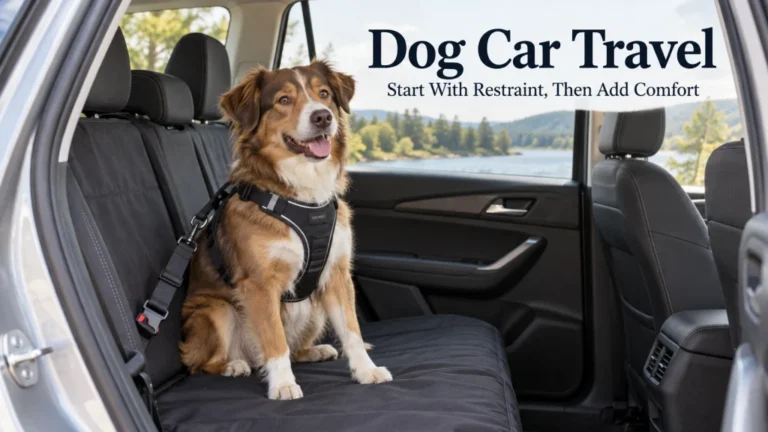
A loose dog can distract the driver and can be exposed to serious forces during a sudden stop or collision, so the vehicle setup deserves more attention than a comfortable blanket or a favorite toy. Start by checking where the dog can ride without interfering with driving, how the restraint or containment system is intended to attach, and whether that location leaves the dog enough usable space. Independent safety testing can help distinguish a meaningful restraint claim from marketing language, but the exact product still has to fit the dog and the vehicle correctly. For the full vehicle setup, use the dog car travel guide before planning the rest of the route.
A portable carrier is a different job from a freestanding travel crate
A carrier and a travel crate can both contain a dog, but they are not automatically interchangeable. A carrier may need to be lifted, moved through terminals, placed in a specific passenger space, or fitted into a vehicle location, while a travel crate may need a stable footprint and a secure attachment method. Compare the dog’s usable interior space with the external dimensions that the transport environment actually allows instead of choosing by the label on the product. The dog travel carrier guide and dog travel crate guide separate those two jobs in more detail.
Let the operator define the rules it actually controls
Airlines, hotels, rental properties, and other operators can set conditions that are separate from general dog travel advice. Those conditions can change by route, aircraft, property, room type, dog size, or the way the dog is being transported. A rule quoted from a different operator is not a substitute for the policy attached to the booking you actually hold. Check the operator directly before purchase and again before departure if the trip depends on a specific allowance.
This is also where vague terms such as approved carrier can create trouble. A seller may describe a carrier as suitable for airline travel, but the airline decides whether that carrier fits its own current process and space limits for the specific trip. The same logic applies to lodging labels such as pet friendly, which do not tell you every property rule by themselves. Operator confirmation should answer the exact question your trip depends on, not simply confirm that dogs are generally accepted.
Air travel adds airline, aircraft, and airport constraints
Flying adds a chain of checks that should be completed before assuming a carrier or crate will work. The airline can control whether a dog may travel through a particular process, the dimensions or construction it accepts, booking procedures, airport handling, and route restrictions. IATA guidance also makes clear that airlines and countries may impose their own requirements, so a general air transport standard does not replace direct confirmation with the airline. The flying with a dog guide focuses on that operator level workflow without treating one airline policy as universal.
Long drives add journey logistics after the vehicle setup is solved
A long drive is not just a short car ride repeated many times. The dog still needs the same secure travel position, but the owner also has to plan safe stops, access to water, meals that fit the dog’s normal routine, overnight lodging, and a way to move the dog in and out of the vehicle without creating an escape risk. Those logistics should be layered onto a vehicle setup that already works rather than used to distract from an insecure restraint or poorly fitted crate. For the journey itself, the road trip with a dog guide handles the road specific planning in more depth.
Pack portable gear around the travel mode rather than one universal checklist
Packing becomes much simpler once the transport system is fixed. A road trip can support more bulky items than an airline cabin, while a trip with repeated hotel stops may place more value on compact food storage, cleanup supplies, a familiar resting surface, and a controlled way to move through shared spaces. The useful question is not whether an item appears on a popular checklist, but whether it solves a predictable job on this route. Gear that adds weight, storage burden, or setup without solving a real constraint can stay home.
I would organize portable gear by function so it can be checked against the trip rather than collected as a shopping list. Food and water support the dog’s existing routine, identification and records support recovery and verification, cleanup supplies handle predictable mess, and containment gear should match the places where the dog must actually be managed. The dog travel gear guide goes deeper into choosing portable equipment without assuming more gear is always better. Keep the final kit small enough that the essential restraint, carrier, crate, records, and routine items remain easy to reach.
- Containment and restraint items that match the actual transport mode.
- Food, water, bowls, and any ordinary feeding supplies already used at home.
- Current identification and the records required for the specific trip.
- Leash and handling equipment that the dog already uses comfortably.
- Cleanup supplies, waste bags, and a simple way to manage dirty items.
- A familiar resting item when space and the transport process allow it.
A useful packing check is to remove each optional item and ask what problem appears. If nothing meaningful changes, the item may be convenience rather than necessity, which matters when space is limited. If removing an item creates a safety, containment, documentation, feeding, or cleanup problem, it belongs much higher on the list. That test keeps the kit tied to the trip instead of turning it into a catalog.
Verify temporary lodging at the property level
A hotel brand or booking filter can help narrow the search, but the property is the level that matters when you need a dependable answer. Rules can differ on dog size, number of dogs, where animals may enter, whether a dog may remain alone in the room, and what fees or deposits apply. Confirm the policy with the exact property and keep the answer attached to the reservation details when the trip depends on it. The staying in a hotel with a dog guide covers the lodging workflow without turning the article into a directory.
The dog’s behavior in a new room matters just as much as the reservation rule. A dog that settles easily at home may react differently to hallway noise, unfamiliar doors, elevators, housekeeping activity, or being left in a strange space. Plan where the dog will rest, how entry and exit will be controlled, and how you will avoid situations the dog is not ready to handle. If the dog cannot settle safely in the planned lodging setup, changing the lodging plan may be more sensible than adding another travel accessory.
Build government and destination requirements on a separate timeline
Government travel requirements are not the same thing as airline or hotel rules, even when they affect the same trip. For interstate travel, the receiving state or territory can set animal health requirements, and for international travel the destination country sets its own entry conditions. Returning to the United States can also trigger current federal dog import requirements that depend on factors such as travel history and documentation. The dog travel requirements guide is the right place to organize those official checks before tickets and reservations make the plan harder to change.
Start this work early enough that you can follow the sequence required by the destination rather than assuming paperwork can be completed at the end. Some trips may involve a veterinarian, official health documentation, government endorsement, import permission, or other steps that must happen in a defined order. Verify the current destination page and the current United States return requirements every time because these rules can change. Do not use an old trip, another owner’s paperwork, or an airline employee’s general advice as a substitute for the authority that actually controls entry.
| Rule layer | Who controls it | What the owner should verify |
|---|---|---|
| Physical transport system | Dog and travel setup | Fit, restraint, containment, securement, handling, and practical route use |
| Operator rule | Airline, hotel, rental, or other service operator | Current booking, carrier, property, route, handling, and access requirements |
| Government requirement | Receiving state, territory, country, or federal authority | Current entry, health, identification, documentation, and return requirements |
The dependency is simple even when the paperwork is not. Use the sequence below as a planning order, not a fixed calendar, because requirements vary by route, destination, dog, and authority. Airline and lodging checks can happen in parallel, but they cannot waive a government requirement. A booking should not be treated as final until the steps it depends on are workable.
| Stage | Confirm | Before moving on |
|---|---|---|
| 1. Route | Origin, destination, transit points, and travel mode | Know which operators and authorities apply |
| 2. Official requirements | Entry, health, identification, documentation, and return rules | Know which professional or government steps are required |
| 3. Required steps | Veterinary, certificate, endorsement, import, or other official process | Confirm the sequence can be completed |
| 4. Operator fit | Airline, property, carrier, crate, and booking rules | Confirm reservations and equipment still work |
| 5. Final setup | Stops, portable gear, records, and transport details | Recheck current instructions before departure |
If one required step cannot be completed, change the route or booking before treating the rest of the trip as settled. Work backward from any official sequence instead of inventing a universal deadline. That keeps the timeline useful without publishing dates or timing claims that may not apply to the specific trip. The result is a dependency check, not a countdown.
Keep ordinary identification and ownership records current before trip specific paperwork starts
Travel paperwork is easier to manage when the dog’s everyday records are already organized. Current contact information, identification details, vaccination records, and other ordinary ownership documents should not become a last minute scavenger hunt because a trip is approaching. Those records may support a travel requirement, but they also have value if the dog becomes separated from the owner away from home. The dog identification and records guide covers the general record system outside the travel specific process.
Keep the distinction between ordinary records and official travel documents clear. A familiar vaccine record or microchip entry may be useful, yet the destination can still require a particular certificate, endorsement, form, or verification process that the ordinary record does not replace. Match each document to the authority asking for it and confirm the accepted format directly. This avoids the common mistake of having plenty of paperwork while still missing the one document the trip actually requires.
When travel fear or carrier acclimation becomes the main problem
A dog that avoids the carrier, panics in the car, or cannot settle during practice is presenting a behavior problem that gear alone may not solve. Mild unfamiliarity can often be approached through gradual, reward based practice that keeps the dog below the point where it is overwhelmed. The goal is not to force the dog into a travel setup because the reservation already exists. For basic acclimation and training structure, use the dog training guide rather than turning the travel article into a behavior treatment plan.
Escalate when fear is intense, the dog is trying to escape or injure itself, aggression appears, or progress is not safe to manage at home. A qualified behavior professional or veterinarian may need to help determine what is driving the problem and whether the planned trip is appropriate. Do not use travel day pressure as a reason to rush exposure or improvise medication. Sometimes the best travel decision is to change the transport plan or arrange care at home instead of asking the dog to tolerate a setup it cannot handle safely.
Keep home crate choice separate from transport compliance
A crate that works well in a bedroom or living area does not automatically become the right crate for vehicle travel or an airline process. Home use is mainly about fit, routine, rest, and containment inside the household, while transport adds placement, securement, handling, space limits, and operator requirements. Those added constraints can change the answer even when the dog is already comfortable in the home crate. Use the dog crate guide for ordinary home crate decisions and keep transport compliance in the travel system where it belongs.
The reverse is also true: a travel container is not automatically the best permanent home setup simply because it meets a transport job. A dog may need a different amount of usable space, access, bedding, routine, or household placement when the crate is used at home. Buying one item to perform every containment task can be attractive, but only if the fit and requirements genuinely overlap. Separate the jobs first, then decide whether one crate can satisfy both without compromise.
Know when the plan needs veterinary input instead of another travel accessory
Motion sickness, repeated vomiting, breathing concerns, underlying medical conditions, medication questions, sedation, and uncertainty about travel fitness are veterinary decisions. A different bowl, calming accessory, seat location, or crate cover should not be used to work around a medical problem that has not been properly assessed. Air travel can add additional stress and handling demands, so health questions deserve attention before the itinerary becomes difficult to change. This article can organize the travel system, but it cannot determine whether a particular dog is medically fit for a specific trip.
Veterinary input may also intersect with official paperwork when a destination requires an examination, certificate, vaccination verification, testing, treatment, or government endorsement. Follow the destination’s current instructions so the veterinarian knows which official process applies rather than asking for a generic travel note. If a required certificate must be issued or endorsed through a specific system, the government source should define that workflow. The useful handoff is from travel planning to the professional who owns the medical or certification step, not from one accessory to another.
Professional handoff: Use a veterinarian for medical fitness, motion sickness, medication, sedation, and required veterinary documentation. Use an appropriate behavior professional when significant fear, panic, aggression, or unsafe escape behavior becomes the main travel problem. Use the airline, property, or service operator for rules it controls, and use the relevant government authority for entry and destination requirements.
Final Thoughts: separate the transport system from the rules around it
A workable dog travel plan starts with the physical movement job, then checks the operator and destination authority. That order prevents a packing list from hiding a poor restraint setup, a carrier that does not fit, an airline assumption, or missing paperwork. It also shows which part of the plan needs revision when something fails. Once the dog, transport space, operator rule, and destination requirement agree, the remaining logistics are easier to manage.
Keep the plan willing to change. Verify the route and rules, choose equipment only for the job it must perform, and move medical or serious behavior questions to the right professional. A simpler trip may be better for some dogs, while others can handle more complexity once the setup is familiar. The goal is a trip the dog and household can realistically manage.
FAQs
🚗 What should I decide first when traveling with a dog?
Decide how the dog will physically travel and where the dog will be restrained or contained. That determines which fit, equipment, operator, and government checks come next.
✈️ Does an airline friendly carrier work on every flight?
No. Check the exact airline, route, aircraft process, and current carrier requirements for your booking. A general marketing label does not guarantee acceptance or fit.
🏨 Is a pet friendly hotel policy the same at every property?
No. Confirm the exact property’s current rules, including dog limits, access, fees, and whether a dog may be left alone in the room. Keep that confirmation with your reservation details.
📄 Do I need the same documents for every dog trip?
No. Requirements depend on the destination, route, mode of travel, and the authority involved. Verify the receiving state, territory, country, and United States return requirements that apply to the specific trip.
🐕 Can I use my dog’s home crate for travel?
Possibly, but only if it also fits the transport job and any operator requirements. Home comfort does not prove that the crate can be secured correctly or accepted in a travel process.
🧳 What dog travel gear is actually necessary?
Prioritize restraint or containment, food and water, identification, required records, handling gear, and cleanup supplies that match the route. Add optional items only when they solve a specific problem on that trip.
🩺 When should I talk to a veterinarian before a trip?
Get veterinary input when there are questions about medical fitness, motion sickness, medication, sedation, breathing, or required veterinary documentation. Do not use general travel advice to make those medical decisions.
References and Sources
- Cornell dog travel guidance: supports owner level planning for vehicle restraint, air travel, lodging, packing, and veterinary handoff.
- Center for Pet Safety certification program: supports the distinction between independent restraint testing and general product marketing claims.
- IATA traveling with pets guidance: supports checking airline and country specific procedures directly rather than treating one air travel rule as universal.
- USDA APHIS pet travel guidance: supports checking receiving state, territory, and destination country requirements through the relevant official process.
- CDC dog import guidance: supports checking current United States entry and return requirements for dogs.
- VCA pet friendly hotel guidance: supports verifying property rules and planning lodging around the dog’s behavior and practical needs.