How to brush a double-coated dog without damaging the topcoat
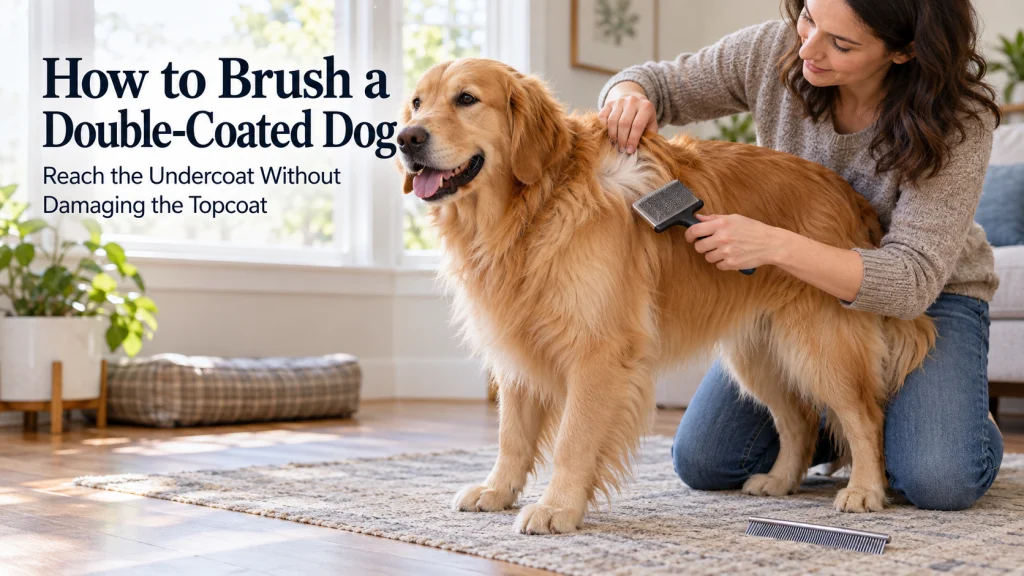
How To Brush A Double Coated Dog

A double coat needs maintenance at two levels: the visible topcoat and the softer undercoat beneath it. The practical goal is to reach loose and packed hair without scraping the skin, pulling through resistance, or treating every brushing session like an aggressive deshedding session. A light brush pass followed by a comb check makes it
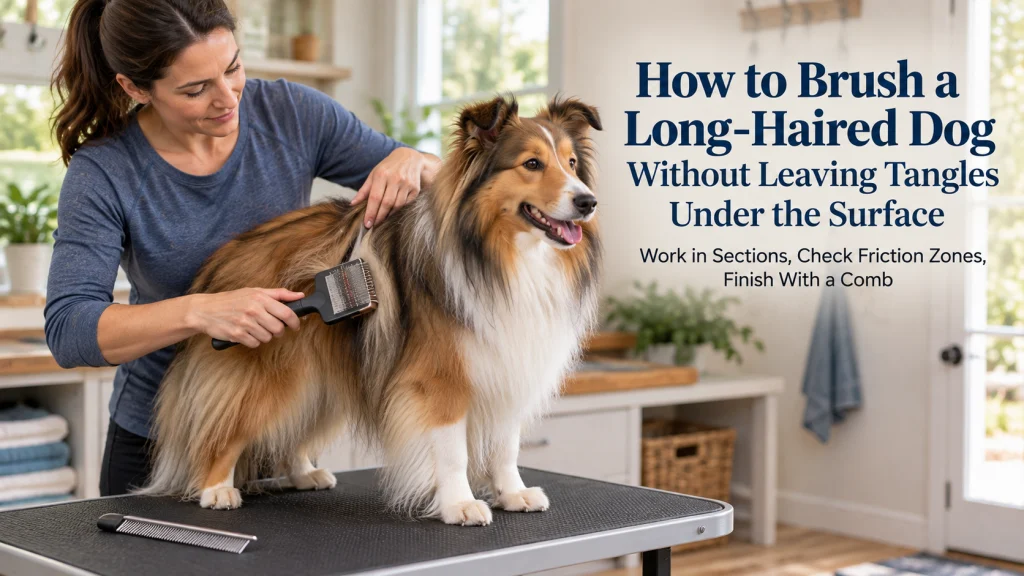
How to brush a long-haired dog without leaving tangles under the surface

How To Brush A Long Haired Dog

A long coat can look smooth on top while small tangles remain closer to the skin. Effective brushing means choosing a tool that reaches the coat depth comfortably, working in manageable sections, checking friction zones, and finishing with a metal comb. Small loose tangles can often be worked apart gently, but tight mats, painful areas,

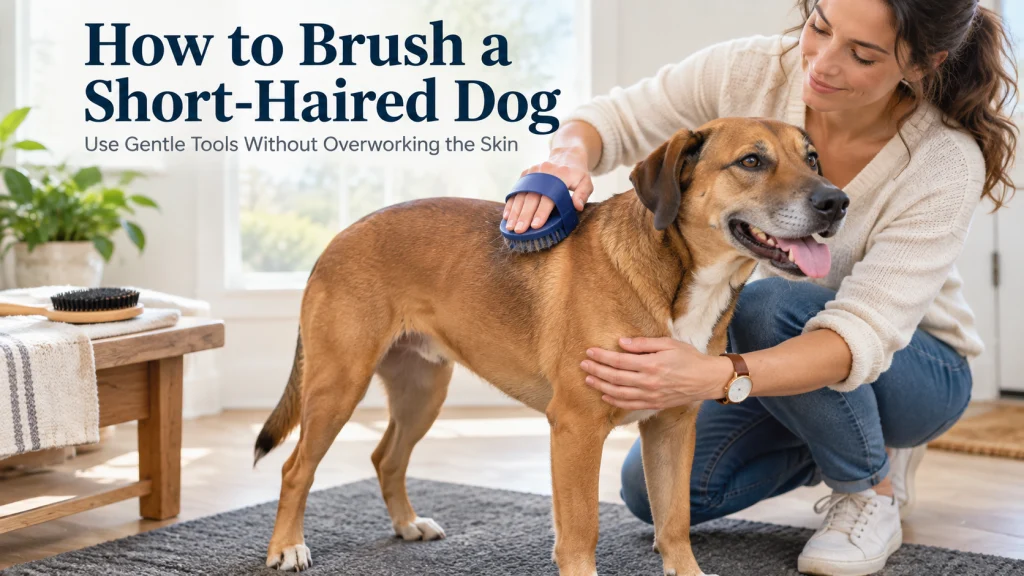
How to brush a short-haired dog without overworking the skin

How To Brush A Short Haired Dog

Short coats put the brush close to the skin, so routine grooming works best when tool depth and pressure stay modest. A rubber grooming tool, grooming mitt, or appropriate bristle brush can remove loose surface hair and debris without treating every short coat like a dense coat that needs deep grooming. The useful test is

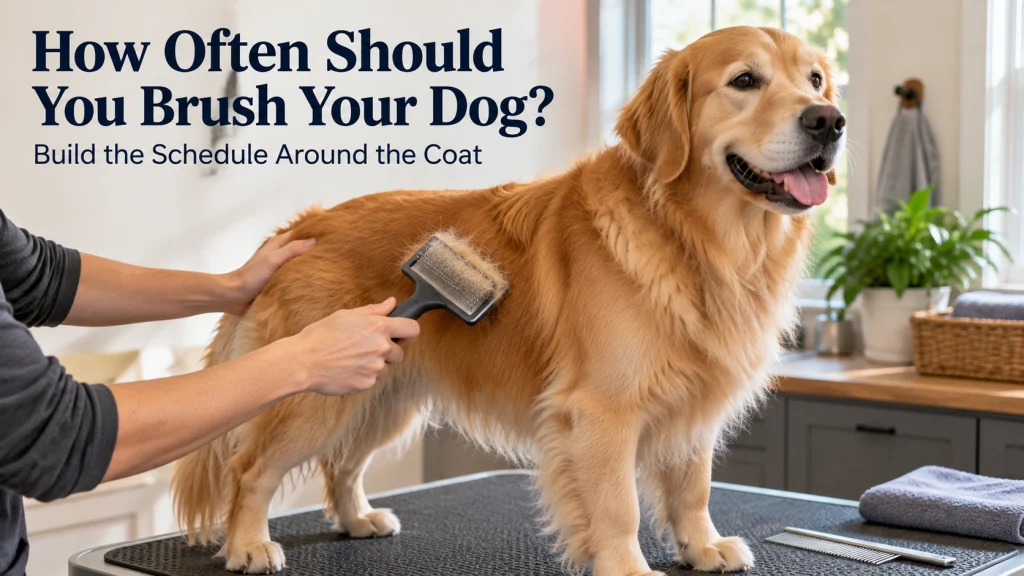
How often should you brush your dog? Build the schedule around the coat

How Often Should You Brush Your Dog

Brushing frequency should follow the coat in front of you, not a universal calendar. Short, smooth coats may stay comfortable with a wider interval, while long, dense, or curly coats often need much closer attention because tangles and trapped loose hair can build below the surface. Shedding, moisture, outdoor activity, collar and harness friction, and

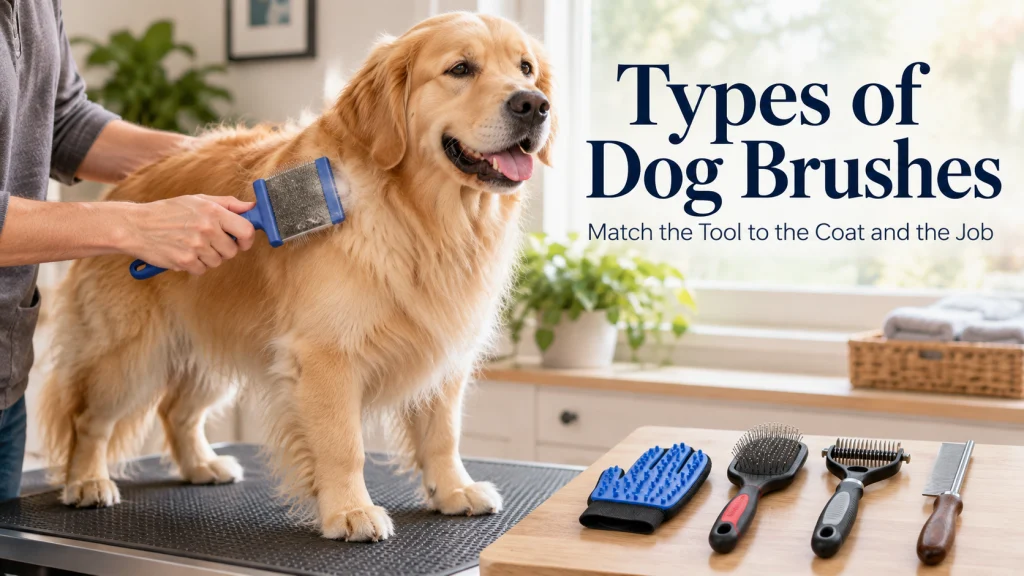
Types of dog brushes: match the tool to the coat and the job

Types Of Dog Brushes

Types of dog brushes make more sense when you match each tool to coat depth and the job you need it to do. Rubber brushes and bristle brushes are often useful on short coats, while slicker brushes, pin brushes, undercoat rakes, and metal combs each solve different problems in longer, denser, or layered coats. The

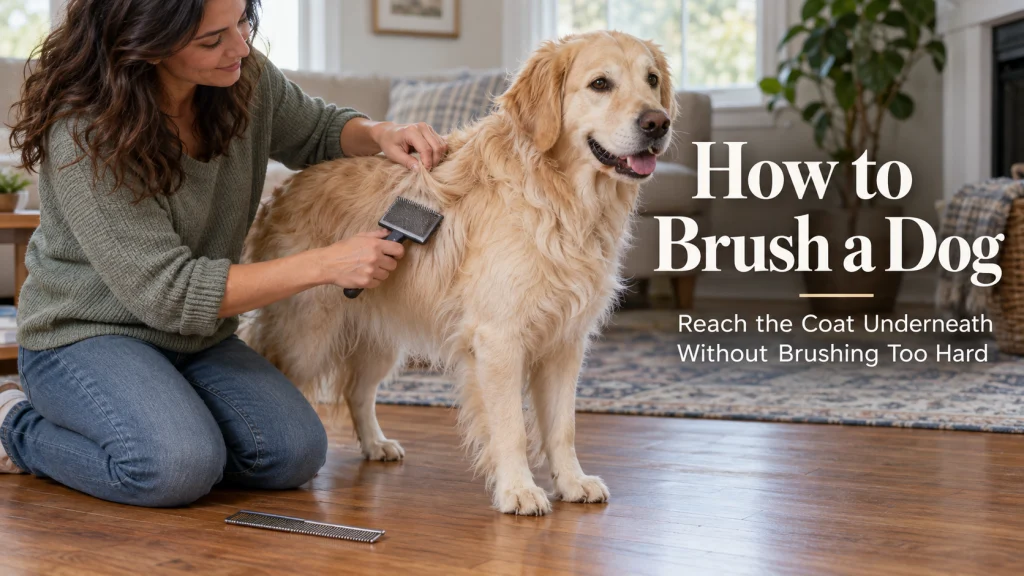
How to brush a dog without missing the coat underneath

How To Brush A Dog

Learning how to brush a dog starts with coat depth, not with counting strokes or buying the biggest brush set. The right routine depends on coat length, density, curl, friction zones, shedding pattern, and how easily a comb can reach the layers that matter. A useful brushing setup is usually small: choose the tool for