A useful senior dog bedroom setup is built around easy movement, not just a softer bed. The resting area should have a clear route, dependable footing, reachable water, enough room to stand and turn, and gentle lighting when darkness makes navigation harder. Keep the layout predictable if vision or hearing is changing, and treat a new change in sleep, pacing, settling, or mobility as a reason to involve a veterinarian rather than assuming the room is the cause. Bed construction and specialty bed choices belong in a separate bed selection decision.

Design the route around the resting area first
A senior dog bedroom setup works best when you start with the path into and out of the resting area. A comfortable bed cannot fix a slick approach, a difficult jump, a narrow turn, or a dark route to the door. If your dog still wants to sleep near you, the goal is to preserve that familiar choice while removing avoidable effort from the route. That is part of caring for an older dog as daily needs change, not a reason to redesign the whole house at once.
Watch one complete trip from the resting spot to water and then toward the usual exit. Notice where the dog pauses, shortens a step, turns carefully, brushes furniture, or chooses a different path. Use those observations to prioritize the changes that matter in that room, then compare them with broader senior dog home modifications if the same problem appears elsewhere. A simple route audit usually tells you more than buying another item before you know what is difficult.
Choose a resting location that does not require repeated stairs or jumps
Start with the place your dog already chooses when the household settles down. If that location can be reached on one level without climbing onto furniture, it may need only small changes around the bed rather than a new sleep zone. If reaching the bedroom requires stairs that have become difficult, compare the value of staying close to the family with the effort of repeating that route. The better location is the one the dog can reach consistently without being asked to perform a movement that has become unreliable.
Furniture access is a separate question from floor level rest. A dog that has always slept on a human bed may still want that spot, but repeated jumping can become the hardest part of the routine even when the rest of the bedroom is easy to navigate. In that case, first decide whether furniture access should continue at all, then decide whether an access aid fits the space and the dog’s current movement. Do not treat age alone as proof that a ramp, stairs, or a different bed is automatically necessary.
Keep enough clear floor space for standing, turning, and repositioning
The area around the bed matters most when the dog is getting up and changing direction. Leave enough open floor for the dog to stand without immediately meeting a nightstand, basket, cord, or wall corner. A larger dog or a dog that turns in a wider arc may need more clearance than the bed footprint suggests. Look at the whole movement, from pushing up to taking the first few steps, rather than measuring only the sleeping surface.
A useful test is to watch whether the dog can approach, enter, turn, lie down, rise, and leave without a tight pivot. If the dog repeatedly backs out, clips furniture, or chooses a longer path, move the obstacle before adding new gear. Keep frequently used routes free of shoes, bags, charging cables, and loose objects that can shift underfoot. Clear space is especially valuable because it reduces complexity without asking the dog to learn a new object or routine.
| Room decision | What to check | What belongs in the bed decision |
|---|---|---|
| Resting location | Distance, stairs, jumps, traffic, and exit route | Bed size and construction |
| Approach | Floor grip, clutter, turns, and clearance | Base design and bed materials |
| Night use | Water route, doorway, and useful lighting | Cover, cushioning, and washability |
Use the room column to fix access first, then handle the bed itself as a separate product choice. That keeps the setup focused on the problem you can actually see instead of assuming every difficulty starts with the mattress or filling. Recheck the route after each change so you can tell whether movement actually became easier. If the dog still hesitates, look for the next limiting part of the route rather than replacing several things at once.
Add traction on the approach when the floor is slick
Hard flooring can become the weak point in an otherwise sensible bedroom layout. Pay special attention to the first step after the dog rises, the turn beside the bed, the path to water, and the doorway where flooring may change. Secure runners or mats can create a more dependable walking path when the existing surface does not offer enough grip. The surface should lie flat and stay in place so the traction solution does not become another thing to catch a paw on.
Do not assume every slow step is caused by the floor, but do compare movement on grippy and slick surfaces. If the dog moves more confidently on one and hesitates on the other, the room is giving you useful information about where traction matters. For a broader look at that specific flooring problem, see what to check when a dog slips on hardwood floors. If slipping is new, worsening, or paired with weakness or difficulty rising, the setup should not replace veterinary assessment.
Keep water reachable without creating a difficult nighttime route
Water should be easy to reach from the resting area without forcing a long trip through stairs, tight turns, or slick flooring. That does not mean placing the bowl against the bed where it narrows the standing area. Choose a spot the dog can approach, drink from, and leave without having to reverse through a cramped corner. The route should also work when the dog has just woken up and is moving more cautiously than during the day.
Think of the room as a simple sequence: bed, clear standing area, water, then the usual doorway or exit. If the bowl creates splashes, keep the surrounding surface dry and stable so the most frequently visited resource does not create a slip hazard. For example, a bowl across a slick hallway may be less practical than one several easy steps from the bed, even if both are technically in the same room. The best placement is the one that supports the dog’s real route without blocking it.
Use gentle targeted lighting when low light navigation is difficult
A completely dark route can be harder to navigate for some older dogs, especially when vision is changing. Gentle, steady light near the bed, doorway, or a change in floor level can make landmarks easier to find without flooding the whole room with brightness. Target the actual route instead of adding lights everywhere. The useful question is whether the dog moves through the familiar path with less hesitation, not whether the room looks brighter to you.
Keep lighting simple and predictable. Avoid flashing lights, moving light patterns, or frequent changes in where the light comes from, because the goal is to make the route easier to read. If your dog is already navigating with reduced vision, combine lighting with a stable furniture layout rather than expecting light alone to solve the problem. A sudden or major change in nighttime navigation still deserves veterinary context because vision, mobility, pain, and cognitive changes can overlap.
Keep the furniture layout predictable when vision is changing
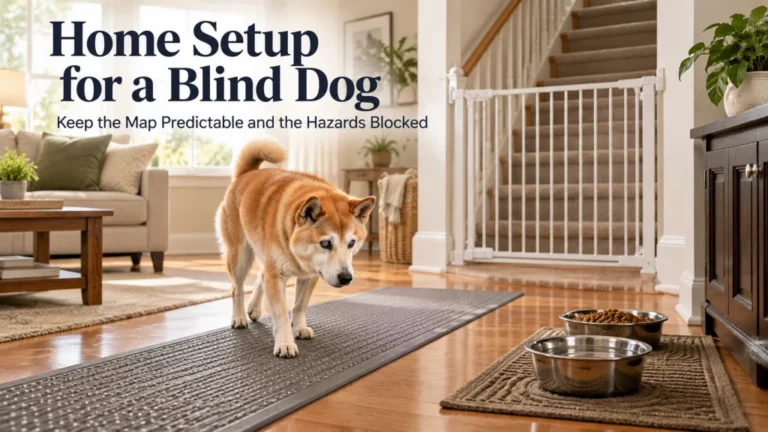
Familiar routes become more valuable when a dog relies less on vision and more on memory, scent, and repeated movement. Keep the bed, water, doorway path, and large furniture in consistent positions when the current layout is working. If you need to move something, preserve a wide, obvious route rather than creating a new series of narrow gaps. Repeated rearrangement can make a familiar bedroom harder to map even when each individual piece of furniture seems harmless.
Look for obstacles at the dog’s body height as well as objects at your own eye level. Low benches, storage bins, fan bases, and projecting corners can matter when the dog approaches them slowly or from an angle. For more focused setup decisions, the guide to home setup for a blind dog covers how predictable routes change when vision loss is the main constraint. In this bedroom, keep the goal narrower: make the normal rest, water, and exit path easy to remember and physically clear.
Avoid startling a hearing impaired dog during sleep and waking
A dog that hears less may sleep through sounds that once announced your approach. That can make a sudden touch or close movement more startling, especially when the dog is deeply asleep. Arrange the resting area so people do not have to step over the dog or squeeze closely past the bed to move through the room. Give the dog a little buffer from the busiest walking line while still keeping the resting place connected to the household.
When you need to wake the dog, use a calm, consistent approach that allows the dog to notice your presence before you handle them whenever possible. The room layout can help by giving you space to approach from a visible direction rather than reaching from behind furniture. If hearing loss is the main home setup problem, see home setup for a deaf dog for a wider decision framework. Bedroom changes should support predictable waking, not attempt to diagnose why the dog’s hearing or sleep behavior has changed.
Use a ramp or pet stairs only when furniture access justifies them
Access equipment makes sense only if the dog still needs or wants to reach raised furniture and the equipment solves that specific height change. Before adding anything, check the available floor space, the approach angle, the landing area, and whether the dog can use the device without a sharp turn. A ramp that blocks the normal walking route or stairs that slide on the floor can make the bedroom more complicated. The equipment should simplify one movement without making several other movements harder.
If a longer, gradual approach fits the room better, compare the practical setup questions in the dog ramp guide. If compact stepped access is the more realistic option, use the dog stairs guide to think through fit and use. Either choice should be based on the dog’s current movement, the furniture height, and the available space rather than age alone. If the dog cannot use the chosen access aid confidently, keeping the resting area at floor level may be the simpler answer.
Choose the bed product itself in the dog bed system
This bedroom setup article owns where the resting area goes and how the dog reaches it. Bed size, cushioning, support, cover materials, washability, and specialty construction are a different decision because those details depend on the individual dog and the bed design. Do not prescribe an orthopedic bed simply because a dog is older. First make sure the room allows easy entry, stable footing, comfortable turning space, and a clear exit.
Once those room conditions are working, use the separate guide on how to choose a dog bed for the product decision. That separation also makes troubleshooting easier because you can tell whether the problem is access to the resting area or the bed itself. A well chosen bed in a bad location can still be difficult to use, while an ordinary familiar bed in an easy location may continue to work well. Change the factor that is actually limiting the dog rather than upgrading everything at once.
Treat new nighttime pacing or major sleep changes as a veterinary question
A room setup can remove physical obstacles, but it cannot tell you why a dog suddenly paces, cannot settle, sleeps much more or less, seems confused, or struggles to rise. Those changes can overlap with pain, sensory changes, medical conditions, or cognitive changes, so the safe owner level response is to notice and document the pattern rather than label it yourself. Pay attention to what changed, where it happens, and whether mobility, appetite, elimination, interaction, or daytime behavior changed at the same time. That gives a veterinarian more useful context than a guess about the cause.
Do not keep rearranging the room in an attempt to solve a new behavior that persists or worsens. You can still make the route safer with stable footing, clear space, reachable water, and predictable lighting while veterinary assessment addresses the reason for the change. The environment is supportive care, not a diagnosis or treatment. That boundary matters because a familiar bedroom becoming difficult can be the first visible sign that the dog’s needs have changed beyond furniture placement.
- Check whether the usual route has become slippery, narrow, dark, or blocked.
- Note any new hesitation when standing, turning, drinking, or reaching the door.
- Keep the location of key furniture and water predictable while you observe the pattern.
- Contact your veterinarian about a new or major change in sleep, pacing, settling, confusion, or mobility.
This checklist separates what you can correct in the room from what needs medical context. If a simple obstacle explains the hesitation, fix it and then watch the same route again. If the behavior is new and broader than the obstacle, do not stop at the room setup. Keep the environment stable while you gather useful observations for the veterinarian.
Final Thoughts: Make the resting area easy to enter, leave, and navigate in the dark
The strongest senior bedroom setup is usually the one that asks the dog to do less. Keep the sleeping location familiar when it still works, clear the standing and turning area, add grip where the floor is slick, and make water and the doorway reachable along a simple route. Gentle lighting can support that route when low light has become difficult. A predictable furniture layout also reduces unnecessary changes for a dog relying on familiar landmarks.
Watch the dog use the space before deciding what to buy or move next. If the difficulty is clearly a jump, floor surface, obstacle, or route problem, change that part first and reassess. If sleep, pacing, confusion, or mobility changes are new or substantial, involve your veterinarian rather than treating the bedroom as the explanation. The room should reduce effort and uncertainty, not hide a change that needs a different kind of attention.
FAQs
🐾 Where should a senior dog sleep at night?
Choose a familiar, calm place the dog can reach without repeated stairs, jumps, slick turns, or a difficult route to the door. The best location depends on the dog’s mobility, household layout, and whether staying near family helps the dog settle.
💧 Should I keep water near my older dog’s bed?
Water should be reachable without a long or difficult route, but it should not block the standing area or create a wet walking surface. Place it where the dog can approach, drink, turn, and leave comfortably.
💡 Does a senior dog need a nightlight?
Not every senior dog needs one. Gentle targeted lighting can be useful when the dog hesitates in low light or has trouble finding the usual route, especially when paired with a stable furniture layout.
🛏️ Should every senior dog have an orthopedic bed?
No. Age alone does not determine the right bed construction, and room access can matter just as much as the bed itself. Choose the bed based on the dog’s size, movement, sleeping style, comfort needs, and the exact bed design.
🚪 What should I remove from the route between the bed and the door?
Remove or secure objects that narrow the route, shift underfoot, or force a tight turn, such as loose rugs, shoes, baskets, and cords. Keep the path wide enough for the dog to stand, turn, and walk without brushing furniture.
🩺 When should nighttime restlessness be discussed with a veterinarian?
Discuss a new or major change in pacing, settling, sleep, confusion, or mobility with your veterinarian, especially when other behavior or daily routines have changed too. A safer room can support the dog, but it cannot identify the medical or cognitive cause of a new pattern.
References and Sources
- AAHA senior care guidance: Supports accessible resting areas, traction, ramps, and nightlights as practical environmental changes for senior pets.
- VCA home mobility guidance: Supports secure walking surfaces, reduced clutter, accessible resting areas, and easier routine routes for dogs with mobility limitations.
- AKC senior dog sleep guidance: Supports the boundary that notable changes in a senior dog’s sleep routine can warrant veterinary evaluation.