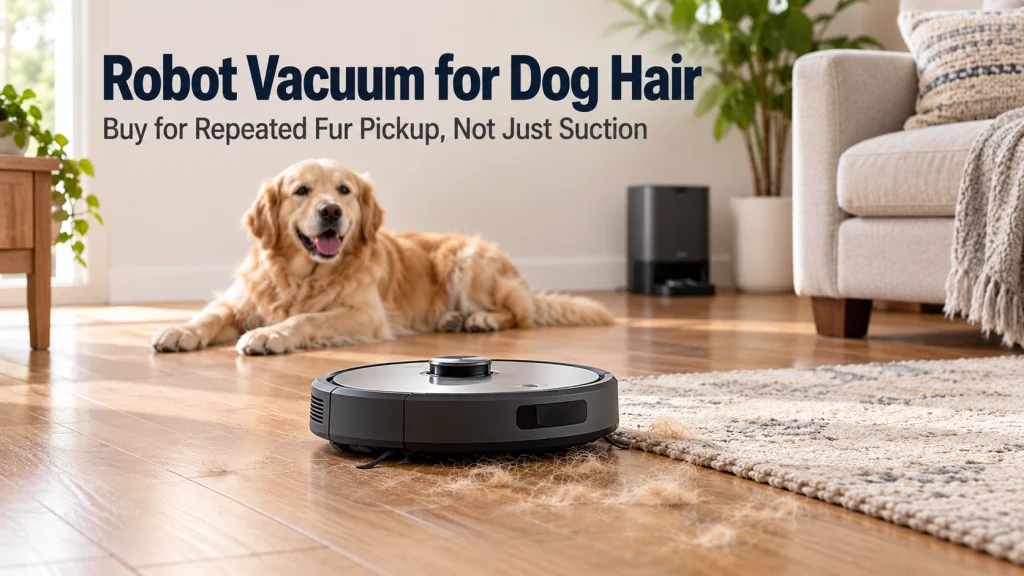
A robot vacuum can be useful in a dog hair household when its main job is repeated floor pickup, not replacing every other cleaning tool. The right choice depends on floor type, how much fur accumulates between runs, roller tangling, bin or dock workload, obstacle handling, mapping and the amount of manual maintenance the system still creates. Hard floors and carpet should be judged separately because a machine that keeps loose fur under control on smooth flooring may still leave embedded hair in carpet. Treat obstacle avoidance as a useful layer of assistance, not a reason to run the robot unattended when a pet accident may be present.
Decide which cleaning work the robot should actually remove
A robot vacuum for dog hair earns its place when it removes a repetitive floor job that would otherwise happen every day or every few days. It does not eliminate cleaning work, because fur still has to leave the roller, bin, filter or dock system somewhere. Before comparing features, look at the broader routine for
keeping a home clean with dogs
and decide which floor task is consuming the most time. That keeps the purchase focused on a real household burden instead of a long feature list.
The next question is how much of your current
dog hair removal routine
is loose floor pickup versus deeper cleaning. A home with mostly hardwood and visible fur along baseboards asks something different from a home with carpet that holds hair below the surface. The robot may take over frequent passes through open rooms while the owner still handles stairs, upholstery, corners or periodic deep cleaning. That division of labor is a better starting point than choosing by suction figures alone.
Start with independent pet hair pickup on the home’s actual floor types
Independent testing is most useful when it separates pet hair pickup from general debris pickup and shows how the machine behaves under repeatable floor conditions. Current RTINGS testing reports hard floor, carpet and pet hair results separately, which makes it easier to match evidence to the rooms that create the most cleaning work. Start with those task specific results before comparing app features, dock extras or headline suction claims. The first filter should be whether the robot performs the job the household needs often enough to justify automating it.
| Home condition | What to verify | Why it matters |
|---|---|---|
| Mostly hard floors | Repeated pickup of loose fur, edge behavior and navigation through open rooms | Daily visible fur is often the main workload |
| Mostly carpet | Independent pet hair pickup on the carpet type closest to the home | Hair can stay embedded even when loose debris disappears |
| Mixed flooring | Performance on each surface plus transition and mapping behavior | A strong result on one surface can hide a weak result on another |
Match the evidence to the rooms where the dog actually sheds. A dog that spends most of the day in one open living area creates a different automation opportunity from a dog whose fur accumulates across several closed rooms or levels. Give the most weight to the surfaces and routes the robot can realistically clean on a regular schedule. The goal is to buy for the workload the robot can repeatedly reach, not for a generic score that blends conditions the home may not even have.
Treat hard floor maintenance and embedded carpet hair as different jobs
Loose fur on hardwood, tile or vinyl often stays visible and mobile, so frequent automated passes can prevent it from collecting along walls and under furniture. Carpet changes the problem because hair can sit between fibers and may need stronger agitation from the cleaning head to release. Independent robot testing shows that strong hard floor performance does not guarantee equally strong pet hair pickup on carpet. That is why a single overall cleaning score should not decide the purchase.
| Cleaning job | Robot vacuum role | Likely backup need |
|---|---|---|
| Loose fur on smooth floors | Strong fit for frequent repeated pickup when testing supports it | Occasional edge and deep cleaning |
| Surface fur on rugs | Useful if pet hair testing is strong on similar carpet | Periodic manual vacuuming |
| Embedded carpet hair | Variable and model dependent | Often a conventional vacuum |
Set the standard you expect from the robot before buying. If the goal is to limit loose fur between full cleaning sessions, moderate carpet performance may still be useful. If the expectation is visibly hair free carpet without another vacuum, the bar is much higher and a conventional machine may still be needed. This keeps a useful robot from being judged against a deeper cleaning job it was not suited to replace.
Check roller design and tangle behavior before trusting a pet hair label
Hair that reaches the dustbin is useful; hair wrapped around the roller is maintenance waiting to happen. Long dog hair, human hair and mixed household hair can wind around brush components even when marketing describes the design as resistant to tangles. Look for independent observations of the main roller and side brush after pet hair testing, then compare that with the manufacturer’s cleaning instructions. A design that reduces wrapping can save real time, but no label should be treated as proof that the brush never needs cleaning.
- Check whether independent testing reports pet hair wrapping on the main roller or side brush.
- Confirm that the roller can be removed or accessed without an awkward disassembly routine.
- Read the exact model manual for brush cleaning and replacement instructions.
- Do not assume a rubber style roller or an anti tangle claim means zero maintenance.
- Include human hair in the decision if the robot will clean shared living spaces.
Also check how easy the roller is to remove and inspect. Frequent cutting and pulling of wrapped hair can move the cleaning burden from the floor to the machine. That matters more in a heavy shedding household because a small annoyance repeated often becomes real work. Favor a design whose routine maintenance demand fits the amount, length and frequency of hair in the home.
Size the bin and dock to the household’s fur volume
Dog hair is bulky, so an onboard bin that looks adequate for ordinary dust can fill quickly during heavy shedding. The useful question is not simply whether the robot has a large bin, but whether it can finish the rooms you expect it to clean before the bin needs attention. If the robot repeatedly stops or finishes with a packed bin, the schedule becomes less automatic than it looked on the product page. This is especially important when the dog has a dense coat or the home has several high traffic rooms.
| Setup | Work it can reduce | Work it still creates |
|---|---|---|
| Robot with onboard bin only | No dock bag or debris transfer system to manage | More frequent manual bin emptying |
| Robot with automatic emptying dock | Fewer direct bin emptying sessions | Dock container or bag care, transfer path checks and more floor space |
A dock that empties the robot can reduce manual bin work, but it does not make debris disappear. The owner still manages the dock container or bag, checks the transfer path and cleans filters or seals as required. A larger dock also takes floor space and may add consumables. Choose it when it removes a real recurring task, not because it is the most elaborate configuration.
Count bags, filters, brushes and cleaning as recurring ownership work
A robot vacuum is a maintenance system, not a sealed appliance that can be ignored after setup. Filters collect debris, brushes wear, sensors get dusty and some docks use replaceable bags or other parts. Combination units may also add mop pads, tanks or wash trays. Before buying, list what the exact model expects you to clean or replace and decide whether that routine fits the household.
Independent test methods can help here because good reviews separate cleaning performance from user maintenance and recurring cost. Manufacturer documentation should then confirm the exact replacement parts, care steps and compatibility for the model under consideration. Avoid converting a manufacturer’s suggested interval into a universal household schedule because shedding level, floor debris and run frequency change the workload. The useful comparison is how many recurring tasks the machine adds relative to the floor cleaning it removes across a normal week.
Treat obstacle avoidance as assistance, not permission to ignore a known pet accident
Obstacle recognition can make a robot easier to live with around cords, socks, bowls and other common floor objects, but performance is not identical across every model or surface. RTINGS tests obstacle handling on both bare floor and carpet with the same set of household objects, including simulated pet waste, specifically because recognition can vary with the obstacle and flooring. That kind of independent test is more useful than a broad marketing claim that a robot can see hazards. It shows whether the feature works under repeatable conditions rather than only describing what the sensor system is designed to do.
Warning: Do not use robot mopping as a substitute for proper cleanup of urine, feces or another contaminated pet accident. Stop the robot before it reaches the area. Clean the accident appropriately for the surface and situation. Inspect any part of the machine that contacted the mess before the next run.
A dog that occasionally has an indoor accident changes the safest cleaning routine. Even if a model advertises pet waste recognition, clear a known accident before starting the robot and do not treat unattended operation as guaranteed protection. Recognition can vary with the model, surface and conditions. Obstacle avoidance can reduce risk, but it should not replace a quick floor check when contamination is possible.
Check mapping, room control and multiple floor limits against the actual home
Mapping features matter only when they solve a layout problem you really have. Room selection can be useful when the dog sheds most heavily in a living room, bedroom or hallway and those areas need more frequent passes than the rest of the home. No go zones may help keep the robot away from feeding areas, delicate floor items or a room that is not ready for unattended cleaning. Verify these controls in the exact model documentation because app features and saved map behavior can vary.
Homes with more than one level need an extra check. A robot may store multiple maps while still requiring manual carrying or charging setup. Stairs also remain an above floor cleaning job even when nearby rooms are automated. Mapping is useful when it reduces repeated setup, not when it adds app work without reducing the manual effort of moving, charging or supervising the machine.
Keep mopping and muddy paw cleanup in the mixed floor system
A vacuum and mop combination can be convenient for light tracked dirt on compatible hard flooring, but dog hair pickup and wet cleanup should still be judged as separate tasks. Mud, water drips and ordinary paw marks can require a different routine from dry fur, especially near entry doors and feeding areas. For the broader floor system, use the guidance on how to
keep floors clean with dogs
rather than expecting one robot feature to handle every mess. That keeps dry vacuuming, routine mopping and contaminated accident cleanup from being blended into one vague promise.
Also consider whether a mop system adds maintenance you do not need. Pads, tanks and dock wash areas can create extra cleaning work even if the vacuum side performs well. A household with mostly dry shedding and little tracked mud may be better served by prioritizing vacuum performance and keeping wet cleaning simple. A household that genuinely uses automated mopping should compare that workload separately and verify flooring compatibility in the exact instructions.
Build a shortlist only from current independent testing and exact documentation
Robot vacuum lines change quickly, and similar names can hide different rollers, docks, sensors or software features. Build the purchase shortlist around the household use case first, then admit a candidate only after current independent testing and exact manufacturer documentation support the features that matter for that lane. Compare pickup on relevant floor types first, followed by tangle behavior, obstacle handling, bin or dock workload and mapping fit. Ignore candidates whose appeal rests mainly on suction claims that are not matched by useful pickup results.
| Shortlist lane | What a candidate must prove | Current evidence to verify |
|---|---|---|
| Hard floor dominant home | Reliable repeated loose fur pickup without creating excessive roller cleanup | Current independent pet hair and hard floor testing plus the exact roller documentation |
| Carpet dominant home | Strong pet hair pickup on similar carpet with enough agitation for the household standard | Current independent carpet and pet hair testing plus the exact brushroll design and care instructions |
| Heavy shedding home | Bin or dock capacity that reduces emptying work without shifting too much labor into bags, filters and brushes | Current independent maintenance findings plus exact dock, bag, filter and brush documentation |
| Accident risk or cluttered floor plan | Obstacle handling and room control that reduce risk without being treated as a guarantee | Current independent obstacle testing plus exact mapping and avoidance documentation |
Use only the lane that matches the household instead of trying to crown one universal winner. Recheck current availability, dock inclusion and whether the exact manual supports the mapping, maintenance or obstacle feature you care about before purchase. Treat software dependent features as model specific rather than assuming a whole product family behaves the same way. This creates a current shortlist with a traceable source path while avoiding stale rankings and unnecessary feature shopping.
Keep a conventional vacuum when carpet, stairs, couches or deep cleaning still require it
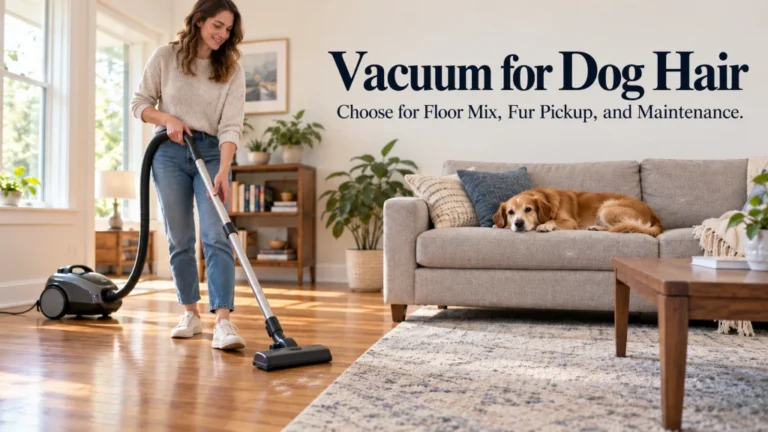
A robot works on the floor it can reach, so it does not automatically solve stairs, couch cushions, dog beds or other above floor surfaces. Carpet can also need more agitation than a robot provides when hair becomes embedded. If those jobs remain substantial, keep a conventional machine in the cleaning plan and use the robot for repeated maintenance between deeper sessions. The separate guide to choosing a
vacuum for dog hair
covers that broader whole home cleaning decision.
| Task | Robot vacuum | Conventional vacuum |
|---|---|---|
| Frequent loose fur pickup | Often the stronger convenience role | Works, but requires manual sessions |
| Embedded carpet hair | Performance varies widely | Often better suited to deeper cleaning |
| Stairs and upholstery | Not the primary tool | Usually required with the right attachment or form factor |
| Automatic repeated runs | Core advantage | Not applicable |
This is not a failure of the robot concept. It can still be worthwhile if it reduces how often the larger vacuum comes out and keeps visible floor fur under control. What matters is whether the total system saves time without lowering the cleaning standard you need. In many dog homes, the practical split is a robot for routine floor pickup plus a conventional vacuum for deeper carpet and above floor cleaning.
Final Thoughts: choose repeated fur pickup that saves more work than it creates
The best robot vacuum decision starts with the household’s actual fur pattern, floor mix and tolerance for maintenance. Prioritize independently tested pet hair pickup on the surfaces that matter most, then check roller access, bin or dock workload, obstacle handling and mapping against the real home. A more complicated system is worthwhile only when its automation removes a task you would otherwise repeat often. If it mostly adds bags, brush cleaning and app management, the convenience case becomes weaker.
Keep expectations narrow enough to be useful. A robot can be an excellent tool for repeated loose fur pickup without being the right answer for embedded carpet hair, stairs, couches or contaminated pet accidents. Verify the exact model documentation before buying, especially when a feature depends on sensors, software or a particular dock configuration. The right setup is the one that makes the weekly cleaning routine easier, not the one with the longest specification sheet.
Frequently asked questions
🐕 Is a robot vacuum good for dog hair?
It can be, especially for repeated loose fur pickup on floors the robot handles well. Check independent pet hair results on your actual floor types and do not assume the robot will replace deep carpet or above floor cleaning.
🧹 Can a robot vacuum replace my regular vacuum?
Not in every home. Stairs, upholstery, dog beds and embedded carpet hair may still require a conventional vacuum even when the robot handles daily floor maintenance well.
🌀 Do pet hair robot vacuums still get hair wrapped around the roller?
They can. Tangle resistant designs may reduce wrapping, but the roller and side brush still need inspection and cleaning based on the home’s hair volume and the exact model instructions.
📦 Is an automatic emptying dock worth it for a shedding dog?
It is useful when frequent bin emptying is a real burden. Compare that benefit with the dock’s floor space, bags or containers, transfer path cleaning and other recurring maintenance.
🚧 Can obstacle avoidance keep a robot from running through pet waste?
Do not treat it as a guarantee. Independent testing shows obstacle handling varies by model and surface, so clear any known accident before a cleaning run and check the floor when contamination is possible.
🏠 Does mapping matter in a dog hair household?
It matters when it helps target the rooms where fur builds up or keeps the robot away from areas that should not be cleaned automatically. Verify room controls, saved maps and multiple floor support for the exact model you are considering.
References and sources
-
RTINGS robot vacuum testing for pet hair
: Supports the distinction between hard floor pickup, carpet pet hair performance, brushroll behavior and the usefulness of automatic emptying in heavy shedding homes. -
RTINGS obstacle avoidance test method
: Supports the conservative treatment of obstacle detection by testing common floor hazards and simulated pet waste on both bare floor and carpet.