A manual pet hair tool works best when its pickup mechanism matches the surface, the amount of embedded hair, and the size of the cleanup zone. Adhesive rollers favor portable targeted pickup, reusable directional rollers favor repeated furniture cleanup, rubber or silicone tools favor friction based gathering on compatible surfaces, and rake style tools need the most caution around delicate textiles. The practical choice also depends on refill burden, edge access, grip, tool cleaning, storage, and whether manual work is still efficient for the area. Start with the least aggressive mechanism that can remove the hair without creating a new problem for the fabric.
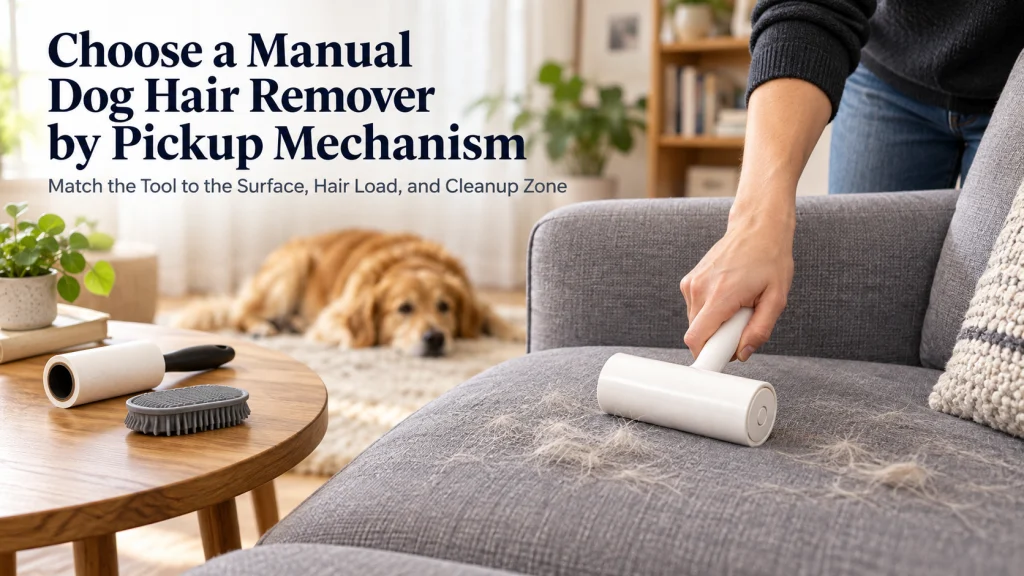
Choose the pickup mechanism before the brand name
A dog hair remover is easier to choose when you begin with the surface rather than a product ranking. A tool that feels efficient on a broad couch cushion can be awkward on a shirt, while a small sticky roller that is convenient near the door can become tedious on a large rug. If you are building a broader routine for keeping a home clean with dogs, separate targeted fur pickup from the rest of the cleaning job. That keeps the purchase tied to a real task instead of to the longest feature list.
The next question is how the hair is actually being collected: adhesive contact, directional fabric, rubber or silicone friction, or a more aggressive detailing edge. For the surface by surface workflow, the broader dog hair removal guide helps route clothing, upholstery, carpet, bedding, and other household areas. Here, the goal is narrower: choose the manual mechanism with enough pickup power for the hair load and no more abrasion than the surface can tolerate. That distinction matters because the fastest tool in one cleanup zone can be the wrong tool in another.
Use adhesive rollers when portability and targeted pickup matter most
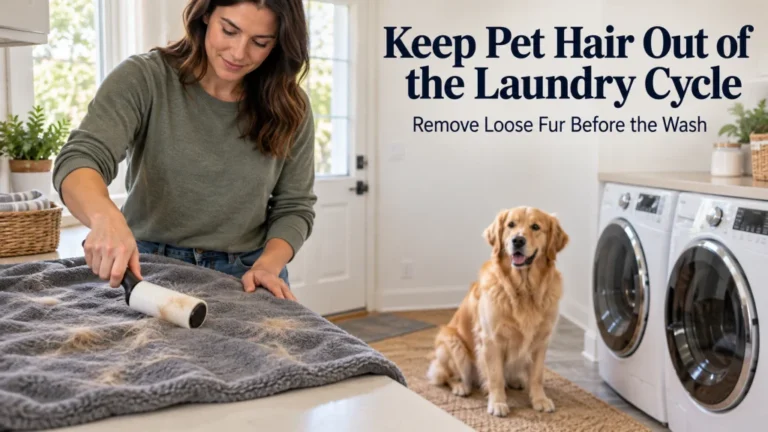
Adhesive rollers make sense when the job is small, visible, and easy to reach. Clothing, smooth bedding, seat cushions, and quick touchups are the kind of tasks where a light handheld tool can be more convenient than setting up a larger cleaning method. The adhesive surface captures loose hair instead of requiring repeated rubbing, so the motion can be relatively simple when the textile tolerates the adhesive. The tradeoff is that every loaded sheet reduces the remaining supply, which turns a cheap handle into an ongoing consumable system.
That refill burden matters more when a household is removing heavy fur from broad surfaces. A few small cleanup zones may barely use the roll, while a large sofa or carpeted stair can burn through sheets quickly because each pass has limited capacity. Adhesive also does not automatically mean safe for every textile, so check garment and upholstery care instructions before using it on delicate, loosely woven, coated, or easily distorted material. Choose this mechanism when convenience, compact storage, and controlled contact are worth more than avoiding refills.
Use reusable directional rollers when furniture cleanup repeats often
Reusable directional or chamber rollers remove the refill problem by collecting hair with a textured pickup surface and storing it for later disposal. They are most practical when the same couch, bed, or upholstered chair needs repeated surface cleanup and the tool can move freely across a broad flat area. Independent testing shows that some reusable rollers can work very well on upholstery while still feeling oversized or awkward around collars, seams, and other small clothing details. That is a useful reminder that reuse alone does not make a tool versatile.
Pay attention to the direction of travel, the amount of pressure needed, and how the chamber or cleaning base releases the collected hair. If a roller only works well when fabric is held taut, loose throws, soft knits, and wrinkled covers may be more frustrating than firm cushions. The storage burden is usually small, but the tool still needs a place where loose fur from emptying the chamber will not simply return to the cleaned surface. Choose this mechanism when repeated broad area cleanup makes disposable sheets feel wasteful or inconvenient.
Use rubber or silicone friction tools when the surface tolerates rubbing
Rubber and silicone tools work by creating friction that pulls loose or embedded hair together into clumps that can be picked up or vacuumed away. This can be useful on sturdy upholstery, carpet, mats, and some vehicle fabrics where hair resists a light roller pass. The mechanism is especially useful when the job is not just lifting visible strands from the top but gathering hair that has settled into the texture. The cost is more hand effort, because friction tools often need short repeated strokes rather than one light pass.
More friction is not automatically better. A tool that grips hair aggressively can also drag against loops, pile, knits, decorative weaves, or soft finishes, so pressure should stay modest and the first test should be in a hidden area. If the fabric starts to fuzz, pill, pull, shine, or change direction in a way that does not recover, stop rather than adding more force. Choose rubber or silicone when the surface is compatible and the hair load justifies the extra mechanical action.
Reserve rake and detailing tools for compatible carpet or upholstery
Rake style and narrow detailing tools are useful when hair is trapped where a broad roller cannot make good contact. Carpet edges, cushion seams, vehicle crevices, and dense sturdy upholstery can benefit from a small working edge that concentrates force in a controlled area. The important distinction is material: rubber edged detailing tools behave differently from rigid or metal toothed tools, even if both are sold for embedded pet hair. Independent testing has found that some aggressive toothed designs can snag knitted or fuzzy fabrics, so a dramatic pile of removed hair is not proof that the textile was treated gently.
Use these tools as specialists rather than as the default answer for every surface. A compatible carpet can tolerate a different action than a sweater, and a firm vehicle mat can tolerate a different action than a loose decorative couch fabric. Keep the working angle shallow, use light pressure first, and inspect the surface before increasing effort. If the tool depends on digging into the textile to work, the fabric itself should decide whether that approach is acceptable.
Compare working width, edge access, and grip to the cleanup zone
Mechanism comes first, but basic geometry decides whether the tool is pleasant to use. A wide head can cover a couch cushion quickly, yet the same width can miss the narrow strip beside a zipper or feel clumsy on a sleeve. A compact tool reaches seams and corners more easily, but it also multiplies the number of passes across a large flat surface. Grip matters in the same way because a tool that requires strong wrist pressure can turn a small cleanup advantage into unnecessary effort.
Before buying, picture the exact zone you clean most often and match the head shape to that zone. Broad flat surfaces reward coverage, narrow gaps reward edge access, and vertical upholstery rewards a grip that stays controlled without excessive force. If one tool is expected to do everything, its compromises become more visible, so two simple mechanisms can sometimes be more practical than one aggressive all purpose tool. The matrix below keeps those tradeoffs tied to the actual pickup task.
| Mechanism | Best fit | Main tradeoff | Surface caution |
|---|---|---|---|
| Adhesive roller | Clothing and small targeted areas | Refill use increases with hair load | Check delicate or coated fabrics first |
| Reusable directional roller | Broad upholstery and bedding | Can be awkward in small details | May work best on firm or taut fabric |
| Rubber or silicone friction tool | Sturdy upholstery, carpet, and mats | Requires more hand effort | Test for fuzzing, pulling, or texture change |
| Rake or detailing tool | Edges, seams, dense carpet, and crevices | Small working area or concentrated force | Avoid aggressive contact on delicate textiles |
Use the table to eliminate mismatched mechanisms before comparing handles, storage, or other secondary features. A tool that cannot reach the cleanup zone or asks the fabric to tolerate too much friction is already the wrong fit, even if it performs well somewhere else.
Count refills, tool cleaning, and storage as part of ownership cost
The shelf price does not describe the full burden of a manual pet hair removal tool. Disposable adhesive systems need replacement rolls, reusable rollers need regular emptying, and rubber or silicone tools may need hair pulled from grooves or rinsing when the manufacturer allows it. A detailing tool may have no consumable cost at all but still require more hand work for the same square area. The better value is the mechanism that fits the household’s repeat task without creating an annoying cleanup routine of its own.
Storage is easy to ignore until the tool is covered with fur or tacky adhesive and ends up collecting debris in a drawer. Look for a simple way to keep the working surface protected and the collected hair contained between uses. If a reusable tool needs a base, chamber, cover, or drying space, count that as part of its footprint rather than treating reuse as maintenance free. Comparing these ownership tasks makes a low purchase price less persuasive when the tool is poorly matched to the amount of hair being removed.
| Cost or burden | Adhesive system | Reusable roller | Rubber, silicone, or detailing tool |
|---|---|---|---|
| Consumables | Replacement sheets or rolls | Usually none | Usually none |
| Cleanup after use | Remove used sheet | Empty chamber or cleaning base | Pull or rinse hair away as instructions allow |
| Storage concern | Protect exposed adhesive | Keep pickup surface and chamber clean | Keep grooves or edges free of trapped debris |
| Best value pattern | Small occasional jobs | Repeated broad surface jobs | Embedded hair on compatible sturdy surfaces |
There is no universal cheapest choice because hair load and cleanup area change how quickly consumables or labor add up. Compare the cost that repeats, not just the number on the package.
Move to a vacuum when manual cleanup keeps repeating across large areas
Manual tools are strongest when the cleanup zone is targeted. If the same session keeps expanding from the couch to rugs, stairs, bedding, and floor edges, the problem has shifted from spot removal to whole area collection. At that point, repeated hand passes can cost more effort than they save, especially when the manual tool only gathers hair into piles that still need to be picked up. A powered method can take over the broad collection work while a small manual tool remains useful for seams, clothing, or stubborn leftovers.
The switch is not about declaring a vacuum universally better. It is about matching scale to the task: use manual pickup where control and quick access matter, and consider a vacuum for dog hair when large carpeted or upholstered areas keep demanding repeat passes. Households with mostly small targeted cleanup zones may never need that handoff, while homes with heavy shedding across several rooms can reach it quickly. The table below gives a simple way to make that call without turning the choice into a product ranking.
| Cleanup pattern | Manual tool still makes sense | Vacuum becomes more practical |
|---|---|---|
| Clothing and quick touchups | Yes, especially with a compact tool | Usually unnecessary for the immediate task |
| One couch or bed | Yes, if pickup stays efficient | Useful when hair is deeply embedded or cleanup expands |
| Several rugs, rooms, or carpeted stairs | Useful only for details and leftovers | Usually a better fit for broad collection |
| Seams and narrow crevices | Often useful for precise finishing | Depends on attachment access and suction path |
Use scale as the stopping rule. When the manual method starts repeating across surfaces instead of solving one defined zone, it is no longer the simplest tool for the job.
Final Thoughts: choose the least complicated mechanism that works safely
The right manual pet hair remover is the one that fits the surface, hair load, and cleanup area without demanding unnecessary force or constant replacement. Adhesive rollers earn their place for portable targeted pickup, while reusable rollers make more sense when broad upholstery needs the same cleanup repeatedly. Rubber or silicone tools are better reserved for compatible surfaces that benefit from friction, and detailing tools belong in narrow or embedded problem areas. None of those mechanisms is a universal winner because the surface and the scale of the job change the decision.
Before buying, check the working width, grip, edge access, cleanup method, storage burden, and any refill cost. Test unfamiliar friction tools where damage would not be visible, and stop if the material starts to pull, fuzz, snag, or change texture. Move to a larger cleaning method when manual work keeps spreading across the home instead of solving one defined zone. That approach keeps the decision practical and makes surface safety more important than a dramatic demonstration.
FAQs
🧥 What type of pet hair remover is easiest to use on clothing?
For small clothing areas, an adhesive roller or a compact reusable fabric tool is usually the simplest starting point. Check the garment care instructions first, especially for delicate knits, textured fabrics, or finishes that could be pulled or marked.
🛋️ Are reusable pet hair removers better for couches?
They can be a strong fit when broad upholstery needs repeated cleanup because they avoid disposable sheets. They are not automatically better around seams, loose covers, delicate fabrics, or deeply embedded hair, so match the pickup surface to the couch material and shape.
🧤 Do rubber pet hair tools work on every fabric?
No. Rubber and silicone create friction, which can be useful on sturdy compatible surfaces but can be too aggressive for some delicate or loosely woven textiles. Test a hidden area with light pressure before using the tool across a visible section.
🧶 Can a pet hair removal tool damage upholstery?
Yes, especially if the tool snags loops, distorts pile, or requires heavy rubbing. Read the upholstery care information, start with the least aggressive mechanism, and stop if the fabric changes appearance during a hidden area test.
🧹 When should I stop using a manual tool and use a vacuum?
Switch when the job keeps spreading across large rugs, several rooms, stairs, or broad upholstery and hand passes become repetitive. Keep the manual tool for clothing, seams, corners, and small leftovers where precise control still saves effort.
📦 Is a reusable pet hair remover always cheaper than a lint roller?
Not automatically. A reusable tool avoids refill sheets, but value still depends on how well it works on your main surface, how much effort it needs, and how easy it is to clean and store. For small occasional jobs, a simple adhesive roller can still be the more practical choice.
References and Sources
- Good Housekeeping pet hair removal tool testing: Supports the mechanism comparisons, surface differences, tool size tradeoffs, and cautions around aggressive tools on some fabrics.
- AKC dog hair removal guidance: Supports the practical use of rollers, rubber tools, detailing tools, and vacuums across clothing, furniture, carpet, and other household surfaces.
- La Z Boy fabric and leather care: Supports checking upholstery care codes and pretesting an inconspicuous area before cleaning or rubbing an unfamiliar fabric.