Dog hair removal gets easier when you match the method to how the hair is trapped instead of expecting one tool to handle every surface. Loose fur on hard flooring, embedded hair in carpet, hair woven into upholstery, and fur clinging to washable fabric each create a different cleanup job. Start with the least aggressive method that suits the surface, remove as much loose hair as practical before laundry, and move to powered pickup when area or frequency makes manual work inefficient. The useful system is the one that fits your floor mix, fabric care limits, cleaning routine, and willingness to maintain the tool.
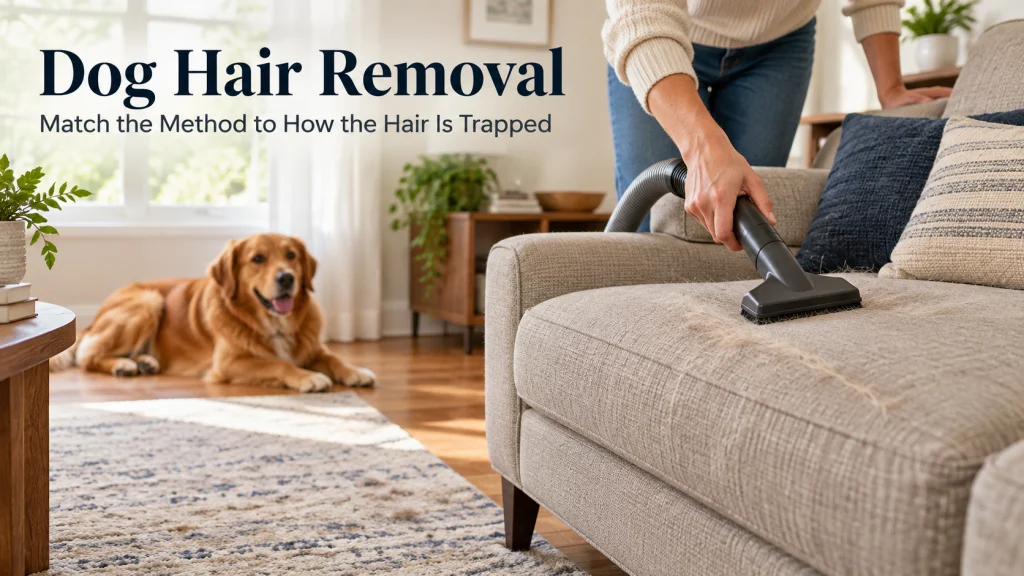
Read how the hair is trapped before choosing the tool
Dog hair removal usually goes wrong when the household starts with a favorite gadget instead of the surface in front of it. A strand resting on smooth flooring is a pickup problem, while hair pressed into carpet or woven upholstery first needs to be loosened without damaging the material. That distinction matters more than whether a package says it is made for pets. If you are building a broader cleaning routine, the same surface first logic fits the home cleaning system for dogs before you choose a tool for one mess.
I would begin by asking three things: is the hair loose or embedded, is the surface hard or fibrous, and how much area needs attention. A small amount on a chair cushion may justify a manual pass, while several carpeted rooms can make powered pickup far more practical. Fabric construction also changes the decision because a method that works on a sturdy low pile rug may pull, scratch, or distort a more delicate textile. That is why no scraper, rake, roller, rubber edge, or vacuum attachment should be treated as universally safe.
Loose versus embedded hair decision: If an ordinary dry pickup pass lifts the hair, treat it as loose. If strands remain caught in carpet pile, upholstery weave, or textile fibers, treat them as embedded and release them gently before another pickup pass. Loose hair needs collection; embedded hair needs safe release first. On delicate materials, surface care guidance overrides extra friction.
Loose hair on hard surfaces and low pile rugs can be gathered before it embeds
Loose fur on hard flooring is usually easiest to manage before foot traffic pushes it toward edges, mats, or nearby fabric. A vacuum, dry pickup tool, or reusable manual collector can work if it gathers the hair without scattering it into another part of the room. On a low pile rug, start with ordinary pickup and look at what remains before adding friction. If most of the visible fur disappears in the first pass, there is little reason to reach for a more aggressive tool.
Carpet and rugs need loosening and pickup matched to pile and fiber
Carpet changes the job because hair can settle below the visible surface and resist a normal vacuum pass. If repeated vacuuming leaves obvious strands behind, gentle loosening may help bring that hair into a position where it can be picked up. The important limit is the carpet itself: pile height, loop construction, fiber, edge binding, and manufacturer care instructions all matter. Test any friction based tool in an inconspicuous area and stop if it snags, pulls fibers, or changes the texture.
Couches and upholstered furniture change the attachment and friction limits
Upholstery adds seams, piping, cushion gaps, and fabric direction, so a floor method cannot simply be copied onto a couch. Loose fur may lift with a vacuum upholstery attachment or a gentle reusable collector, while hair packed into seams may need a smaller detailing approach. Before using any friction tool, check the furniture care information and test a hidden spot. Delicate weaves, velvet like surfaces, leather, and loosely woven covers can respond very differently to rubbing or scraping.
| Surface | How the hair is trapped | Start with | When the job changes |
|---|---|---|---|
| Hard flooring | Loose on the surface or gathered at edges | Dry pickup, manual collection, or vacuuming | Use powered floor pickup when area or frequency grows |
| Carpet and rugs | Loose on top or embedded in pile | Vacuum first, then gently loosen what remains | Check pile, fiber, and snag risk |
| Couch and upholstery | Loose on panels or packed into seams | Upholstery attachment or gentle manual collection | Detail only where broad pickup leaves hair |
| Clothes | Clinging to fabric or caught in the weave | Dry fabric safe removal | Move to laundry after reducing loose hair |
| Blankets and bedding | Heavy buildup or hair held in fibers | Shake, vacuum, or use a fabric safe manual method | Move to laundry after dry pre removal |
The practical rule is simple: start with the lowest effort method that removes the hair without stressing the surface. If that first pass works, stop there. If it does not, change the mechanism rather than simply pushing harder. That keeps dog hair cleanup focused on the material in front of you instead of turning it into a search for one universal remover.
Move washable textiles into one laundry workflow
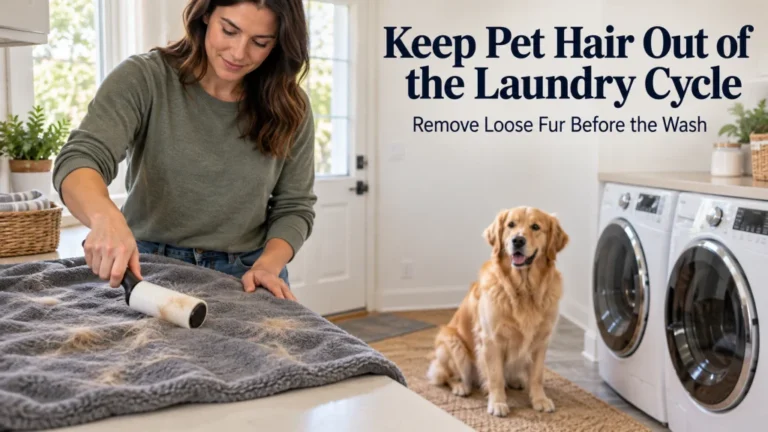
Clothes, blankets, removable covers, and bedding share one important rule: remove as much loose dog hair as practical before the fabric gets wet. Once hair and water meet, the fur can clump, stay on the fabric, collect around the washer, or move to another item in the load. That makes laundry a poor first line of attack for heavily coated textiles. The dedicated pet hair laundry workflow goes deeper into load preparation and transfer control when clothing and bedding are the main problem.
Start dry with shaking, vacuuming, or a fabric appropriate manual remover, then check the care label before using the washer or dryer. If the textile and appliance instructions allow it, an air only or no heat dryer step can help release additional loose hair before washing, but it should not override garment or machine guidance. Clean the dryer lint filter as required by the appliance instructions and inspect the washer after a very hairy load. The point is to keep the washing machine from becoming the place where the household expects all remaining fur to disappear.
Clothes, blankets, and bedding share dry pre removal before washing
Clothing often needs a lighter touch than a dog blanket because surface finish and fabric construction vary widely. A reusable garment brush, lint style collector, or gentle vacuum method may work, but the care label still sets the boundary. Blankets and bedding can hold much more hair, especially where the dog sleeps, so removing the heavy layer before the load protects the rest of the wash from unnecessary transfer. Do not overload the machine just to clear a pile of hairy textiles in one pass.
Washer buildup is appliance maintenance, not another textile surface problem
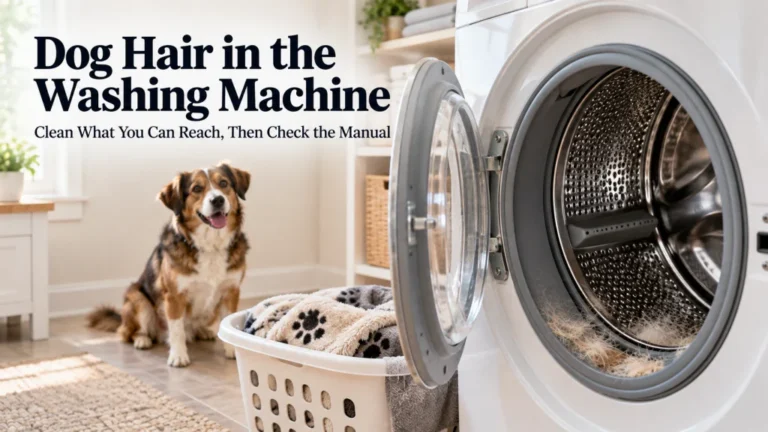
Hair left inside the washing machine is no longer a clothing problem. Consumer Reports notes that wet pet hair can form clumps that stick to fabrics and washer surfaces and can contribute to drain problems, which is why reducing the hair before washing matters. If you repeatedly see fur in the drum, gasket, filter area, or on the next load, move to the washing machine hair cleanup process rather than repeating the same textile routine. Appliance specific maintenance should follow the washer manual because access points and cleaning procedures vary by model.
| Textile or location | Before water | After the load |
|---|---|---|
| Clothes | Remove visible loose fur with a fabric safe method | Check for transfer before mixing with clean clothing |
| Blankets and bedding | Shake, vacuum, or collect heavy surface hair first | Inspect lint collection and the washer interior |
| Removable upholstery covers | Follow the furniture and cover care instructions | Refit only after the cover is clean and fully ready for use |
| Washer interior | Keep excess hair out of the load | Use model specific maintenance guidance if buildup remains |
This dry before wet sequence is useful because it reduces the amount of hair the appliance must handle instead of trying to make the washer solve a surface problem. It also keeps clothing, bedding, and machine maintenance from becoming one muddled job. Once the hair enters the appliance, the decision changes from textile cleaning to equipment care. Treating those as separate steps makes the whole routine easier to repeat.
Use manual tools for targeted cleanup zones
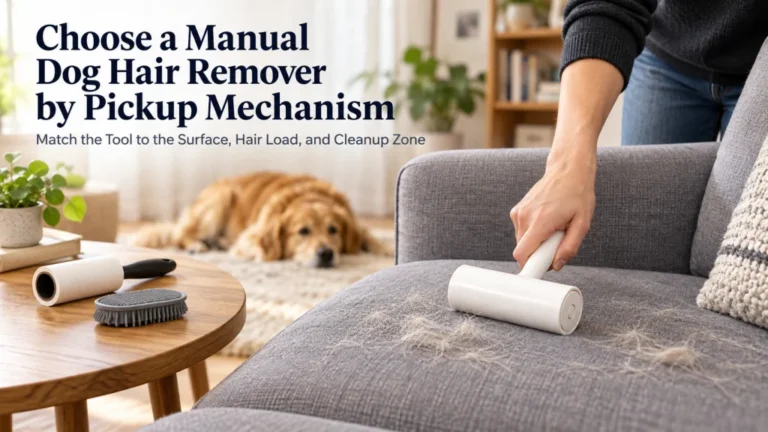
Manual tools make the most sense when the cleanup area is small, easy to reach, or not worth setting up a vacuum for. Adhesive sheets can be convenient for quick clothing touchups, reusable rollers reduce disposable waste, and rubber or silicone surfaces can gather hair through friction. Small detailing shapes can reach seams and edges that broad tools miss. None of those mechanisms is automatically right for every carpet, couch, garment, or blanket.
Choose by the surface and by what happens to the hair after the tool lifts it. Some tools collect fur into a chamber, some gather it into a pile that still needs pickup, and some depend on replaceable adhesive material. That creates different storage, cleaning, and replacement burdens even when two tools appear to solve the same problem. The separate manual dog hair remover guide is the better place to compare those mechanisms when a reusable or disposable hand tool is the main decision.
Move to powered pickup when area or frequency changes the workload
Powered pickup becomes valuable when dog hair covers enough floor or furniture that manual removal turns into repetitive work. The decision is not simply manual versus powered; it is whether you need deep session cleaning, frequent maintenance pickup, upholstery reach, or some combination of those jobs. Floor mix matters because hard floors, rugs, and carpet do not challenge a vacuum in the same way. Hair pickup also creates maintenance in the form of bins, filters, brush areas, attachments, and tangled fur.
Independent testing is useful here because a pet hair label does not prove how a vacuum will perform on your floors. RTINGS testing shows meaningful differences in hair pickup across surfaces and across conventional and robot formats, especially when hair becomes embedded in carpet. Use that kind of evidence to compare the job a machine is good at, then verify the exact model for attachments, maintenance, dimensions, replacement parts, and floor compatibility. A larger feature list does not help if the machine is awkward for the surfaces you actually clean.
Use a conventional vacuum when carpet, upholstery, and full session pickup dominate
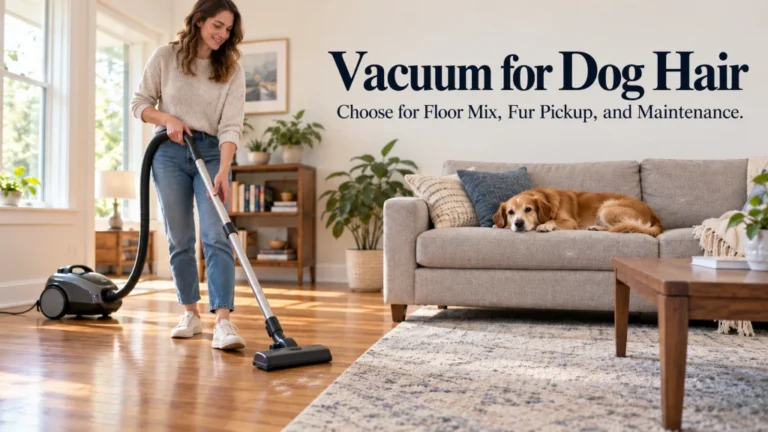
A conventional vacuum is usually the stronger system when you need deliberate passes over carpet, upholstery, stairs, edges, or several surface types in one cleaning session. The useful features are the ones that match those jobs, such as a suitable floor head, accessible upholstery tool, manageable hose or wand, and parts that can be cleaned when hair wraps or collects. Form factor also changes the burden because a large machine may offer reach or capacity while being less convenient to bring out for a small mess. The vacuum selection guide for dog hair handles that decision in more detail.
Use a robot vacuum when repeated autonomous floor pickup is the primary job
A robot vacuum solves a different problem: repeated floor maintenance with less hands on time. It can be useful when loose hair returns quickly on accessible floors and the household benefits from frequent pickup between deeper cleaning sessions. It is less suited to upholstery, stairs, and detailed manual work, and embedded carpet hair can still expose performance differences between models. The separate robot vacuum guide for dog hair is the right route when autonomy is the main reason for buying.
| Cleanup system | Best fit | Main tradeoff to check |
|---|---|---|
| Manual remover | Small targeted zones and quick touchups | Surface safety, hand effort, and consumables |
| Laundry workflow | Washable clothing, blankets, and removable covers | Dry hair removal and appliance maintenance |
| Conventional vacuum | Carpet, upholstery, stairs, and full cleaning sessions | Storage, setup, brush cleaning, and attachment fit |
| Robot vacuum | Repeated accessible floor pickup | Navigation, floor obstacles, maintenance, and carpet limits |
| System | Recurring maintenance burden | What makes the burden grow |
|---|---|---|
| Manual disposable remover | Replace adhesive material and manage waste | Large surfaces or frequent cleanup |
| Reusable manual remover | Clear hair and clean the working surface | Dense hair, seams, and repeated detailing |
| Laundry workflow | Pre remove hair, manage lint, and inspect the appliance | Heavy hair loads entering the washer |
| Conventional vacuum | Empty the bin or bag, maintain filters, and clear brush areas | Frequent carpet use, small capacity, or awkward storage |
| Robot vacuum | Empty the bin or dock, clear moving parts, and clean sensors | Heavy shedding, clutter, thresholds, and frequent runs |
The maintenance burden matters because a system only saves work when its upkeep fits the household routine. A robot reduces floor pickup but still needs regular checks, while a manual tool can become tiring over large areas. A conventional vacuum adds storage and upkeep in exchange for broader reach. Compare the cleanup labor removed with the maintenance labor added.
Reduce new loose hair without turning home cleanup into grooming
Household cleanup starts after hair has left the coat, so it should not absorb the entire topic of shedding control. If loose fur is appearing faster than the home routine can reasonably handle, coat care may reduce the amount that reaches floors and furniture. The exact brushing approach depends on coat type, condition, skin comfort, and the tool being used. That belongs in the dog shedding and coat care guide, where the decision can stay focused on the dog instead of the floor.
Keep the boundary clear because more grooming is not always the answer to a cleaning problem. A normal shedding dog can still require frequent home pickup, and a strong cleaning routine does not explain sudden coat changes or skin problems. If shedding changes sharply or appears with bald areas, skin irritation, or other health concerns, home cleaning should not be used as a diagnosis. The practical move is to manage the loose hair you can see while getting appropriate veterinary guidance for a health change.
Final Thoughts: one dog hair system should cover surfaces until the job truly changes
A workable dog hair removal routine starts by reading the surface and the way the hair is trapped. Loose floor hair, embedded carpet fur, upholstery buildup, washable textiles, and appliance buildup are related problems, but they do not need the same method. Start gently, separate loosening from pickup when necessary, and keep excess fur out of wet laundry whenever practical. Move to powered equipment when area and frequency justify the setup and maintenance.
A good system does not need a cabinet full of specialized removers. Keep tools that solve distinct jobs, fit the surface, and avoid duplicates that add storage or upkeep. When the job changes to coat shedding, appliance service, or a health concern, use the appropriate guidance instead of stretching one cleaning method too far. That keeps the routine practical and repeatable.
Explore the dog hair cleanup jobs that need their own workflow
The whole home method should stay broad until the task changes enough to need a different decision process. Laundry handling, washer buildup, manual remover selection, conventional vacuum selection, and robot vacuum selection each create their own maintenance or compatibility questions. Use the table below when one of those jobs has become the bottleneck in your routine. The links stay focused on that next decision instead of repeating the same surface advice.
You do not need to read every route before cleaning one room. Choose the row that matches the problem you are actually trying to solve, then return to the broader system when several surfaces need to work together. This keeps the cleanup plan simple while giving deeper guidance only where equipment or appliance care changes the answer. Each route has a different job, so the broader article does not need to repeat those instructions.
| Topic | What you’ll find |
|---|---|
| Pet hair in laundry | A fabric first workflow for reducing transfer and preparing clothes, blankets, and bedding before washing. |
| Dog hair in the washing machine | Owner level checks for hair buildup in the appliance and when to follow model specific maintenance guidance. |
| Dog hair remover tools | How reusable, disposable, rubber, silicone, and detailing mechanisms differ by surface and upkeep. |
| Vacuum for dog hair | How to compare floor type, upholstery needs, attachments, storage, and maintenance for full cleaning sessions. |
| Robot vacuum for dog hair | How to decide whether repeated autonomous floor pickup fits the home, floor mix, obstacles, and maintenance load. |
Keep the broad system as the starting point and use a deeper route only when the reader job truly changes. That gives each workflow a clear purpose without multiplying surface specific rules. The next step should solve the specific surface, appliance, or workload constraint that sent you there. Return to the whole home system when the cleanup jobs need to be coordinated again.
FAQs
Most dog hair questions become easier once you identify whether the problem is a surface, textile, appliance, or workload issue. The answers below keep that distinction intact so a quick cleanup question does not turn into a universal tool recommendation. Surface care instructions and exact appliance manuals still take priority when they set a stricter limit. Use these answers as routing help, then verify the material or machine in front of you.
A second useful check is whether the current method actually fails or simply requires normal maintenance. Hair on one chair may need a small manual tool, while recurring fur across several rooms can justify a powered system. Laundry needs dry removal before washing, and washer buildup needs appliance care rather than another garment trick. Those boundaries keep the routine efficient and prevent unnecessary purchases.
🐕 What is the easiest way to remove dog hair from a couch?
Start with a fabric safe vacuum attachment or gentle reusable collector, then inspect seams and corners for hair that remains. Test any friction tool on a hidden area first because upholstery weaves and finishes respond differently.
🧹 Should I loosen dog hair from carpet before vacuuming?
Only if normal vacuuming leaves clearly embedded hair behind. Use a carpet appropriate method with light pressure, then vacuum again, and stop if the tool snags or disturbs the pile.
👕 Why is dog hair still on clothes after washing?
Water can make pet hair clump and stay with the fabric, so heavily coated items should have as much loose fur removed as practical before washing. Also check load size, the garment care label, and the washer instructions instead of adding an unverified cleaner.
🧺 Can dog hair damage a washing machine?
Large amounts of wet pet hair can collect in the washer and contribute to drainage problems. Reduce the hair before washing and follow the exact machine manual for filter, drum, gasket, or self clean maintenance.
🛋️ Are rubber or silicone pet hair removers safe for every fabric?
No. Friction that gathers hair on one sturdy fabric can mark, pull, or distort another, so check the care guidance and test a hidden area before using the tool broadly.
🔌 Is a regular vacuum or robot vacuum better for dog hair?
A conventional vacuum is usually the more flexible choice for carpet, upholstery, stairs, and deliberate deep cleaning. A robot makes more sense when repeated autonomous floor pickup is the main job and the home layout is suitable for it.
🐾 How can I keep dog hair from taking over the house?
Target the highest hair zones, pick up loose fur before it embeds, and remove excess hair from washable textiles before laundry. If coat shedding itself is the main issue, move that decision to coat care rather than trying to solve it only with house cleaning.
References and Sources
These sources support the article’s surface, laundry, and powered pickup distinctions. They are included because those claims depend on current cleaning guidance or independent performance evidence rather than on a generic product label. No source below is used to justify a specific product recommendation. The practical advice in the article stays at the household system level.
For exact furniture, textile, washer, dryer, or vacuum care, the relevant manufacturer instructions still control. Independent testing can show that performance varies by surface and machine format, but it does not make one model right for every home. Use source evidence to narrow the decision, then verify the exact surface or equipment you own. That keeps the recommendation tied to the real setup.
- American Kennel Club dog hair removal guidance: Supports the surface based distinction across carpet, furniture, clothing, and bedding, including the need to loosen stubborn hair before pickup.
- Consumer Reports washer guidance for pet hair: Supports removing as much pet hair as practical before washing and explains why wet hair buildup can create appliance problems.
- RTINGS pet hair vacuum testing: Supports comparing conventional vacuums by surface performance, hair pickup, attachments, and maintenance rather than relying on pet marketing alone.
- RTINGS robot vacuum pet hair testing: Supports the distinction between repeated autonomous floor pickup and the more difficult job of removing embedded hair from carpet.