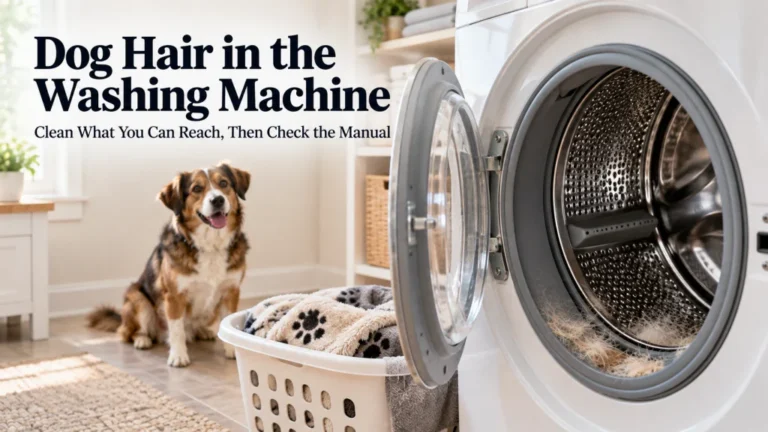
Pet hair in laundry is easier to control when clothes, blankets, towels, and washable bedding are treated as one system instead of separate cleanup problems. Remove the heaviest loose fur while fabrics are dry, check each care label before using the dryer or washer, leave enough room for items to move, and clear collected fur from the lint system afterward. The washer should clean fabric, not serve as the first line of pet hair removal. When hair is building up inside the appliance itself, the job has shifted from textile cleanup to washer maintenance.
Start with the fur while it is still dry
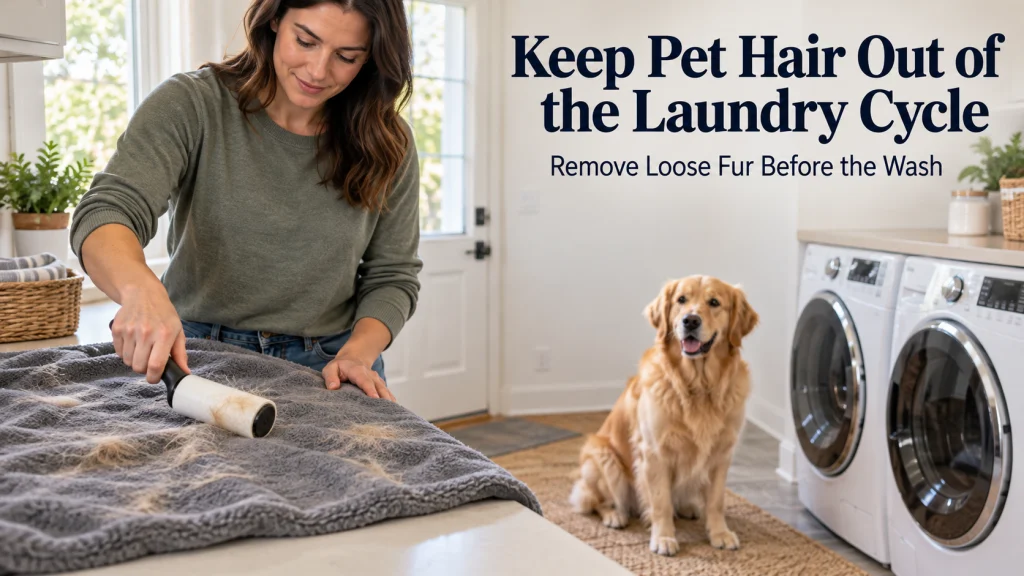
The most stubborn pet hair in laundry often begins as loose dry fur that goes straight into the washer with the fabric. I would remove the biggest visible layer before adding water, especially when pet hair on clothes can be lifted with a shake, roller, brush, glove, or vacuum. That keeps the washer focused on soil and normal laundry residue instead of asking it to collect a heavy coat of loose fur. It also creates one repeatable starting point for shirts, throws, towels, and bedding rather than a different routine for every fabric item.
This fits the broader goal of keeping a home clean with dogs: control the mess at the point where it is easiest to handle. For the larger surface by surface strategy, dog hair removal around the home explains how the method changes with furniture, floors, fabric, and other surfaces. In the laundry room, the dividing line is simpler because loose fur is easiest to control before it is soaked into a wash load. Once the heavy surface layer is gone, normal fabric care can take over.
Dry before wet decision: If fur is loose and visible on dry fabric, remove it before washing. If the item is already clean apart from surface hair, stop after dry removal instead of washing it again. If the item needs laundering, check the care label and continue with an appropriate load. If hair is collecting inside the machine, switch from textile cleanup to appliance maintenance.
Treat clothes, blankets, and washable bedding as one laundry system
A fleece throw, a cotton shirt, and a washable dog blanket may feel like three different cleanup jobs, but they pass through the same washer, dryer, baskets, and folding area. That shared route matters because loose hair can move from one item to another or remain in equipment after a very hairy load. The practical question is not whether the item belongs to the dog or a person. The practical question is how much loose fur is present, what the care label allows, and whether the load gives the fabric enough room to move.
Sorting still has a place, especially when one blanket is carrying far more fur than ordinary clothing, but sorting does not replace dry removal. A heavily coated item should lose as much loose hair as practical before it joins any load. Lightly affected clothing may need only a quick pass with a roller or brush, while a blanket may need shaking and vacuuming first. Using the same decision logic across washable textiles keeps the routine simple without pretending that every fabric should receive the same cycle or drying method.
| Where the hair is | Main job | What to check next |
|---|---|---|
| Loose on dry fabric | Remove as much as practical before washing | Fabric surface and care label |
| Still on fabric after washing | Review load size, drying permission, and dry removal | Care label and dryer instructions |
| Collected in the dryer | Clear the lint screen or trap as directed | Dryer manual and visible lint buildup |
| Building up in the washer | Switch to appliance cleanup | Washer manual and machine specific maintenance points |
The table is a responsibility map, not a promise that one step removes every strand. If fur remains after a normal load, identify whether the source is the fabric, the load setup, the dryer collection point, or the washer itself. That keeps each fix tied to the place where the hair is actually accumulating. It also avoids treating every leftover hair as a reason to repeat the wash.
Shake, roll, brush, or vacuum heavy loose hair before washing
Start with the least complicated dry method that works on the fabric in front of you. Shaking an item outdoors can release hair that is barely attached, while a roller, soft brush, rubber glove, or vacuum may work better when fur is clinging to the surface. The goal is not to make the item perfectly hair free before washing. The goal is to keep an obvious layer of loose fur from entering the machine when it can be removed more easily while dry.
Fabric construction should change how aggressive you are. Smooth, sturdy material can tolerate a different touch than a loose knit, delicate trim, or surface that snags easily, so inspect the item rather than treating every blanket like a floor mat. Stop if the tool is pulling threads, roughening the surface, or distorting the fabric. A few extra passes are not worth damaging an item simply to chase the last visible hairs before the wash.
- Shake sturdy items outdoors when loose fur releases easily.
- Use a roller or gentle brush for localized hair on clothing.
- Vacuum broad, sturdy surfaces when the fabric and attachment are suitable.
- Check seams, folds, cuffs, and blanket edges where loose fur can collect.
- Move on to washing once the heavy loose layer is gone.
This dry step is especially useful when pet hair on blankets is concentrated where the dog usually rests. It also helps separate a surface problem from a laundry problem before more work is added. If a gentle dry method clears the visible fur, there is no benefit in escalating to a stronger washer setting just for hair removal. Move to the wash only when the textile itself needs laundering.
Use an air only dryer step only when the fabric instructions allow it
A dryer can loosen some hair from already dry fabric and move that hair toward the lint screen, but this is a conditional step rather than a universal rule. Check the textile care label first and use the appliance only in a way the dryer manual supports. If the item should not be tumble dried, skip this step and stay with manual dry removal. The purpose is to use tumbling as a hair release step when permitted, not to override fabric care in pursuit of cleaner looking laundry.
When an air only setting is allowed, keep the objective narrow: loosen dry fur before the wash, then clear the collected hair from the lint system. Do not add heat simply because more seems stronger, because the correct drying method depends on the textile. Bulky bedding, delicate material, coated fabric, and items with special construction may carry different restrictions. The care label remains the controlling instruction even when a general pet hair technique works well on ordinary washable clothing.
Care label checkpoint: If the label does not allow tumble drying, do not use a dryer as the prewash hair removal step. Use a dry manual method instead. Check the fabric before loading it rather than assuming every washable item can also be tumbled. The dryer is optional, while the care instructions are not.
This checkpoint keeps a useful tactic from becoming a fabric care mistake. The dry stage can still be completed with a roller, brush, glove, vacuum, or simple shaking when tumble drying is not allowed. That means the workflow does not depend on a dryer to work. The fabric instructions decide which dry method is appropriate.
Keep heavily haired items from crowding the washer
A stuffed drum gives clothing and blankets less room to move through the wash process. When a load contains bulky or heavily haired textiles, cramming in one more towel can work against the basic mechanics of washing. I would reduce the load before changing settings, because load size is a visible household variable the reader can actually control. The exact amount that fits depends on the washer, the fabric bulk, and the appliance instructions rather than on a single rule for pet owners.
This is also where separating one very hairy item can make sense. A dog blanket that releases a large amount of fur may be better handled apart from lightly affected work clothes, provided the resulting load still follows the machine instructions. Separation is about controlling transfer and giving fabric room, not about declaring all dog items incompatible with household laundry. If ordinary clothes repeatedly leave the dryer with new hair, look at the heaviest source items and the load setup before assuming the washer needs a stronger cycle.
| Load condition | Better first adjustment | Why |
|---|---|---|
| One blanket has a thick loose layer of fur | Remove fur dry before loading | Keeps the largest hair source out of the washer |
| Bulky textiles fill most of the drum | Reduce the load | Gives items more room to move |
| Light clothing follows a heavily haired load | Check the washer and dryer collection areas | Helps catch transfer from the previous load |
The first adjustment should match the visible problem rather than add complexity. Too much bulk calls for a smaller load, while fur left by a previous load points toward machine cleanup. Those failures can look similar once hair lands on clean fabric, but they do not need the same fix. Separating them makes troubleshooting faster and reduces unnecessary repeat washing.
Wash according to the textile care label, not a pet hair temperature rule
There is no useful reason to invent one water temperature or wash cycle for every item that has dog hair on it. Clothing, towels, throws, covers, and bedding can have different fiber content, finishes, stitching, and care requirements. Once the heavy loose fur is removed, follow the item’s label for washing and drying. That is more reliable than treating pet hair as permission to override the instructions that protect the textile.
The same restraint applies to additives and cycle changes. A tip may sound harmless in isolation, but it can conflict with a fabric label, an appliance manual, or the material of the item being washed. I would solve the mechanical problem first by removing loose hair, leaving enough load space, and clearing the lint system. Only then should any optional laundry input be considered, and only when it is compatible with both the textile and the machine.
Simple rule: Pet hair changes the cleanup workflow, but it does not cancel the garment label or the appliance manual. Follow the textile instructions for the item in front of you. Follow the washer and dryer instructions for the equipment doing the work. Adjust the hair removal method around those limits instead of overriding them.
This is why the same pet hair routine can work across many households without prescribing the same settings to everyone. The stable part of the method is the sequence: dry removal, label check, reasonable load size, normal washing, appropriate drying, then equipment cleanup. The variable part is the exact cycle or drying permission for the item and machine. Keeping that distinction clear is more useful than pretending one setting is best for all washable fabrics.
Clean the dryer lint system and check where fur collects after heavy loads
The dryer can move a surprising amount of loose fur away from fabric, but that hair has to go somewhere. Check the lint screen or trap as directed by the dryer manufacturer, especially after a load that began with a lot of pet hair. Removing the collected lint keeps the next load from starting with an already loaded screen. It also gives you a simple feedback point: a large amount of fur in the lint system confirms that the dry stage is doing collection work rather than making the hair disappear.
Keep owner maintenance within the parts the manual tells you to access. Wiping a reachable surface or clearing the lint screen is different from opening panels, probing a vent path, or improvising a repair. If airflow seems abnormal or buildup is beyond routine user access, follow the appliance documentation or use appropriate service rather than pushing tools into hidden areas. Pet hair cleanup should not become an excuse to bypass appliance safety instructions.
- Clear the lint screen or trap according to the dryer instructions.
- Look for visible fur around the door area and other user accessible surfaces.
- Notice whether one heavy load leaves much more hair than ordinary loads.
- Stop at the maintenance boundary defined by the appliance manual.
| What you find after the load | Next step | Where the job belongs |
|---|---|---|
| Most loose fur is in the dryer lint screen or trap | Clear it as directed and continue the normal laundry routine | Dryer lint cleanup |
| Hair remains on otherwise clean fabric but the lint system is clear | Review dry removal, load size, and fabric handling | Textile workflow |
| Fur is visible in the washer drum, gasket, filter area, or another user maintenance point | Stop repeating the load and follow the washer’s cleaning instructions | Washer buildup cleanup |
This handoff keeps dryer lint cleanup and washer buildup from blurring into one generic machine problem. If the lint system is collecting fur normally, clear it and continue. If the washer itself is retaining hair, repeating the same fabric treatment is unlikely to solve the source. At that point, move to the machine specific maintenance path.
Handle washer buildup as a separate appliance cleanup job
Hair on a shirt and hair packed around a washer gasket are not the same problem. Once fur is collecting in the drum, gasket, filter area, or another maintenance point named by the appliance maker, the task has moved beyond fabric preparation. The washer manual should control what the owner can open, wipe, remove, or clean. Rewashing the same clothes will not solve a machine that is retaining fur and releasing some of it into later loads.
For that job, use the separate guide to clean dog hair from a washing machine without duplicating the appliance procedure here. The distinction matters because washer designs vary, and a filter or access point on one machine may not exist or may not be owner serviceable on another. This article owns the textile route up to the point where machine buildup becomes the primary problem. That boundary keeps the laundry advice practical without guessing at model specific maintenance.
Stop point: If the needed cleanup requires disassembly or access beyond routine owner maintenance in the manual, do not improvise a repair. Stop at the parts the manufacturer identifies for routine user care. Hidden buildup can require a different maintenance path than visible fur on a gasket or drum. The safe next step comes from the appliance documentation or appropriate service, not from forcing access.
This separate handoff explains why clean laundry can pick up hair even when the fabric steps were reasonable. It also prevents a machine problem from being misread as a need for a stronger cycle. Once routine washer buildup is handled according to the manual, the textile workflow can be judged on its own. If the problem sits beyond owner maintenance, stop there rather than improvising access.
Use a manual remover when dry surface cleanup is the fastest answer
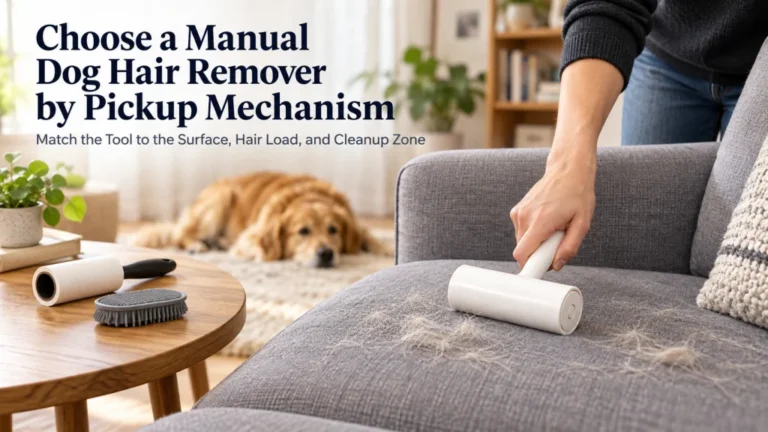
Not every hairy shirt needs another trip through the laundry room. If the fabric is otherwise clean and the problem is a visible layer of dry fur, direct surface removal may be faster and gentler than washing the item again. A roller, brush, glove, or suitable vacuum attachment can solve a localized problem without adding another wash and dry cycle. This is especially useful for an outfit that picked up hair after laundering or a blanket that needs a quick reset before its next normal wash.
The tool choice should match the fabric and the amount of hair, not a promise that one device works on every textile. For a fuller look at those choices, see the guide to choosing a dog hair remover for household surfaces. In the laundry workflow, the decision is simpler: if dry removal solves the visible problem, stop there. Washing should be used because the textile needs washing, not because the machine is being asked to act as a universal fur remover.
| What you see | First move | When to continue to laundry |
|---|---|---|
| A few hairs on otherwise clean clothing | Use gentle dry surface removal | Only if the item also needs washing |
| A thick layer on a washable blanket | Shake, brush, roll, or vacuum first | After the heavy loose layer is reduced |
| Hair appearing after several clean loads | Inspect machine collection points | Resume normal laundry after buildup is addressed |
Use the smallest step that matches the condition of the fabric. Dry surface cleanup is enough when the item is already clean, while laundering belongs to textiles that actually need washing. Appliance maintenance begins only when hair is accumulating in the machine. Keeping those jobs separate saves work and makes recurring transfer easier to trace.
Final Thoughts: Handle loose pet hair before the wash cycle
The strongest routine is a sequence of small checks rather than a special pet laundry setting. Start with the visible condition of the fabric, follow its care label, leave the load enough room to move, and clear the dryer lint system after hairy loads. Those steps work across clothing, blankets, towels, and washable bedding without pretending every textile needs identical treatment. The appliance instructions still control anything specific to the washer or dryer.
If hair keeps returning, trace where it is accumulating before changing the routine. Surface hair, an overloaded load, a full lint screen, and washer buildup are separate conditions with separate fixes. I would change only the step connected to the problem you can actually see. That keeps the workflow practical and prevents repeat washing from replacing basic troubleshooting.
FAQs
👕 Why is there still pet hair on clothes after washing?
Loose fur can remain attached to fabric or transfer from a heavily haired load or from buildup in the machines. Remove the heaviest hair while items are dry, avoid crowding the washer, and check the lint system and washer surfaces if hair keeps returning.
🧺 Should I wash dog blankets separately from my clothes?
Separate them when a blanket carries much more loose fur than the rest of the laundry or when its care instructions call for different handling. The important first step is still to remove heavy dry fur before washing rather than assuming separation alone will solve transfer.
🌬️ Can I put hairy clothes in the dryer before washing?
Yes, when the textile care label allows tumble drying and the dryer provides an appropriate air only setting. The goal is to loosen dry fur into the lint system before washing, so skip this step when the item should not be tumble dried.
🏷️ What wash temperature removes dog hair best?
There is no universal pet hair temperature that should override the textile care label. Remove loose fur first, then wash at the temperature and cycle the fabric instructions support.
🐕 How do I remove pet hair from laundry without buying a special product?
Start with methods you already have, such as shaking sturdy items outdoors, brushing or rolling dry fabric, or vacuuming a suitable surface. If the care label permits tumble drying, an air only dryer step can also loosen hair before the wash.
🧼 When does pet hair become a washing machine problem?
It becomes an appliance cleanup problem when fur is visibly collecting in the drum, gasket, filter area, or another maintenance point named in the washer manual. At that point, follow the machine specific cleaning guidance rather than relying on another wash cycle to clear it.
References and Sources
- American Kennel Club dog hair removal guide: Supports removing loose hair before washing and using an air only dryer step when appropriate.
- Maytag pet hair laundry guidance: Supports the dry, wash, and dry sequence, care label checks, reasonable load size, and lint screen cleanup.