Preparing for a new dog works best when the household removes decisions that will be hard to solve once the dog is already home. The priority is not buying the longest list of supplies, but making accessible spaces safer, agreeing on household rules, covering care gaps, collecting information that may be difficult to recreate later, and having only the gear needed for known functions. Some choices should stay provisional until you can see how the individual dog eats, rests, moves, settles, and uses the home. The result is a calmer handoff from selection into the first week without pulling detailed feeding, containment, travel, training, or medical decisions into one oversized checklist.
Prepare for the problems that are hardest to fix after arrival
Preparing for a new dog is less about filling a cart and more about removing friction before the dog walks through the door. A missing bowl is easy to solve, while unsafe access, conflicting rules, uncovered care, or missing handoff information can create immediate problems. I would settle access, responsibility, records, and continuity before shopping for extras. That keeps preparation aligned with the broader bringing home a new dog guidance.
The selected dog should also change the plan. A puppy, an adult foster dog, and a dog with a known home routine may need different supervision, information, and temporary boundaries. Decide what must be ready, what must be verified, and what can wait for observation. That distinction prevents preparation from becoming a shopping project built on guesses.
Start with the decisions that must be made before arrival
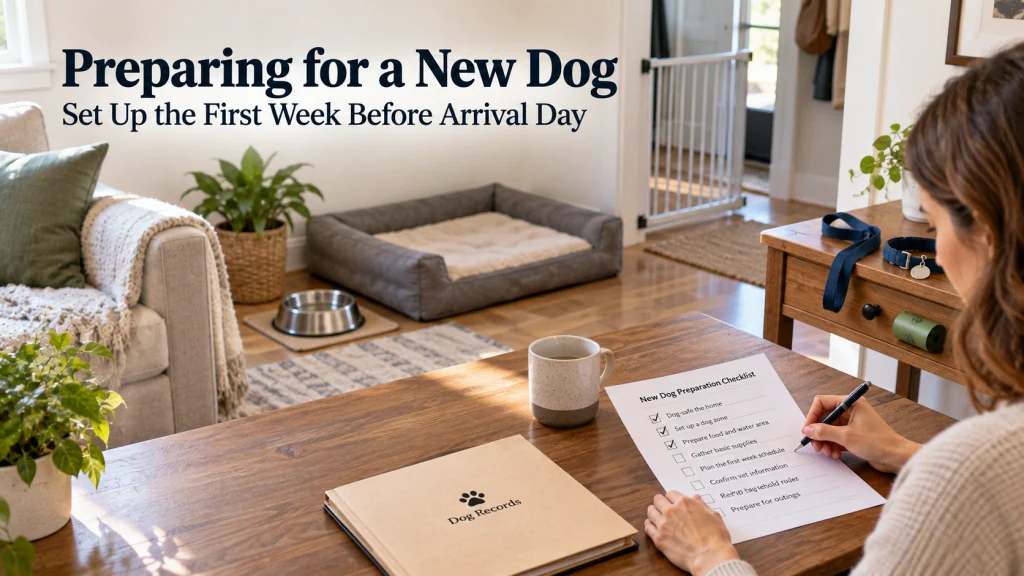
Begin with choices that affect the dog even if nothing new is purchased. Decide which rooms are accessible, where the dog can rest, who handles routine care, who covers gaps, and which rules everyone follows. Confirm which records and routine details must come from the breeder, shelter, rescue, or foster. Then put those decisions into one household worksheet so unfinished tasks are visible before the handoff.
| Household preparation task | Responsible person | Known constraint or missing information | Backup or source contact | Status |
|---|---|---|---|---|
| Accessible rooms, yard route, and resting area | Primary owner | Hazards or access limits | Person who can verify the gap | Ready / verify |
| Daily care and work coverage | Routine owner | Uncovered periods or conflicts | Backup caregiver | Ready / gap |
| Handoff information | Information owner | Missing records, food, routine, or history | Breeder, shelter, rescue, or foster contact | Complete / missing |
| Immediate supplies by function | Supply owner | Unknown fit, size, compatibility, or detail | Verification source | Ready now / verify later |
| Identification and records | Records owner | Missing paperwork or transfer steps | Source or service contact | Ready / missing |
| Pickup and trip home | Handoff owner | Vehicle, restraint, or transfer constraints | Backup person or source contact | Ready / verify |
| Dog dependent choices | Reassessment owner | What needs observation after arrival | Relevant guidance or professional contact | Wait |
Fill every row with a person, a known constraint, and a status instead of treating the worksheet as a generic checklist. A blank contact or unresolved gap should stay visible until someone owns the next action. For buying decisions, separate a function that must work immediately from fit or preference that still needs verification. The worksheet is complete when the household can see what is ready, what is missing, who owns it, and what is intentionally waiting.
Use a puppy specific checklist when the incoming dog is a puppy
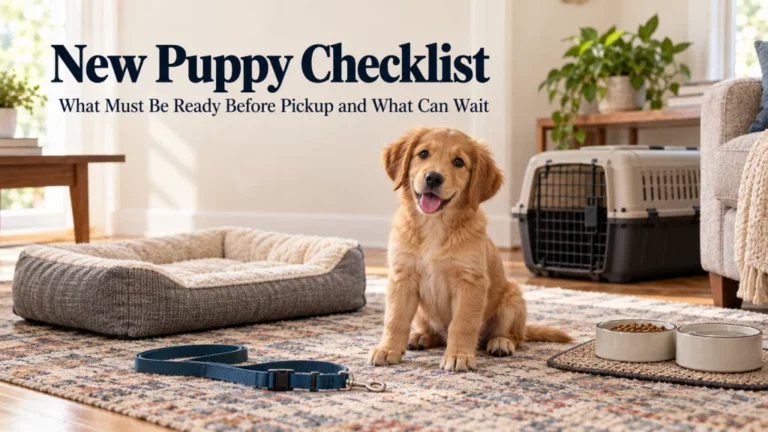
A puppy adds close supervision, chewing, house training logistics, rapid growth, and less predictable equipment fit. A generic adult dog list can therefore miss important preparation while encouraging unnecessary purchases elsewhere. The new puppy checklist is the better place to organize puppy specific needs without turning this page into a full puppy care plan. Here, identify which parts of your preparation change because the incoming dog is young.
Ask the source about current food, routine, records, and anything familiar that will come home with the puppy. Prepare accessible rooms for chewing and supervision, but avoid buying several sizes or elaborate setups before fit is known. Keep veterinary questions with the veterinarian rather than guessing from a checklist. The household can prepare the environment and information flow while leaving clinical decisions to the professional examining the puppy.
Buy supplies by function instead of by list length
The useful supply question is not how many items a new dog needs, but which functions must work on arrival. Water, current food, identification, leash control, cleanup, and a resting area are easier to justify than a long list of preference based extras. The new dog supplies guide handles the fuller buying decision. This page only needs to make sure an immediate function is not forgotten.
- Provide fresh water in a stable location the dog can reach.
- Have the current food information and enough continuity to avoid an unplanned switch.
- Prepare identification and a secure way to move the dog from the handoff point.
- Keep waste bags and appropriate household cleanup supplies easy to reach.
- Set aside a quiet resting area before adding optional comfort items.
Keep the first purchase pass narrow and based on known information. A dog arriving with familiar food or bedding may need less buying, while fast growth can make some early sizing choices temporary. If an item depends on exact fit, compatibility, or a product manual, verify it in the article that owns that decision. Preparation is successful when the household can meet immediate needs without buying around unknown preferences.
Dog proof the parts of the home the new dog can access
Dog proofing starts with the route the dog can actually reach. Walk through the entry, living area, rest space, bathroom route, yard access, and transitions from the dog’s height and likely movement path. Remove or secure accessible medications, chemicals, cords, sharp objects, small swallowable items, food waste, and unstable breakables. The detailed dog proofing guide can take over when you need a room by room check.
- Trace the dog’s route from entry to rest, water, and outdoor access.
- Move ingestible hazards and medications out of reach rather than relying on supervision alone.
- Secure trash, cords, breakable objects, and unstable items in accessible rooms.
- Check gates, doors, fence gaps, and latches before using an outdoor area.
Access control matters as much as removal. A room that is not ready does not have to be available immediately, and a yard should be checked for gates, gaps, trash, and reachable hazards before use. Do not assume a previous home history predicts what the dog will investigate in a new environment. Start with manageable access, then expand it from observation rather than optimism.
Agree on house rules before different people teach different expectations
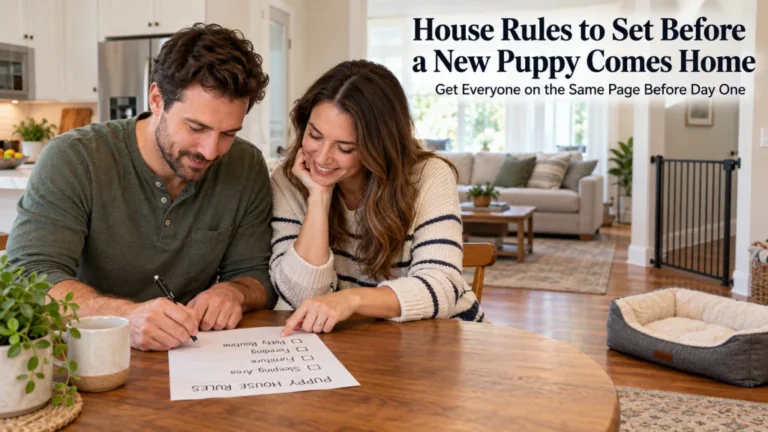
House rules are easier for a new dog when people agree before the dog has to interpret several answers. Decide where the dog may sleep, whether furniture access is allowed, which rooms stay restricted, where food is handled, and who responds to routine behavior. Keep the rules simple enough for every household member to follow consistently. For a young dog, the house rules for a new puppy guide goes deeper without asking the puppy to decode conflicting routines.
Consistency does not make every rule permanent. You can begin with narrower access while the dog is unfamiliar with the home and change a rule later with better information. Temporary rules still need to be clear to the humans enforcing them. If one person allows a behavior while another blocks it, the preparation problem belongs to the household before it belongs to the dog.
Close work coverage gaps before arrival
Plan work coverage around the incoming dog and the household’s real schedule, not a universal amount of leave. Identify the longest uncovered periods, who can handle necessary care, what backup exists if the primary person is delayed, and which routines may need temporary adjustment. The time off work for a new puppy guide handles the puppy specific version. An adult dog with a reliable foster routine may need a different plan from a young puppy requiring close supervision.
Do not promise that a certain amount of time at home will guarantee a smooth transition. Remove obvious care gaps and avoid forcing the dog into an independence plan the household has not considered. If the source reports a known difficulty with being alone, take that information to an appropriate qualified professional rather than inventing an advanced behavior program here. Coverage planning is household logistics, not diagnosis or treatment.
Confirm the information the breeder should hand over
After a puppy has been selected, the breeder conversation should shift from evaluation to information transfer. Ask about current food, routine, veterinary or registration records, identification, and whom to contact if something is missing. The questions to ask before picking up a puppy guide organizes that handoff without reopening the breeder selection process. The goal is continuity, not another shopping round.
Keep documented information separate from interpretation. A record can show what care was documented, while questions about what the puppy needs next belong with the veterinarian reviewing the record and dog. If current food, familiar bedding, routine notes, or other materials come home, record what each item is for rather than assuming it must remain permanent. A useful handoff leaves the household knowing what is known, what is missing, and what needs verification.
Plan pickup separately from breeder evaluation
Pickup is a logistics task after the dog has been selected. Confirm who is attending, what paperwork and items should transfer, how the dog will move from the handoff point, and who checks that nothing essential is left behind. The puppy pickup checklist is the better place for a detailed sequence. Here, treat pickup as an information and transport handoff rather than an improvised errand.
Vehicle restraint, carrier fit, and detailed travel setup belong with travel guidance because they depend on the dog, vehicle, and exact equipment. Before leaving, compare what you received with the list you expected and note anything still missing. Avoid changing food, equipment, and household rules simultaneously just because pickup feels like a clean break. Continuity is easier to manage when unnecessary changes wait.
Organize identification and records before arrival
Give incoming records one clear place before the dog arrives. Keep veterinary documents, adoption or breeder paperwork, identification details, source contacts, and routine notes together so they do not disappear across bags and inboxes. The dog identification and records guide owns the long term maintenance system. Here, make sure the handoff information has a destination.
Do not interpret medical records beyond what they document. A vaccine entry, medication note, previous test, or behavior observation may be useful context, but future care decisions belong with the appropriate professional. If a microchip or other identification system already exists, record the provider and transfer instructions for the responsible person. The household should be able to find the dog’s information quickly when a clinic, shelter, or source asks for it.
Finish the home, feeding, and travel decisions that cannot wait
Some preparation questions belong to other parts of dog care even though they appear before arrival. Detailed crate, pen, gate, bed, and home zone choices continue in the home setup guide, mealtime choices in the feeding guide, and restraint or vehicle fit in the dog travel guide. This page only needs to identify which of those decisions cannot wait for the specific handoff. Use the narrowest workable setup until the individual dog gives you better information.
| Preparation question | What to solve here | Where detailed guidance belongs |
|---|---|---|
| Where will the dog rest and what areas are accessible? | Choose a manageable starting area and remove obvious hazards. | Home setup and containment |
| What will the dog eat on arrival? | Confirm current food information and avoid an accidental abrupt change. | Feeding and mealtime decisions |
| How will the dog get home? | Confirm the trip exists and identify the dog and vehicle constraints. | Travel and transportation setup |
| What records and identification come with the dog? | Collect and organize what transfers at handoff. | Identification and record maintenance |
Route the detailed question as soon as preparation reaches one of these boundaries. Each system has its own fit, safety, maintenance, and compatibility questions that do not improve when compressed into a general checklist. The dog still gets what must be ready while complex choices stay with the guidance designed to handle them. That keeps preparation useful instead of turning it into abbreviated versions of several other topics.
Confirm the shelter or foster handoff before arrival
A shelter, rescue, or foster handoff is most useful when it separates known history from unknown history. Ask what records are available, what the dog currently eats, what routine has been observed, what medical or behavior information is documented, and which contact handles missing handoff details. The source may know a great deal, very little, or something between those extremes. Preserve what is known without inventing certainty.
Before arrival, write down which contact owns each kind of follow up instead of saving one general phone number. Keep the source contact for missing records or routine details, the veterinarian for clinical interpretation, and a household backup caregiver for coverage problems. If the organization offers post adoption support, record how that support is accessed and what questions it handles, because practices vary. Detailed adjustment after arrival belongs in the bringing home a rescue dog guide.
Collect available records, current routine, known history, and support contacts
Keep a short list of what you received and what remains unknown. Record current food, routine, sleep location, known handling preferences, medical paperwork, identification, and documented behavior observations. Beside each missing item, name the shelter, rescue, foster, or other source contact responsible for clarifying it. Also record any stated post adoption support path separately from emergency or veterinary care. This gives the household a practical start without turning observations into permanent labels.
Keep medical interpretation and unresolved health questions with the veterinarian
Transfer medical information accurately, but do not decide what a past record means for future treatment. If paperwork is incomplete, note the gap and give the available records to the veterinarian instead of filling blanks with assumptions. The same boundary applies to medication, vaccination, parasite prevention, medical nutrition, and other clinical decisions. Preparation organizes information, while the veterinarian interprets appropriate care for the individual dog.
Separate what must be ready now from what should wait until the dog is home
A strong preparation plan leaves some decisions unfinished on purpose. The household needs safe access, current information, basic supplies, responsibility coverage, and a workable handoff, but it may not know the dog’s preferred bed, long term containment layout, favorite toys, or best mealtime setup. Waiting is not a failure when the answer depends on observation. It can prevent replacing products or routines chosen before the dog could show what works.
| Timing | Examples | Decision rule |
|---|---|---|
| Must be ready | Safe accessible area, water, current food information, identification plan, handoff records, care coverage | Missing it would create an immediate gap or unsafe improvisation. |
| Dog dependent | Permanent bed choice, detailed containment layout, some toys, refined feeding setup | The dog or home must be observed before the choice is reliable. |
| Can wait | Duplicate gear, decorative items, convenience upgrades, speculative accessories | The dog can transition without it and no known constraint requires it. |
Review the table again after collecting source information because a known need can change timing. Put immediate safety, continuity, identification, access, and unavoidable transport in the must be ready bucket. Put fit, preference, behavior, and household use questions in the dog dependent bucket when a temporary solution works. Leave decorative, duplicate, convenience, and speculative purchases for later unless a real constraint moves them forward.
Hand the prepared household to the correct arrival guide
Preparation ends when the household has solved what it reasonably can before the dog arrives. After that, the next decisions depend on the kind of transition and what the dog shows in the new environment. A puppy household should continue with the bringing home a puppy guide, while an adopted adult or rescue transition may need rescue arrival guidance. Do not keep extending the preparation checklist into training, settling, introductions, or care routines that only become meaningful after arrival.
This handoff protects the household from locking in a permanent routine too early. The preparation plan should provide a safe starting structure, clear responsibilities, current information, and room to observe. Once the dog is home, use what the dog actually shows to refine the setup and route specialized questions appropriately. Preparation should make the next decision easier, not pretend there will be no next decision.
Final thoughts: prepare the decisions that cannot wait and postpone the ones that should
A well prepared home is not the one with the most dog products. It is the one where people know their responsibilities, accessible spaces have been checked, essential information has been collected, and obvious care gaps are covered. Keep the first setup simple enough to change when the individual dog gives you better information. That flexibility is part of preparation, not evidence that the plan was incomplete.
Before the handoff, review the worksheet for missing information, uncovered responsibilities, and choices that are deliberately postponed. Make sure each unresolved item has an owner or a contact who can answer it. Then stop shopping and make sure the household can carry out the plan it wrote down. The most useful preparation still works when the dog is no longer theoretical.
Continue with the preparation topic that matches your next decision
The next step depends on which part of preparation still needs work. A puppy checklist is different from a supply decision, home safety check, household rule, work coverage plan, breeder handoff, or pickup task. Use the matching guide instead of expanding one problem into the entire arrival process. That keeps each decision narrow enough to verify and act on.
| Topic | What you’ll find |
|---|---|
| New puppy checklist | Puppy specific preparation needs, supplies, and household tasks before arrival. |
| New dog supplies | How to separate necessary functions from optional or dog dependent purchases. |
| Dog proofing your home | A closer room and access check for hazards the incoming dog can reach. |
| House rules for a new puppy | How household members can set clear, consistent expectations before a puppy arrives. |
| Time off work for a new puppy | How to think through supervision and coverage around a real work schedule. |
| Questions before picking up a puppy | What information to collect from the breeder after the puppy has been selected. |
| Puppy pickup checklist | How to organize paperwork, items, people, and the handoff itself. |
Choose the guide that answers the unresolved decision in front of you, then update the household plan. If the question has moved into detailed home setup, feeding, travel, records, veterinary care, or behavior work, route it to that topic. Do not stretch preparation beyond its useful boundary just to keep every decision on one page. A narrower next step is easier to verify and easier for the household to follow.
FAQs
🐾 What should I do first when preparing for a new dog?
Start with access, household responsibilities, care coverage, and information that must transfer with the dog. Buy for known functions, then postpone choices that depend on fit, preference, or observation.
🏠 Do I need to dog proof the whole house before the dog arrives?
No. Start with the rooms, routes, yard areas, and transitions the dog will actually use, and block areas that are not ready. Expand access later as you learn how the dog moves through the home.
🛍️ Should I buy every item on a new dog supply list?
No. Cover immediate functions such as water, current food, identification, leash control, cleanup, and rest. Let the dog’s size, behavior, routine, and home use guide later purchases.
📋 What information should come with a dog from a shelter or foster home?
Ask for available medical records, current food and routine information, known history, documented behavior observations, identification details, and the correct support contact. Keep known facts separate from history the source does not know.
🐶 What should I ask a breeder after I have already chosen the puppy?
Focus on current food, routine, records, identification, paperwork, and anything that will come home with the puppy. Questions about future medical care should be reviewed with the veterinarian.
💼 How much time should I take off work for a new dog?
There is no single amount that fits every dog and household. Plan around age, known routine, supervision needs, ability to be alone, and uncovered periods, then arrange backup care where needed.
References and sources
- AAHA new dog checklist: Supports preparing the home, agreeing on household responsibilities, and building a support plan before a new dog arrives.
- AKC house rules guidance: Supports setting household expectations before a puppy arrives so different people are not teaching conflicting rules.
- Best Friends new pet guidance: Supports collecting available medical history and current food information and preparing the accessible home environment.
- SPCA of Texas adoption process: Shows why adopters should distinguish known medical and behavior information from history an organization does not know.