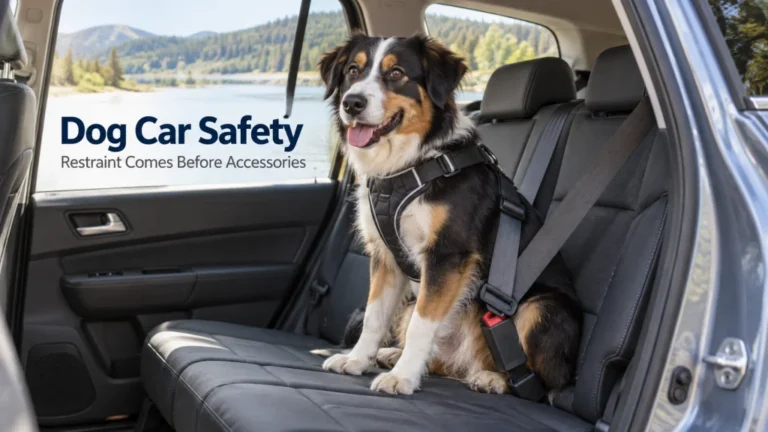
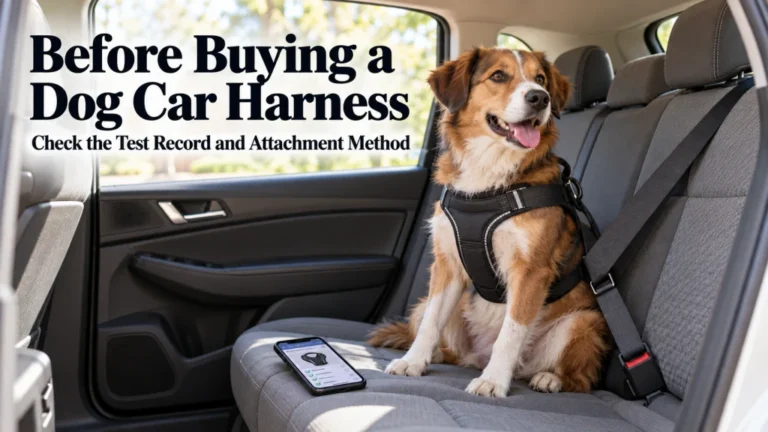
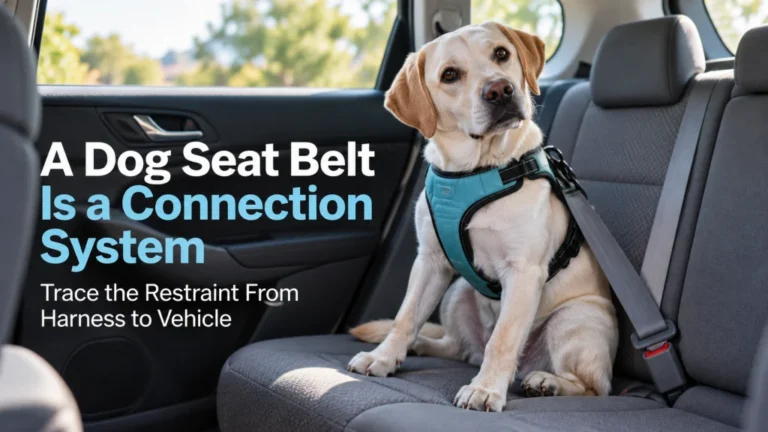
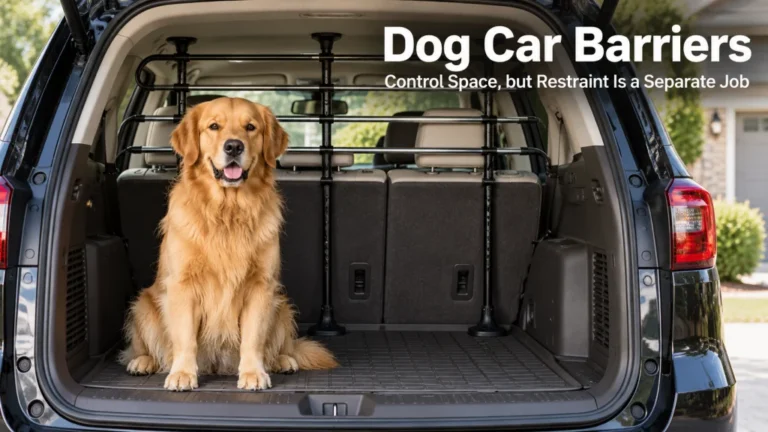
A dog car seat can make a small dog easier to position, contain, and elevate during ordinary car travel, but those comfort functions do not automatically prove crash protection. The key is to decide whether you need a comfortable perch, basic containment, or a restraint system supported by independent evidence. The seat, its attachment to the vehicle, and the dog’s connection must be evaluated as separate parts of the setup. If verified restraint is the priority, a different travel setup may be the better choice.
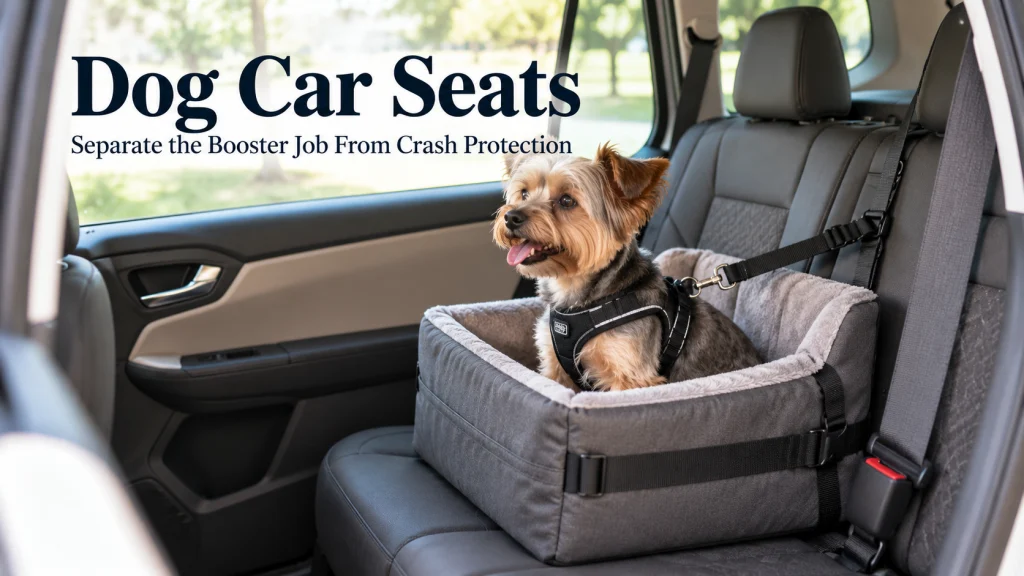
Decide what job the seat needs to do
A dog car seat can solve a real comfort problem without solving every safety problem at the same time. A small dog may settle better when raised high enough to see out, while the driver may simply want the dog off a lap and in a defined rear seating area. Before comparing padding, pockets, or fabric, decide whether your priority is elevation, everyday containment, or verified crash restraint. That distinction also keeps the choice consistent with a broader traveling with a dog plan instead of treating one accessory as the entire transportation system.
The same decision should fit the rest of your dog car travel setup, including where the dog rides and how the restraint equipment is attached. Comfort and driver distraction control matter, but they are different questions from what happens in a sudden stop or collision. We would choose the restraint goal first, then judge whether an open booster style seat actually meets that goal. This prevents soft padding and reassuring product language from carrying more weight than the underlying connection design deserves.
Treat booster height and padding as comfort features
Booster height can help a short dog see through a side window, and a padded interior can give the dog a more defined place to settle. Raised sides may also reduce casual wandering within the rear seating area. Those are useful ownership features, especially for a small dog that otherwise tries to climb toward the driver. None of them, by themselves, show how the product will manage crash forces.
Crash protection depends on more than whether the dog stays inside the seat during normal driving. The seat has to remain controlled by its vehicle attachment, and the dog’s restraint path has to manage movement without relying on a weak connector or unsuitable body attachment. A comfortable dog may be less distracting, which is valuable, but distraction control should not be relabeled as occupant protection. Keep those outcomes separate when reading product descriptions.
| Feature | What it may help with | What it does not prove |
|---|---|---|
| Raised seat height | Window view and positioning for a small dog | Crash performance |
| Padding and bolsters | Comfort and a defined resting area | Restraint strength |
| High fabric sides | Everyday containment and reduced roaming | Structural integrity in a collision |
| Included tether | A connection point during ordinary use | Independent crash protection |
Use the table as a filter rather than a scorecard. A seat can be good at comfort and still require a separate decision about restraint, so do not reward a comfort feature for doing a safety job it was never shown to do. If the listing emphasizes softness and visibility but gives little usable restraint evidence, treat that as a comfort focused product description. Move to the connection and testing checks before making the purchase decision.
Read the vehicle connection and dog connection separately
An open travel seat usually has at least two connection questions. First, ask how the seat itself is attached to the vehicle and whether the instructions specify the routing, seating position, and hardware required. Second, ask how the dog is connected and what equipment is supposed to be worn on the dog’s body. A sturdy looking seat does not compensate for a weak dog connection, and a strong body restraint does not fix a seat that is attached incorrectly.
Trace the setup from the vehicle to the seat, then from the seat or vehicle restraint to the dog. Look for instructions that clearly identify which vehicle belt path or anchor method is permitted and whether added straps are part of the tested configuration. Then check the dog side for the required harness type, attachment point, and any warning against substitute hardware. If either half of the chain is vague, treat the safety claim as incomplete until the exact instructions or independent evidence clarify it.
- Confirm the intended rear seating position.
- Confirm exactly how the seat attaches to the vehicle.
- Confirm what equipment must be worn on the dog’s body.
- Confirm whether any tether or connector is part of verified testing.
- Do not add adapters or extra straps unless the instructions specifically allow them.
This connection by connection check is more useful than asking whether the seat simply feels solid in your hands. The practical question is whether the whole restraint path works as a system under the conditions the manufacturer or independent tester actually evaluated. If you cannot reconstruct the intended setup from the instructions, do not fill the gap with your own hardware. A clear installation path is part of the product decision, not an optional detail after purchase.
Never use the collar as the travel seat restraint point
A collar is not the place to route crash restraint forces. If a travel seat includes a short lead or tether, do not assume the metal clip makes a collar connection appropriate. The restraint load needs to be managed through equipment designed for body restraint and used exactly as instructed. A dog can still wear identification on a collar while the travel restraint uses a separate, appropriate body connection.
This is also why a built in tether should not be treated as proof that the complete system is protective. Center for Pet Safety warns that extension tethers can allow excessive movement and can undermine crash protection claims for otherwise tested equipment. The safer reading is to verify the complete configuration, not to improvise because two pieces happen to clip together. If the seat instructions conflict with current independent safety guidance, choose the more defensible restraint setup rather than forcing the seat to remain part of the system.
Safety boundary: Do not connect a travel restraint to the dog’s collar, and do not add a generic extension tether to a restraint setup simply to give the dog more range of motion. Extra travel can increase the distance the dog moves before the restraint loads. A connector that is convenient during normal driving may still be unsuitable for crash forces. Follow the exact restraint instructions rather than improvising a longer or easier connection.
That boundary matters even when the dog is tiny and the tether looks short. A small dog’s lower body weight does not turn a neck connection into a body restraint, so size is not a reason to relax this check. The same logic applies when a product photo shows a connection that is not clearly supported by current instructions or testing. Treat the verified restraint path as the rule and marketing imagery as secondary evidence at most.
Use historical travel seat testing as a warning, not a permanent verdict
The Center for Pet Safety travel seat pilot is useful because it exposed category level weaknesses in some booster and travel seat connection systems. That evidence supports skepticism toward broad safety wording, but it does not justify declaring every current dog car seat unsafe. Product designs, instructions, and restraint configurations change, so older findings should guide the questions you ask rather than replace current verification.
Use historical evidence to identify failure modes, then check whether the exact current setup has independent support for the claim being made. Look for evidence tied to the actual product category, connection method, and configuration you would use. For a broader comparison of restraint options, see the dog car safety guide. If the evidence trail stops at vague phrases such as crash tested, treat the claim as unverified until the test conditions and result are clear.
Evidence boundary: Historical testing is a reason to ask harder questions, not a shortcut around checking the current model. A redesigned buckle, strap path, shell, or attachment method can change what older evidence means for a later product. Match the claim to the exact configuration you are considering.
The practical takeaway is simple: do not let either old criticism or new marketing wording decide the purchase by itself. Current evidence should answer who tested the setup, what was tested, how the dog was restrained, and what the result actually showed. If those details are missing, move the product into the comfort or containment category until stronger proof is available. That keeps the decision tied to evidence rather than assumptions.
Compare an enclosed carrier when containment matters more
An open booster is not the only way to give a small dog a defined travel space. If the dog benefits from more complete containment, an enclosed carrier may better match the task because the dog remains inside a structured enclosure rather than sitting above open sides. That can also make the travel boundary clearer for a dog that tends to climb, turn, or reach toward nearby passengers. The important comparison is not which format looks more comfortable, but which format matches the dog’s size, behavior, vehicle space, and restraint goal.
A carrier still needs correct sizing, vehicle placement, and secure attachment, so enclosure alone should not be mistaken for verified crash performance. Check the exact carrier instructions and independent evidence when safety claims matter. If this route fits the dog better, the dog travel carrier guide covers the carrier decision separately. Choose the enclosed option because its containment and restraint method fit the situation, not because every carrier is automatically safer than every open seat.
Compare an automotive harness when the dog can ride on the rear seat
Some dogs do not need elevation or a padded booster at all. If the dog can settle directly on the rear seat, a body worn automotive restraint can remove the extra seat structure from the equation. That makes the decision more focused: fit the harness to the dog’s body, verify the vehicle connection, and confirm the exact restraint evidence. It can also reduce bulk for households that do not want to store a separate booster between trips.
This does not mean any walking harness becomes a car restraint. The relevant question is whether the exact harness and connection method were designed and evaluated for vehicle use. Size, chest fit, routing, and vehicle compatibility still matter, and added extension pieces can change the configuration. The dog car harness guide covers that body worn restraint decision in more detail.
Use a buy, skip, or switch format filter for the exact model
Once the restraint category makes sense, move to ordinary fit and ownership checks. Measure the usable interior rather than judging size from a photo, and compare it with the dog’s actual resting posture and body dimensions. Confirm the stated weight limit, but do not use weight alone as a fit test because two dogs at the same weight can have very different body length and height. The seat also needs to fit the intended rear seating position without blocking the belt path or forcing an attachment route the instructions do not permit.
Cleaning and maintenance matter because a travel seat lives in a high mess environment. Check whether the cover is removable, which parts can actually be washed, how the padding is handled, and whether the restraint hardware has inspection instructions. A seat that is difficult to dry, reassemble, or inspect may create more work than a simpler setup. Use the filter below to turn those checks into a purchase decision rather than another list of features.
| Decision | Use it when |
|---|---|
| Buy for comfort | The dog fits the usable interior, the seat installs exactly as instructed, and your main goal is elevation or a defined resting area rather than verified crash restraint. |
| Buy only after verification | The product makes a protection claim and you can match that claim to current independent evidence for the exact restraint configuration. |
| Skip | The dog does not fit comfortably, the vehicle attachment is unclear, the required dog connection is unsuitable, or the listing relies on vague safety language without usable evidence. |
| Switch format | You really need stronger containment or verified body restraint, making an enclosed carrier or automotive harness a cleaner match for the job. |
- Measure usable interior length, width, and side height.
- Check the stated dog weight limit and body fit together.
- Verify the exact vehicle attachment method in the instructions.
- Verify the exact dog restraint method and required body equipment.
- Check whether current independent testing supports any crash protection claim.
- Check cover removal, washing, drying, reassembly, and hardware inspection steps.
Do not substitute a similar looking model when checking any of these details. Small differences in straps, buckles, belt routing, dimensions, or instructions can change both fit and the meaning of a safety claim. Review the exact instructions for the version you own, especially if the listing has changed since purchase. If the setup no longer matches your vehicle, dog, or restraint goal, switch formats rather than modifying the product.
Final Thoughts: choose the job before the padding
A comfortable perch, a contained travel space, and a verified crash restraint are different purchasing goals. An open dog car seat may be useful when elevation and ordinary positioning are the main needs, especially for a small dog, but comfort features should stay in the comfort column unless evidence supports more. Start with the job, then trace the vehicle connection and dog connection before deciding whether the seat belongs in the setup.
If the evidence does not match the restraint outcome you want, change the format instead of stretching the claim. A carrier or automotive harness may be the cleaner choice when containment or verified body restraint is the real priority. The goal is not to make a booster seat win. The goal is to choose a setup whose fit, connections, and evidence all match the job you actually need done.
FAQs
🐕 Is a dog booster seat the same as a crash restraint?
No. A booster can provide elevation, comfort, and everyday containment without having independent evidence for crash protection. Check the exact model and complete restraint configuration before treating any safety claim as proven.
🚗 Should a small booster seat go in the front or rear seat?
Use an appropriate rear seating position unless the exact vehicle and restraint instructions say otherwise. Rear seating also keeps the dog away from the driver’s workspace and reduces concerns associated with front air bags.
🦺 Can I attach the car seat tether to my dog’s collar?
No. Keep identification on the collar, but use the body restraint specified for vehicle travel rather than routing restraint forces through the neck. Verify the exact harness and attachment instructions for the setup you use.
🔎 What does crash tested mean on a pet travel seat listing?
The phrase alone does not tell you who performed the test, what configuration was tested, or what counted as a passing result. Look for current independent evidence that identifies the exact product, size, connection method, and performance standard.
📦 Is an enclosed carrier always safer than an open booster?
No. Enclosure can improve containment, but crash performance still depends on the exact carrier, its attachment, its size, and the evidence behind its restraint claim. Compare verified configurations rather than assuming the category alone decides safety.
📏 Is the listed weight limit enough to choose a dog safety seat?
No. Weight is only one fit check. Also compare the dog’s body dimensions with the usable interior and confirm that the seat fits the intended vehicle position without altering the required belt or anchor routing.
References and Sources
- Center for Pet Safety research library: Supports the historical evidence boundary for pet travel seat testing and related restraint research.
- Center for Pet Safety certified products: Supports checking current independent certification by restraint category rather than relying on general product wording.
- Center for Pet Safety tether safety advisory: Supports caution around extension tethers and excess movement in vehicle restraint setups.
- Cornell University College of Veterinary Medicine travel guidance: Supports securing dogs during car travel and using appropriate restraint equipment.
- American Kennel Club dog car safety guidance: Supports rear seat restraint and keeping dogs away from the driver’s lap and workspace.