Short coats put the brush close to the skin, so routine grooming works best when tool depth and pressure stay modest. A rubber grooming tool, grooming mitt, or appropriate bristle brush can remove loose surface hair and debris without treating every short coat like a dense coat that needs deep grooming. The useful test is not how much hair a tool can pull in one pass, but whether it removes loose coat comfortably without repeated scraping, redness, or avoidance. When heavy shedding becomes the main problem, the decision shifts from routine brushing to shedding management.
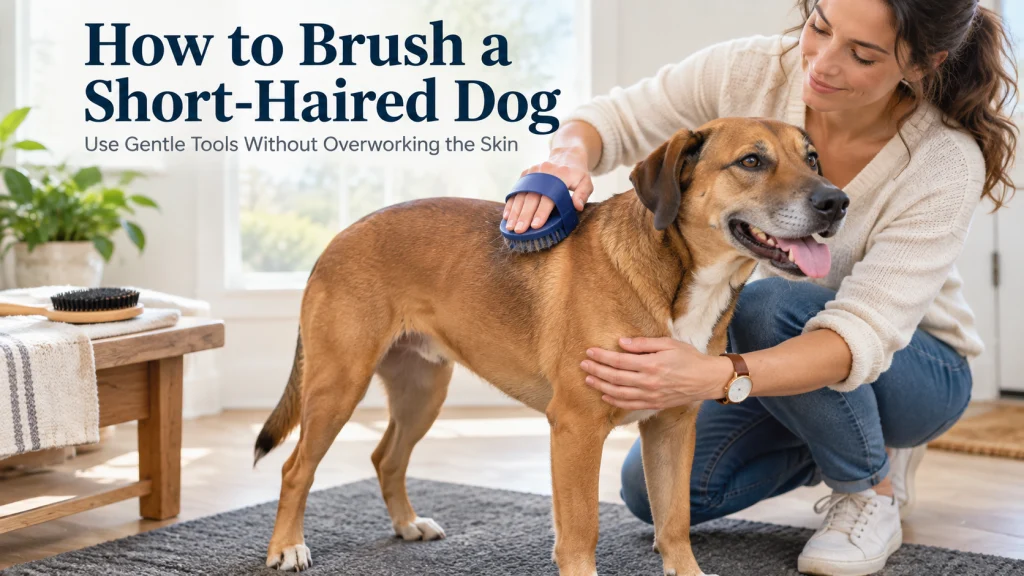
Start at the surface instead of reaching for the deepest brush
Learning how to brush a short-haired dog is mostly a matter of restraint. Short hair removes the need for deep sectioning, but it does not remove the need to choose a tool that matches the coat and the skin beneath it. Start with the broader principles in how to groom a dog, then use this routine as the short coat version of how to brush a dog. The goal is to lift loose hair, surface dirt, and dander without turning a simple maintenance job into repeated skin contact with an unnecessarily aggressive tool.
A smooth coat such as a Boxer’s, a dense short coat such as a Labrador’s, and a fine short coat can all look similar in length while behaving differently under a brush. That is why I would begin with the least aggressive tool that actually moves loose hair, then judge the result by coat response and dog comfort rather than by how dramatic the pile of hair looks. A rubber tool or grooming mitt often gives useful friction on smooth coats, while an appropriate bristle brush can finish the surface and collect debris. If the dog flinches, moves away, or the skin becomes pink, more pressure is not the next step.
Check the skin first because a short coat gives tools less distance from it
Run your hands over the coat before brushing so you know what you are about to pass a tool across. Look and feel for obvious sores, scabs, bald areas, tender spots, or an area where the dog reacts to light touch. A short coat makes these changes easier to see, but it also means brush pressure reaches the skin with less cushioning from hair. Routine brushing should not become a way to work through a spot that already looks irritated.
This first check also helps separate an ordinary grooming task from something that needs a different response. Loose hair and a little surface debris can be reasonable brushing targets, while a sore patch, unusual hair loss, or broken skin is not a cue to scrub harder. If one area looks different from the surrounding coat, leave it alone rather than repeatedly testing it with the brush. That boundary keeps a simple home grooming session from drifting into guesswork about a skin problem.
Use rubber brushes or grooming mitts for loose surface hair on many smooth coats
Rubber grooming tools and mitts can work well on many short, smooth coats because their flexible surface creates friction without relying on long metal pins. Move the tool over the coat with light, controlled contact and pay attention to whether loose hair begins to collect or lift. On some dogs, small circular motions with a rubber tool can loosen hair before you smooth the coat in its natural direction. On another dog, straight strokes with the lay of the coat may be more comfortable, so treat technique as something to adjust rather than a rigid rule.
The dog should still look relaxed while the tool is doing useful work. A tool that removes less hair per stroke can be the better routine choice if the alternative requires sharper contact or repeated passes over the same skin. Rubber tools also do not always hold every loosened hair, so you may need to gather the released coat with your hand, a mitt, or a finishing brush. That is a cleanup detail, not evidence that the tool failed.
| Tool type | Best fit for the task | What to watch |
|---|---|---|
| Rubber grooming tool | Loosening surface hair on many smooth short coats | Use light contact and stop repeated rubbing if the skin looks pink |
| Grooming mitt | Broad surface contact for dogs that tolerate grooming through hand contact well | Do not keep working one spot just because hair continues to release |
| Bristle brush | Finishing the coat and lifting loose hair, dander, and light debris | Choose bristle stiffness that feels appropriate against the dog’s skin |
| Deep or rigid tool | Only when the actual coat structure and task justify deeper reach | Do not choose it by default just because it removes a larger pile quickly |
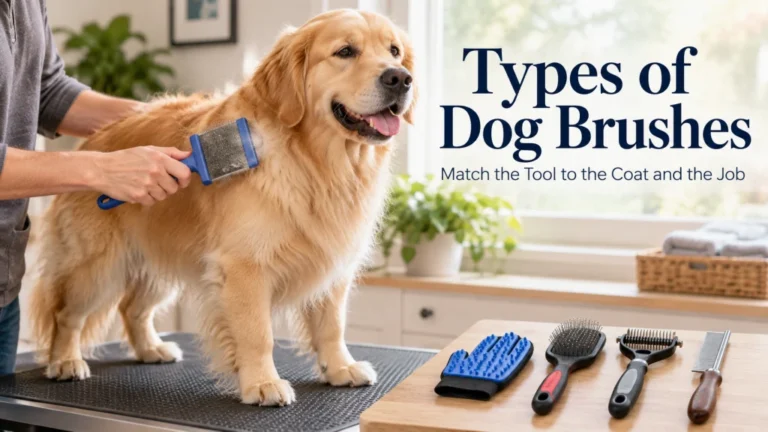
If you are unsure why one tool reaches differently from another, the practical distinction is easier to see in this guide to types of dog brushes. A surface level tool mainly works through the visible short coat and loose hair near the skin, while an undercoat focused tool is designed to reach into denser coat beneath the surface. For routine short coat care, the useful question is whether that deeper reach is actually needed. That keeps the brush choice tied to the dog in front of you instead of to the most aggressive tool in the grooming drawer. It also makes it easier to change tools later if shedding level or coat condition changes.
Use an appropriate bristle brush for finishing and debris removal
A bristle brush can be a useful second step when the coat needs smoothing, loose surface hair needs collecting, or small dry debris remains after the first pass. The bristles should move over the coat without scratching or making the dog brace against contact. Work in manageable areas, clear the brush as needed, and keep checking what the coat and skin look like rather than following a fixed number of passes. A finishing brush is doing enough when the surface looks orderly and the remaining loose hair is decreasing.
Do not confuse a firmer feel with better grooming. Short coats vary in density, and a bristle brush that feels comfortable on one dog may feel too stiff on another with sparse hair over the belly, legs, or other lightly covered areas. Reduce pressure and shorten the stroke when the skin is more exposed. The point is to finish the coat, not prove that the same brush can be used with the same force everywhere.
Work with light pressure and stop if the skin reddens or the dog flinches
Pressure is one of the easiest parts of brushing to adjust, and on a short coat it matters quickly. Hold the tool so your hand can stay loose, then let the working surface contact the coat rather than pushing it down toward the skin. If you have to lean into the tool to make it collect hair, reconsider the tool before adding more force. Comfortable brushing should look more like controlled grooming than scrubbing a surface clean.
The dog’s response belongs in the decision too. Turning the head once is not the same as sustained avoidance, but repeated flinching, stepping away, tense posture, or sudden sensitivity tells you to stop and reassess. Visible redness is also a clear reason to stop working that area. Do not keep brushing in hopes that the dog will simply get used to uncomfortable contact.
Pressure reminder: Short hair offers little buffer between the tool and the skin. If a tool only seems effective when you press hard or repeatedly scrape the same patch, switch the tool or stop the session rather than increasing force. A larger pile of hair is not a useful trade for visible irritation. Let skin response and dog comfort set the limit.
After a pause, you can decide whether the issue was pressure, tool choice, a sensitive body area, or something already present on the skin. If gentle contact is comfortable elsewhere, continue only where the coat and skin look normal. If sensitivity is localized or persistent, routine brushing is no longer the right way to investigate it. Make a note of the location so you can describe the change accurately if further assessment is needed.
Brush higher shedding areas methodically without repeatedly scrubbing one spot
Short coats can release a surprising amount of hair, especially across the back, neck, shoulders, and other areas where the coat is denser. Work across the body in a simple sequence so you can tell which areas have already been covered. Make several light passes across an area, then move on instead of chasing every last loose hair from one patch. You can return later if the skin still looks calm and the dog remains comfortable.
Brushing direction should also stay flexible. Some guidance for short coats includes a brief pass against hair growth to loosen dead hair, followed by brushing with the coat, while other dogs tolerate only with the coat strokes comfortably. I would not make against the grain brushing a universal requirement because coat texture, density, skin sensitivity, and individual tolerance differ. The practical endpoint is loose hair removal without roughening the skin or making the session progressively less comfortable.
- Start on an easy, well tolerated area so you can judge the tool and pressure.
- Cover the back, sides, chest, and other short coat areas in a consistent sequence.
- Use fewer passes on sparsely haired or more sensitive areas.
- Clear collected hair from the tool so you can see whether each new pass is still productive.
- Stop working a patch when the skin changes color or the dog becomes uncomfortable.
A methodical pass is useful because it reduces the temptation to equate more strokes with better grooming. Once most easily released hair is gone, continuing to rub the same place has diminishing benefit and increasing skin contact. That is the point to finish the session or switch to a gentler cleanup step. A calmer ending also makes the next routine session easier to judge because you are not starting with already irritated skin.
Wipe ordinary surface dirt separately instead of brushing it harder into the skin
Not every mark on a short coat needs to be removed with a brush. Light dust or ordinary surface dirt may come away more comfortably with a soft damp cloth, especially when the coat does not contain tangles or deep debris. Brushing harder at a dirty patch can add friction without improving the cleanup. Separate the jobs by using the brush for loose coat and appropriate wiping for simple surface dirt.
This distinction is especially useful after an ordinary walk when the dog has picked up a little dust but does not need a full bath. Wipe in the direction that feels comfortable, avoid scrubbing irritated skin, and let the coat dry if it becomes damp before deciding whether more brushing is useful. If the material is sticky, oily, unknown, or associated with skin irritation, do not treat it as routine dirt that simply needs more friction. The right cleanup method depends on what is actually on the coat.
Move to shedding management when loose hair volume becomes the main task
Routine short coat brushing and heavy shedding overlap, but they are not the same job. If the dog is comfortable, the tool suits the coat, and a normal brushing pass still leaves large amounts of loose hair coming away throughout the coat, the main decision has shifted. At that point, changing the routine around shedding makes more sense than repeatedly extending a basic brushing session. The separate guide to dog shedding covers that broader problem without forcing this maintenance routine to do two jobs.
That handoff matters because short hair can still come from a dense coat or an undercoat that needs a different level of management. A dog can have short visible hair and still shed heavily enough that tool depth, coat structure, and seasonal or individual changes matter more than a simple surface pass. Do not assume the answer is automatically a harsher tool. First decide whether you are still doing routine brushing or now managing a larger shedding workload.
Seek veterinary advice for bald patches, sores, or unusual coat change
Brushing gives you a useful chance to notice the skin because a short coat leaves little hidden. Bald patches, sores, inflamed areas, sudden thinning, or an unusual change in the coat should not be treated as a tool selection problem. Avoid brushing directly over an affected area simply to see whether more hair comes out. A veterinarian can assess changes that routine home grooming cannot explain safely. Until then, keep the brush away from the affected area instead of testing different tools on it.
The same boundary applies when the dog suddenly reacts to gentle handling in an area that was previously comfortable. You can note where the sensitivity occurs and stop using the brush there, but do not turn that observation into a diagnosis. Routine grooming is useful for noticing change, not naming the cause of it. That keeps care at the owner level focused on what you can see and do safely. It also prevents a grooming article from turning a visible coat change into a medical conclusion.
Final Thoughts: short coat brushing should feel simple because the tool matches the shallow coat
A short coat does not need a complicated routine to be well maintained. Start with the skin, use a tool suited to surface level coat care, keep pressure light, and work across the coat in a deliberate sequence instead of repeatedly scrubbing the same patch. If a rubber tool, mitt, or bristle brush removes loose hair while the dog stays comfortable and the skin stays calm, the routine is doing its job. Comfort and a calm skin response are better endpoints than chasing one more productive pass.
When that simple routine stops matching the problem, change the decision rather than increasing force. Heavy loose hair belongs in shedding management, while sores, bald areas, redness, or unusual coat change belong with veterinary assessment. The useful endpoint is not the biggest pile of hair on the floor. It is a cleaner, orderly coat achieved without overworking the skin.
FAQs
🐕 Do short-haired dogs still need brushing?
Yes. Short coats can still hold loose hair, dander, and light debris, and brushing also gives you a chance to notice skin changes. The useful routine depends on coat density, shedding level, and how the dog tolerates the tool.
🧤 Is a grooming mitt good for a short coat?
It can be a good surface choice for many smooth coats, especially when the dog is comfortable with broad hand contact. Judge it by how well it loosens hair without requiring repeated rubbing or causing redness.
🪮 Should I use a slicker brush on a short-haired dog?
Do not choose a slicker by default just because it removes hair quickly. Match the tool to the actual coat depth and density, and favor a gentler surface tool when deeper wire contact is unnecessary.
↕️ Should I brush a short coat against the direction of hair growth?
Not as a universal rule. Some short coats tolerate a brief loosening pass against the coat before a finishing pass with the coat, while other dogs are more comfortable when you stay with hair growth throughout.
🧼 Can I brush dirt out instead of wiping the coat?
For light surface dust, a soft damp cloth may be the simpler option. Do not increase brush pressure just to remove dirt that is better handled as a separate cleanup task.
🩺 When should I stop brushing and call a veterinarian?
Stop brushing an area if you find sores, bald patches, marked redness, sudden thinning, or unusual sensitivity. Those changes need assessment rather than more grooming pressure.
References and Sources
- American Kennel Club dog brush guidance: Supports matching brush type to coat type and using bristle brushes on short coats with attention to gentle handling.
- American Kennel Club shedding guidance: Supports short coat tool choices, conditional brushing direction, and the boundary between routine brushing and heavier shedding management.
- PetMD grooming kit guidance: Supports the use of rubber grooming tools on short-haired dogs and the need to avoid unnecessary skin scraping.