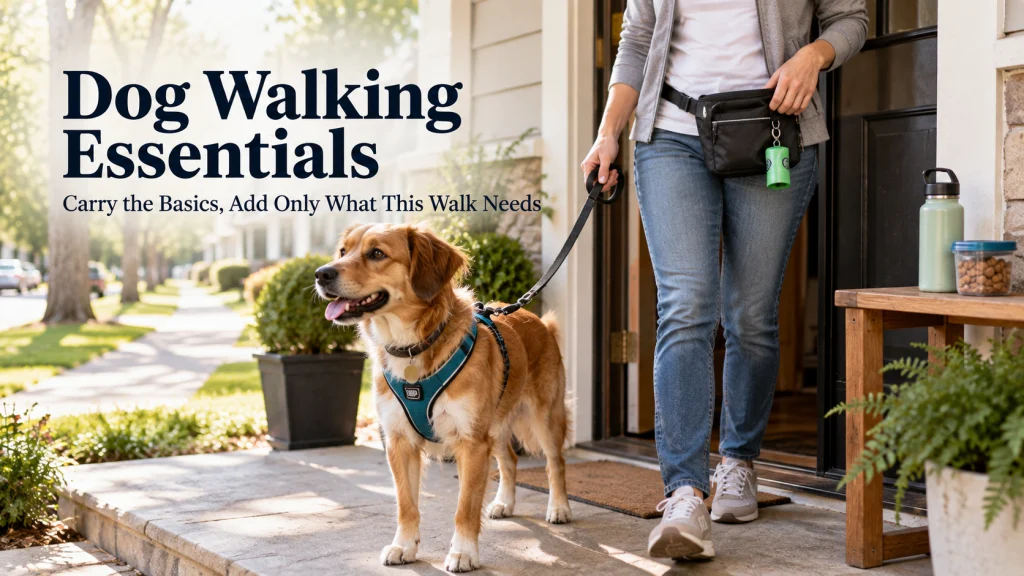
A practical dog walking kit should cover secure control, cleanup, identification and the conditions of the walk without turning every outing into a packing exercise. Water, treats, visibility aids, a towel and basic first aid items belong in the bag only when distance, weather, route or the individual dog gives them a clear job. The useful test is simple: carry the small set you consistently need, inspect it before leaving, then add only what this particular outing changes.
Pack for the walk you are actually taking
Most dog walking bags fail in one of two ways: they are missing the one thing you actually need, or they are stuffed with extras that never get used. A useful set of dog walking essentials avoids both problems by starting with the walk in front of you, not every situation a dog owner could possibly imagine. The same owner who needs only a secure leash, cleanup bags and current identification for an ordinary neighborhood loop may need water, visibility gear or cleanup extras on a different route. That approach also fits the broader goal of walking and exercising a dog in a way that matches the dog and the setting.
The base kit should solve the recurring jobs first: control the dog securely, clean up after bathroom breaks, identify the dog if you become separated and keep the handler able to respond to the environment. A good dog walking routine becomes easier when those basics live in one predictable place near the door or in the same walking pouch. Conditional items can then be added for heat, darkness, mud, training work or a longer route. Carrying less is useful only when the essentials are still present and ready to use.
| Carry level | What belongs there | Why it earns space |
|---|---|---|
| Everyday base | Secure walking equipment, waste bags and current identification | These cover control, cleanup and basic recovery if the dog becomes separated. |
| Conditional additions | Water, treats, a light, reflective visibility aid or small towel | Add them when the route, conditions or training goal creates a real need. |
| Longer outing additions | More water, route appropriate supplies and a modest first aid setup | Longer or more remote outings create different problems than routine neighborhood walks. |
The table is not a shopping list. It is a filter for deciding what deserves to leave the house with you. If an item has no clear job on the planned route, it can usually stay home. That keeps the base kit useful without turning ordinary preparation into overpacking.
Start with secure walking equipment that fits the dog and environment
The first item to check is the equipment actually keeping the dog connected to the handler. The leash, collar or harness should be appropriate for the individual dog, fit correctly and be in usable condition before the walk begins. A frayed strap, damaged clip or poor fit is a more important problem than forgetting an optional accessory. The goal here is not to declare one leash or harness style best for every dog, because body shape, strength, behavior and route all change the decision.
Before leaving, run a quick physical check instead of relying on memory. Confirm that clips close fully, straps sit where intended and nothing has become loose, twisted or visibly worn since the last outing. If a dog has a history of backing out of equipment or if the route is unusually busy, the setup deserves extra attention before the door opens. Questions about leash handling, traffic exposure and route hazards belong in a more focused dog walking safety guide, rather than being solved by adding more objects to the bag.
Carry more waste bags than the minimum you expect to use
Waste bags are one of the few items that belong in almost every routine walking kit because cleanup is predictable even when the exact need is not. Carrying only one bag assumes the walk will go exactly as expected, that the bag will not tear and that another owner will never need one. A small backup supply takes little space and prevents an ordinary bathroom break from becoming a problem. VCA also includes cleanup supplies as a basic part of responsible walking preparation.
The easiest system is to refill the walking pouch before it becomes empty rather than waiting until the next outing. Keep the bags in the same location so they can be checked by touch while you are still at the door. If multiple people walk the dog, the shared pouch is usually more reliable than expecting everyone to remember separate supplies. The practical standard is not a huge roll, but enough margin that one unexpected use does not leave the rest of the walk uncovered.
Keep current visible identification on the dog where appropriate
Identification is easy to overlook because it does nothing during a normal walk, but it matters immediately if the dog becomes separated from the handler. A visible tag with current contact information can help another person act quickly without guessing who the dog belongs to. VCA also notes that visible identification and a registered microchip serve different roles, since a tag can be read immediately while a microchip provides another route to identification. The useful habit is to check whether the information is still current rather than assuming an old tag is enough.
Identification should not be treated as a substitute for secure walking equipment or attentive handling. A tag can help after separation, but it does not prevent a loose clip, open gate or dropped leash from creating the problem. Check that the tag remains legible and attached, and update contact details when they change. If the dog cannot comfortably wear a particular item because of a medical, fitting or equipment issue, that decision should be handled according to the individual dog rather than forced by a generic checklist.
Bring water when duration, heat or exertion makes it useful
Water is important, but it does not need to become a ritual object on every brief outing regardless of conditions. Longer routes, warm conditions, higher exertion and a dog that will be away from easy access to safe drinking water all make carrying water more useful. VCA specifically recommends bringing a way for the dog to drink on longer walks and paying closer attention in warm weather. That is a better rule than pretending every household needs the same bottle, bowl or carrying setup.
Think about both the dog and the route before leaving. A shaded local loop with quick access back home creates a different hydration problem than an exposed route with sustained activity, and a small dog moving comfortably may have different carrying logistics from a large dog on the same path. Whatever container is used should be easy enough to carry and use that it will actually come along when needed. Decisions based on weather should stay tied to conditions rather than being converted into permanent additions to the everyday bag.
Carry treats when reinforcement is part of the outing
Treats earn a place in the walking kit when they have a job, such as reinforcing attention, practicing a cue or rewarding behavior the owner wants to strengthen. They are not mandatory cargo for every dog on every route. AKC guidance on walking multiple dogs notes the practical value of keeping treats accessible and using them to reinforce desired behavior. The important distinction is purpose: treats support a training or management plan, while simply carrying them does not make the walk better by itself.
Portion what you expect to use and keep it in a container or pouch that is easy to reach without losing control of the leash. For dogs with dietary restrictions, food sensitivities or a veterinary nutrition plan, the reward choice should fit those constraints instead of being copied from another owner’s kit. If the outing is not being used for reinforcement with food, leaving treats behind may be completely reasonable. The walking bag should reflect the work being done, not a generic list of dog supplies.
Add visibility aids when the route is hard to see
Low light changes the walking problem because being visible to drivers, cyclists and other people becomes part of the setup. VCA advises making both handler and dog visible and notes that reflective material depends on light reaching it, while an active light can provide another way to be seen. That does not mean every daytime neighborhood walk needs illuminated gear. It means visibility should be added when the route or conditions make seeing the team more difficult.
Choose a simple setup that does not interfere with leash handling, fit or the dog’s movement. Check that any light attached by a clip or any reflective item stays secure and does not dangle where it can strike the dog or tangle with the leash. The handler also needs to be visible, since a light on the dog alone does not solve every traffic interaction. If the route itself is poorly lit or difficult to navigate safely, changing the route can be more useful than adding more equipment.
Add a towel or small cleanup item only when the route makes it useful
A towel is a good example of a conditional item that can be useful without belonging in every kit. Muddy paths, wet grass, sandy areas or a dog that tends to step through messy ground create a clear reason to bring something for a quick wipe before getting back into a vehicle or home. On a dry paved route, the same towel may simply take up space. The decision should come from the route and the dog, not from a list that assumes every walk creates the same mess.
Keep cleanup modest and realistic. A small absorbent cloth or other simple item is often enough for paws and light surface dirt until a proper cleanup can happen at home. Do not turn the walking pouch into a mobile grooming station, especially when the issue can wait for a controlled home setup. If a walk regularly produces the same cleanup problem, adjusting the route or keeping a larger towel at the car or entryway may be easier than carrying more on the dog walk itself.
Keep first aid carry modest on ordinary walks
A small first aid setup can make sense when the route, distance or access to help creates a reason for it, but an ordinary walking bag does not need to imitate a veterinary clinic. The purpose of basic carry is to support simple immediate management while you arrange appropriate help, not to diagnose an injury or improvise treatment. Avoid adding medications, wound products or other medical supplies just because they appear on a generic packing list. Those choices can depend on the dog, the product and veterinary guidance.
For routine local walks, the more useful preparation may be knowing how you would get home, contact a veterinarian or reach help if the dog cannot continue normally. Longer or more remote outings can justify a more deliberate first aid kit, but the contents should come from appropriate veterinary guidance rather than crowdsourced lists. Any injury, sudden illness or concerning change that exceeds simple handling an owner can safely provide should move the decision out of the walking checklist. The kit should support judgment, not create false confidence.
Scale the kit up for hiking instead of overpacking every daily walk
Routine walking and trail outings can look similar at the front door, but the distance, terrain, access to water, exposure and distance from help can be very different. That is why the everyday pouch should not be forced to cover every possible outdoor scenario. When the outing becomes a trail trip, use a dedicated hiking with dogs checklist that accounts for the specific route and conditions. This keeps the daily kit small while still allowing more complete preparation when the situation genuinely changes.
A useful comparison is a familiar local loop versus a longer route away from quick access to home or a vehicle. The local loop may need only the base kit, while the longer outing can justify more water, cleanup specific to the route, visibility support and appropriate emergency planning. The difference is not that one owner cares more; the exposure is different. Scaling the kit to the outing is the practical middle ground between forgetting basics and carrying a trail pack everywhere.
Use a simple check at the door before leaving
A packing system only works when it is easy to repeat. Keeping the everyday items together near the leash makes missing supplies easier to notice before the dog is already outside. The check should be short enough to become automatic and specific enough to catch a damaged clip, empty bag roll or missing identification tag. Conditional items can then be added after looking at the route, weather, visibility and purpose of the outing.
This is also where a household can avoid duplicate bags and inconsistent routines. When several people walk the same dog, one shared checklist gives everyone the same starting point while still allowing additions that fit the route. The person leaving should make the final check because they know which dog, route and conditions apply to that outing. A simple system reduces both forgotten essentials and the temptation to stuff the pouch with items no one actually uses.
- Check the leash, collar or harness for secure fit and visible damage.
- Confirm that waste bags are present with at least a small backup supply.
- Check that visible identification is attached and current.
- Add water when route length, heat or exertion makes it useful.
- Add treats only when reinforcement or training is part of the walk.
- Add visibility or cleanup items when the conditions call for them.
- For a longer or more remote outing, switch to a more complete packing plan built for the route.
The point of this checklist is consistency, not ceremony. Once the base kit is stable, most walks require only a quick condition check and a few sensible additions. If something is missing or damaged, fix that problem before adding optional gear. The routine should make preparation easier, not create another complicated task.
Final thoughts: keep the useful kit small enough to come every time
The best everyday walking kit is not the one with the most compartments or the longest shopping list. It is the one that reliably covers secure control, cleanup and identification. It should expand only when the route, weather, visibility, training goal or distance creates a reason. That keeps the routine practical and makes missing essentials easier to notice.
Before leaving, check the equipment on the dog, confirm the basic supplies and look at the actual outing ahead. Add water, treats, a light, a towel or more complete emergency preparation only when those items solve a real problem for that walk. Leave unnecessary extras behind when they add bulk without helping with the route or the dog. A small kit that is checked and used consistently is more useful than an oversized bag that stays behind.
FAQs
🐕 What should I bring on a normal dog walk?
Start with secure walking equipment, waste bags and current identification. Add water, treats, visibility aids or cleanup items only when the route, conditions or training purpose makes them useful.
🧻 How many poop bags should I carry?
Carry more than the minimum you expect to use so one extra bathroom break or damaged bag does not leave you without a cleanup option. A small backup supply is usually more practical than carrying a bulky roll.
💧 Do I need to carry water on every walk?
Not necessarily. Water becomes more important as the route gets longer, conditions get warmer, exertion rises or easy access to safe drinking water disappears.
🍪 Should treats always be in a dog walking kit?
No. Bring treats when you plan to reinforce behavior, practice cues or manage a training situation, and make sure the reward fits any dietary restrictions that apply to your dog.
🔦 What should I add for a low light walk?
Add a visibility aid for the dog and consider your own visibility as well. The item should stay secure and should not interfere with leash handling or the dog’s movement.
🥾 Is a hiking kit the same as a daily dog walking kit?
No. Hiking can add distance, terrain, weather exposure and reduced access to help, so it deserves a packing plan built for the route rather than forcing every daily walk to carry the same load.
References and sources
- VCA Animal Hospitals dog walking safety tips: Supports cleanup preparation, hydration, identification and visibility guidance used in this article.
- American Kennel Club guide to walking multiple dogs: Supports the practical use of accessible treats and carrying methods that keep the handler’s hands available when managing a walk.