Dog car safety starts with controlling movement, not with adding comfort accessories. A useful setup must match the dog, the vehicle, the exact restraint or containment system, and the way that system was actually tested or documented. For most owners, the practical decision is between a verified automotive harness, a secured travel carrier, or a secured travel crate, while barriers, covers, extenders, and booster style seats serve different jobs. The safest claim is the one you can trace to the exact model, size, connection method, and vehicle attachment rather than to a broad marketing phrase.
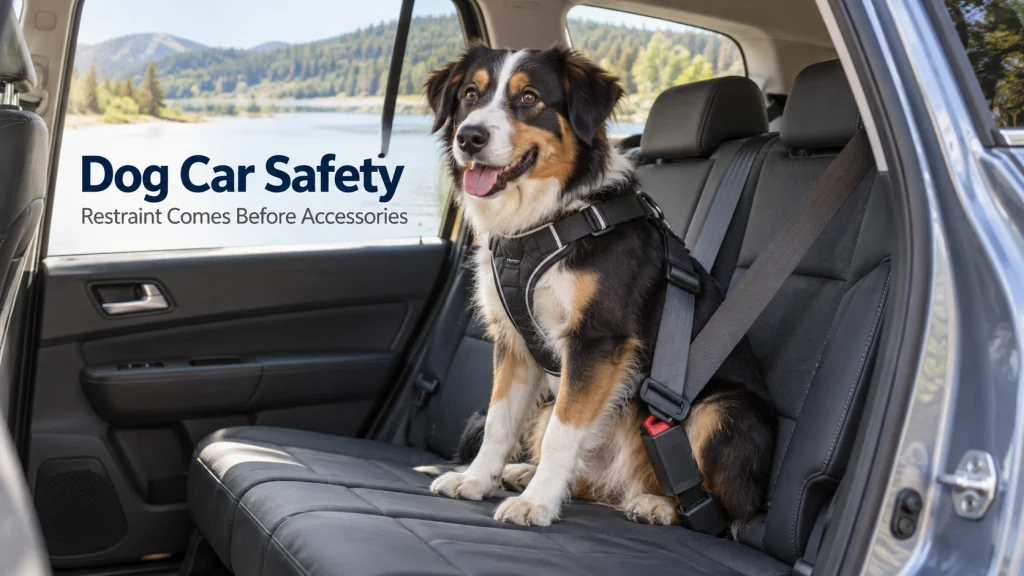
Start with what actually restrains the dog
Before comparing accessories, identify what physically limits the dog’s movement during a sudden stop. That question is the starting point for traveling with a dog safely and for building a practical dog car travel setup. A dog can look calm, stay off the driver, and still be poorly restrained if the only equipment in use is a cover, barrier, open bed, or loose tether. The restraint decision therefore comes before convenience, upholstery protection, or giving the dog a better view.
Dog car safety also depends on the relationship between the dog and the vehicle, not just the label on a product. A harness needs a suitable seating position and the connection method used in its tested configuration, while a carrier or crate needs enough physical space and a secure way to remain controlled in the vehicle. A system that cannot be installed as documented in your actual car should not inherit a crash protection claim simply because a similar product passed testing elsewhere. Once the movement control is clear, the rest of the setup becomes much easier to judge.
Start with the three restraint routes that have current independent certification categories
The Center for Pet Safety currently groups certified vehicle products into safety harnesses, pet travel carriers, and travel crates. That does not mean every harness, carrier, or crate is certified, and it does not mean those three categories are interchangeable for every dog. A small dog that fits a tested carrier may have a very different practical route from a large dog that rides on the rear seat in a tested harness. Vehicle layout, dog size, body shape, behavior in transit, and available attachment points all affect which route can actually be installed correctly.
The useful distinction is restraint versus containment versus comfort. A harness is primarily a body restraint connected to the vehicle, while a carrier or crate combines containment with a vehicle connection when used as a tested travel system. A barrier may limit where the dog can go inside the cabin, but that is not the same job as controlling the dog in a crash. Seat covers, mats, and extenders can improve traction, cleanliness, or usable space, yet those functions should stay separate from crash protection claims.
| Setup type | Main job | What still needs verification |
|---|---|---|
| Automotive harness | Body restraint on a vehicle seat | Exact model, size, fit, belt routing, connection method, and seating position |
| Travel carrier | Containment plus vehicle restraint when tested as a system | Exact carrier, dog size limit, orientation, belt or anchor routing, and vehicle fit |
| Travel crate | Rigid containment plus secured vehicle installation | Exact crate, anchor method, strap requirements, cargo platform, and vehicle anchor strength |
| Barrier | Space control and driver distraction management | Vehicle fit and intended use, without assuming crash restraint |
| Cover or extender | Interior protection, traction, or surface management | Fit, stability, and compatibility with the real restraint system |
| Riding area | When it is the practical starting point | What to verify before choosing it |
|---|---|---|
| Back seat | The dog can ride on the rear seat in a verified automotive harness or a carrier designed for the documented seating position. | Dog fit, required belt path or connector, seat position, buckle access, and whether the exact setup matches the available evidence. |
| Cargo area | The vehicle has enough level space for a secured carrier or travel crate and the system is documented for that location. | Exact orientation, securement method, cargo platform, anchor location, and whether the vehicle manufacturer supports the required attachment point. |
Use these tables to identify both the job and the riding area before judging evidence. A back seat route is not automatically better than a cargo area route, and a cargo area is not automatically suitable just because a crate fits there. The dog, the documented configuration, and the vehicle connection all have to line up. That distinction keeps convenience features from borrowing a safety claim they have not earned.
Choose a car harness when rear seat body restraint fits the dog and vehicle
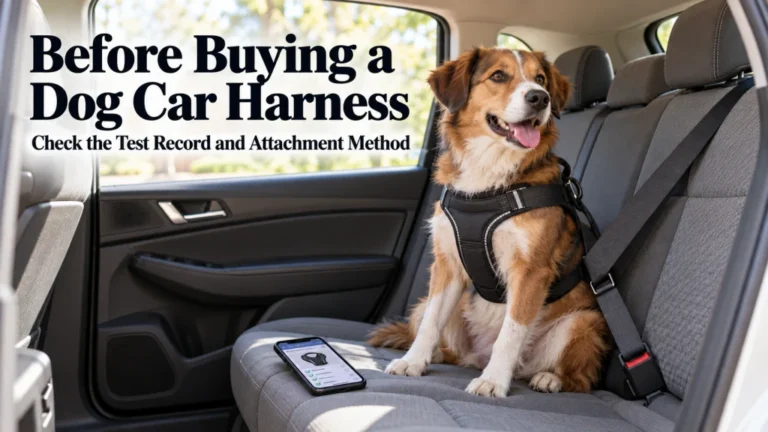
A car harness can make sense when the dog can ride on the rear seat, tolerate a body restraint, and fit within the exact size range supported by the product documentation. The important word is automotive, because a walking harness with a convenient loop is not automatically a vehicle restraint. Independent testing has shown that hardware strength alone does not prove that a harness controls forward movement or keeps the test dog on the seat. The full system includes the harness structure, the dog’s size, the way the harness fits, and the way it connects to the vehicle.
Do not solve fit by adding an unverified connector or improvising a longer reach so the dog can roam farther. Do not attach a vehicle restraint to a collar, because the restraint system should be used only with the body connection and attachment method supported by its instructions and evidence. Use the dedicated dog car harness guide when you need to compare fit, sizing, chest coverage, and certification details. At this level, the decision is simpler: choose the harness route only when the dog and the rear seat can reproduce the required setup without modification.
Treat the seat belt connection as part of the tested configuration
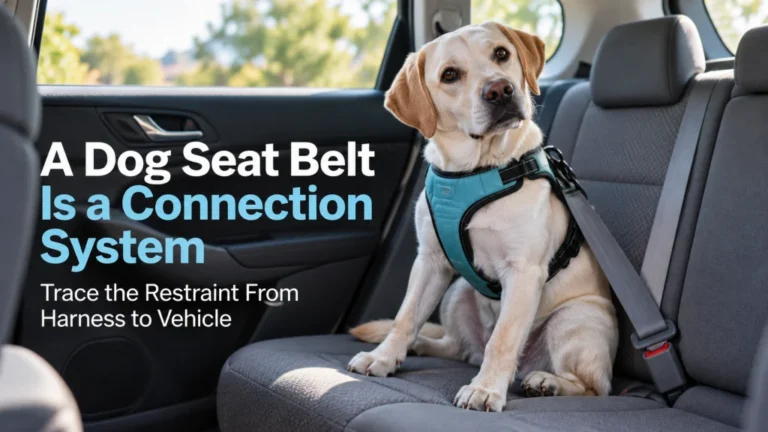
A restraint is not just the part worn by the dog. The belt path, buckle, loop, connector, and vehicle seating position can all be part of the configuration that produced the test result. Replacing one connection with a generic tether may create a setup that looks similar but no longer matches the documented system. That is why a broad statement such as “this harness was crash tested” is incomplete unless you can also identify how the tested harness was attached.
Extension tethers deserve particular caution because added length allows more travel before the dog is controlled. Center for Pet Safety specifically advises against extension tethers and zipline style products, which is a stronger evidence boundary than a retailer description that simply calls an item a safety belt. The dog seat belt guide owns the connection system details, including routing and compatibility checks. For this article, the rule is to preserve the tested connection rather than mixing parts for convenience.
Use a secured carrier when the dog and the verified vehicle setup both fit
A travel carrier can be a practical route for a dog that fits the carrier’s documented size limits and can settle inside it without defeating the closure or connection system. The carrier itself still needs to be evaluated as a travel system, because containment alone does not prove crash protection. Independent carrier research has found meaningful differences in structural integrity and connection strength among products marketed for vehicle use. That makes the exact model and exact connection more important than simply choosing a hard or soft shell by appearance.
Vehicle fit matters just as much as dog fit. A carrier that physically holds the dog may still be unsuitable if it cannot sit in the required orientation or if the vehicle belt cannot follow the documented routing. Use the dog travel carrier guide when you need to work through carrier dimensions, dog fit, and vehicle placement in more detail. If the documented installation cannot be reproduced, choose a different restraint route instead of inventing a new way to secure the carrier.
Use a travel crate only when the vehicle can accommodate and secure the exact system
A travel crate can provide rigid containment, but the crate and its vehicle connection need to work together as one system. An unsecured crate can still move, and a poorly chosen anchor point can fail to provide the support the owner assumed it would. Center for Pet Safety specifically warns that cargo area anchors are not automatically strength rated for crash loads and recommends verifying anchor strength with the vehicle manufacturer. The practical check therefore starts with the car, the cargo platform, and the approved connection points before it moves to crate size or convenience.
The crate also has to fit the dog without creating a new installation problem. Buying a larger crate does not help if it cannot be positioned or anchored as required, and forcing a crate into a cargo area does not validate the anchors beneath it. The dog travel crate guide covers crate specific fit, construction, and anchoring decisions in greater depth. Here, the important boundary is that a crate should not receive a crash protection claim unless the exact crate and securement method support it.
Keep booster style car seats separate from proven crash restraint
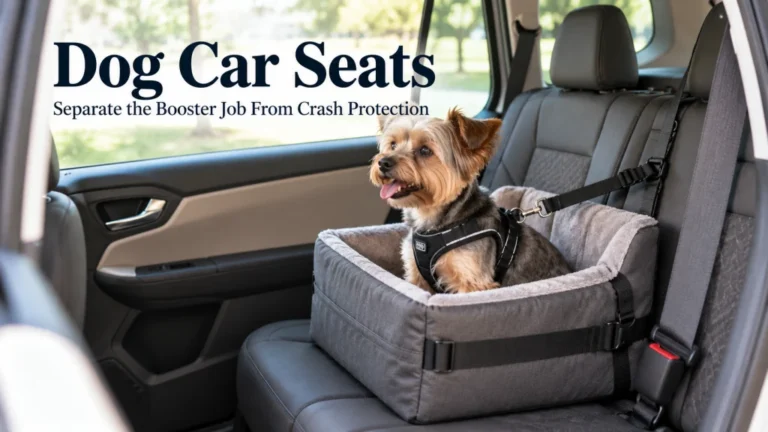
Booster style seats can make a small dog more comfortable, raise the dog’s view, or help define a riding space, but those benefits are not the same as verified crash restraint. Independent pilot testing has shown why the seat structure, its connection to the vehicle, and the restraint attached to the dog all have to be evaluated together. A product can reduce distraction or organize the dog’s space without having evidence for crash protection. That difference should remain visible in the buying decision rather than being blurred by the word safety on packaging.
If a current travel seat claims crash protection, verify the exact current model rather than relying on an old test of a different version or on a generic category claim. Check what was tested, what size was used, how the product was attached, and whether the dog restraint was part of the same configuration. The dog car seat guide handles the comfort and booster tradeoffs without treating every raised seat as a restraint. In this article, a booster style seat stays in a separate evidence lane unless the exact system has independent support.
Use barriers to control space or distraction without calling them restraints
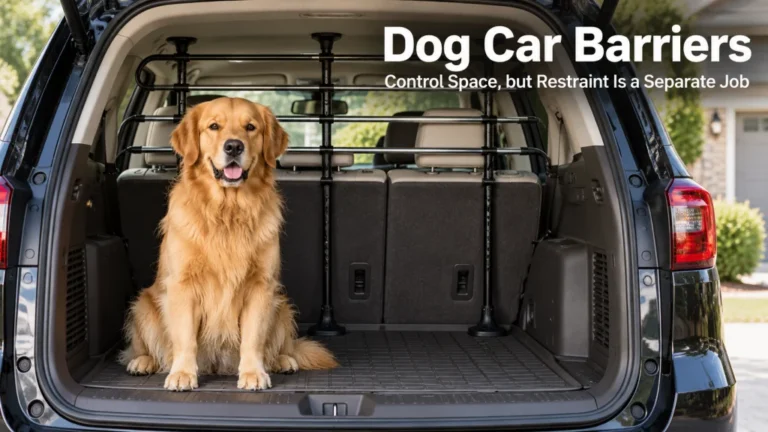
A barrier can help keep a dog out of the driver’s area or separate a cargo space from the passenger cabin. That is useful space control, especially for a dog that otherwise tries to climb forward, but the barrier should not automatically become the crash restraint in your reasoning. It may reduce one kind of risk while leaving the dog loose within the space behind it. The distinction matters because controlling access to the driver and controlling the dog’s movement in a collision are different jobs.
Barrier fit also depends on the vehicle, the mounting method, and the area the dog occupies. A loose or poorly fitted barrier can create its own problem, while a well fitted barrier still does not replace a separately verified restraint or containment system when one is needed. Use the dog car barrier guide for cabin separation and vehicle fit decisions. Treat the barrier as an additional layer only after you can explain what is actually restraining or containing the dog.
Keep covers and extenders in the comfort and interior management layer
Seat covers and back seat extenders can make car travel easier to manage, especially when the goal is protecting upholstery, improving footing, or filling an uncomfortable gap. Those are real benefits, but neither item should be allowed to replace the restraint decision. A padded surface can make a dog look settled while the dog remains unsecured, and a wide platform can increase usable space without controlling forward movement. The right question is whether the accessory works around the restraint system without interfering with it.
Check openings, belt access, buckle access, stability, and whether the accessory changes the route required by the restraint instructions. If a cover blocks a required belt path or an extender prevents the restraint from sitting as designed, the comfort upgrade has created a compatibility problem. The dog car seat cover guide and dog back seat extender guide own those detailed choices. Keep them as supporting equipment, not as evidence that the dog is secured.
Keep dogs out of the front seat airbag area and off laps
A dog riding on a driver’s lap is not restrained, even if the dog is small and calm. The dog can interfere with steering or controls, and the front seating position adds airbag and dashboard hazards that are avoided by placing the dog in an appropriate rear seating or secured cargo setup. Cornell guidance also advises against allowing dogs to roam freely in the car because loose pets can distract the driver and can be injured during sudden stops or crashes. The same logic applies to a dog standing on the front passenger seat without a verified restraint system.
Open windows are not a substitute for a controlled riding position either. A dog leaning or placing its head outside can be exposed to debris and can move farther than the owner expects during a sudden maneuver. Choose the restraint location first, then allow only the amount of movement permitted by the documented system. A calm dog still needs a setup that works when the trip stops being calm.
Stop and recheck: If the dog can reach the driver, ride on a lap, enter the front seat airbag area, or move freely between seating positions, the setup has not finished the restraint job. Move the dog to an appropriate rear seating or secured cargo position before adding comfort accessories. Confirm that the restraint or containment system still matches its documented connection method in that location. A calm dog should not be used as evidence that an unsecured position is acceptable.
Verify the exact configuration before repeating a crash protection claim
The most reliable buying habit is to turn a broad claim into a configuration you can check. Start with the exact product name and model, then confirm the size or weight range used in the evidence, the test protocol, the attachment method, and the part of the vehicle that carries the load. Look for a pass, certification, or published result rather than assuming that the phrase crash tested means the product passed a meaningful independent standard. If the current product has changed since the available test, treat the old result as historical evidence rather than proof for the new version.
A generic example shows why this matters. Suppose a harness line has evidence for one size connected through the vehicle belt in a specific way, but the owner buys a different size and adds a long aftermarket tether to reach a cargo anchor. The brand name may be the same, yet the installed system no longer matches the tested configuration. The correct response is to verify the current instructions and evidence for that exact setup or choose a route that can be installed as documented.
- Confirm the exact product model and current version.
- Confirm that the dog fits the documented size or weight range.
- Confirm whether the evidence is independent and whether the product passed the stated protocol.
- Confirm the required belt path, connector, strap, or anchor method.
- Confirm that your vehicle provides the required seating position or anchor point.
- Reject add on parts that change the tested configuration unless they are specifically supported.
That checklist is deliberately stricter than reading the front of a package. Safety language is useful only when the owner can connect it to the actual dog, product, installation, and vehicle. If one part of the chain is missing, do not fill the gap with an assumption about a similar model or accessory. Verify the missing detail or choose a setup with documentation you can reproduce.
Final Thoughts: car safety is a system, not a single accessory
The safest way to travel with a dog in a car is not a universal product choice. It is a verified restraint or containment route that fits the dog, fits the vehicle, and can be installed in the configuration supported by current evidence. Harnesses, carriers, and crates can all be valid routes when the exact setup is appropriate. Barriers, booster style seats, covers, and extenders should stay attached to the narrower jobs they actually perform.
Before the next trip, identify what controls the dog’s movement, where the dog rides, and what vehicle point the system depends on. Then check the exact model, size, instructions, test result, connection method, and anchor rather than relying on a broad safety phrase. If any part of that chain is unclear, narrow the claim and verify it before driving. That approach keeps comfort accessories useful without letting them stand in for restraint.
FAQs
🚗 What is the safest way to travel with a dog in a car?
Choose a verified automotive harness, secured travel carrier, or secured travel crate that fits both the dog and the vehicle. The exact best route changes with dog size, body shape, behavior in transit, vehicle space, and available attachment points.
🐕 Can my dog ride loose in the back seat if the dog stays calm?
Calm behavior does not provide restraint during a sudden stop or crash. Use a documented vehicle restraint or secured containment system that fits the dog and seating position.
🔗 Is any dog seat belt tether safe to use with a harness?
No. The connector is part of the restraint system, and changing its length or attachment point can change how the system performs. Follow the exact connection method supported by the product instructions and available testing.
📦 Is a carrier automatically safer than a harness?
No. A carrier needs evidence for its structure and vehicle connection, while a harness needs evidence for fit and restraint performance. Choose based on the dog, the vehicle, and the exact tested configuration rather than product category alone.
🧱 Does a dog car barrier count as crash restraint?
A barrier mainly controls space and can reduce driver distraction. Do not treat it as a substitute for a verified restraint or secured containment system unless the exact product has evidence for that function.
🪑 Are booster style dog car seats crash safe?
Do not assume so from the seat style or marketing language. Verify the exact current model, the independent evidence, the dog restraint used with it, and the vehicle connection before repeating a crash protection claim.
References and Sources
- Center for Pet Safety certified products: Supports the current independent certification categories for safety harnesses, pet travel carriers, and travel crates.
- Center for Pet Safety research library: Supports the distinction between product category, tested configuration, and documented crash performance.
- Center for Pet Safety extension tether advisory: Supports the warning against extension tethers and zipline style connections.
- Center for Pet Safety cargo area advisory: Supports checking cargo anchor strength and the vehicle structure before securing a crate or restraint in the cargo area.
- Cornell University College of Veterinary Medicine car travel guidance: Supports restraining dogs in vehicles and avoiding loose travel setups.
- American Kennel Club dog car safety guidance: Supports rear seat restraint, avoiding laps, and keeping dogs from riding with their heads outside open windows.