Dog proofing your home: Secure what the new dog can actually reach

Dog Proofing Your Home

Dog proofing your home works best when you start with the space a new dog can actually reach, not with a generic list of everything that might exist in a house. Define the initial access area, inspect it from dog height, then remove, secure, block, or supervise anything that creates a realistic chew, swallow, escape,

Dog toy size: choose a toy the dog can grip but not swallow

Dog Toy Size

Dog toy size should be judged by what the dog can actually grip, carry, mouth and potentially swallow, not by an S, M or L label alone. A useful toy is large enough that the whole object cannot slip too far into the mouth, while still being manageable for the dog’s jaw and play style.

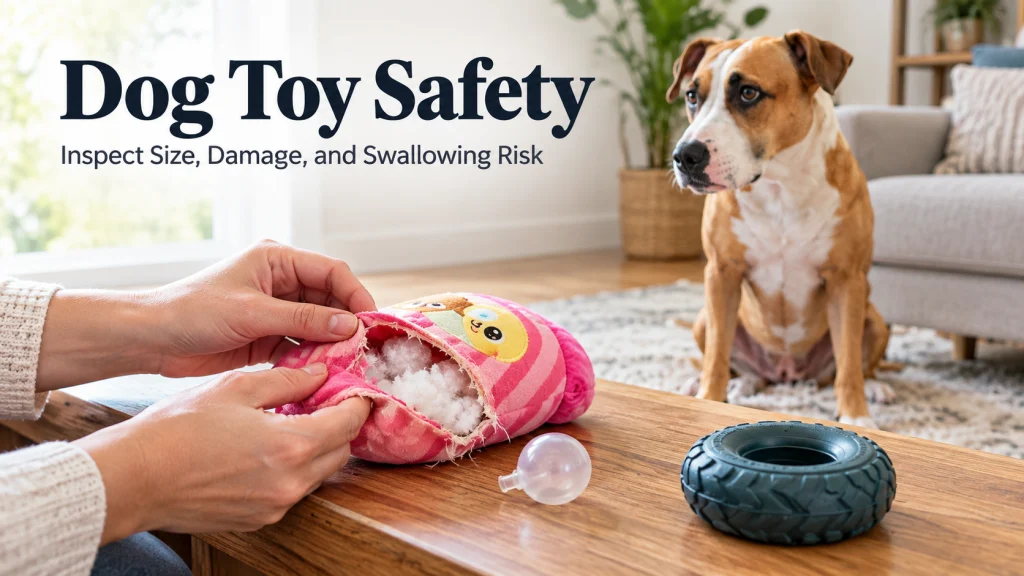
Dog toy safety: size, damage, and swallowing risk matter more than the label

Dog Toy Safety

Dog toy safety depends on what the toy becomes during real play, not only on what the package says when it is new. Size, chewing style, exposed internal parts, sharp damage, loose fragments, and cleaning limits can all change whether a toy is still suitable for a particular dog. The practical habit is simple: choose

Where my practical dog-care advice stops

Dog Care Advice Boundaries

Practical dog care advice is useful only when its boundaries are clear. I can help readers think through everyday routines, household setup, basic handling, gear fit, cleaning, maintenance, and other owner-level decisions, but I do not turn those topics into medical, clinical nutrition, rehabilitation, or complex behavior advice. When a question crosses that line, the

When dog gear has a real safety standard, I want to know which one

Dog Product Safety Standards

Dog product safety standards only help when the safety claim can be traced to a real test, a named organization, a defined protocol, and the exact product covered by the result. Words such as certified, safety tested, and crash tested can mean very different things depending on who performed the work and what the test