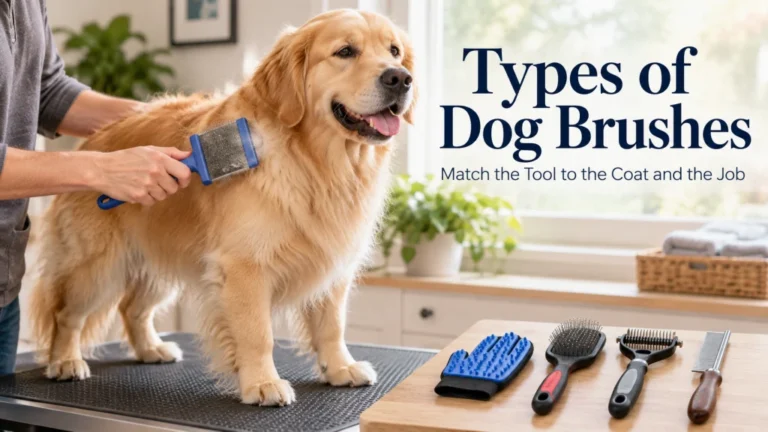
A long coat can look smooth on top while small tangles remain closer to the skin. Effective brushing means choosing a tool that reaches the coat depth comfortably, working in manageable sections, checking friction zones, and finishing with a metal comb. Small loose tangles can often be worked apart gently, but tight mats, painful areas, and stubborn resistance should be left to a professional groomer. The goal is not to make the surface look neat for a few minutes, but to confirm that the coat underneath is actually clear.
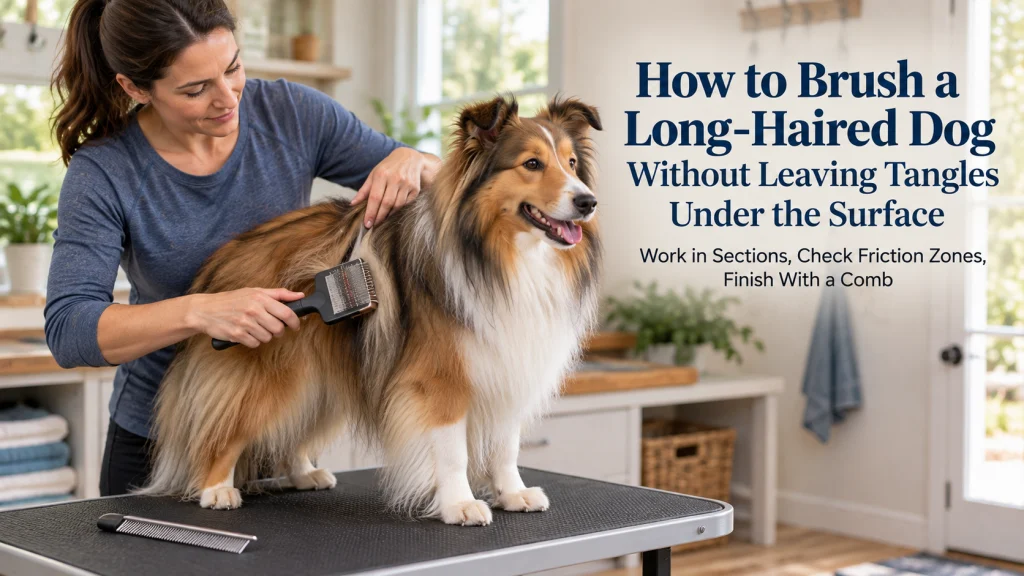
Start by checking below the smooth surface
Learning how to brush a long-haired dog starts with one simple habit: part the coat before you assume a smooth top layer means the job is finished. Long hair can fall back into place and hide catches near the skin, especially where hair is dense or repeatedly rubbed. Use your fingers to open a small section and look at how freely the hair separates from skin to tip. That quick check tells you whether you are dealing with loose coat, a small tangle, or resistance that needs more careful attention.
If you need the broader sequence for routine brushing, start with this dog brushing guide, while the at-home dog grooming guide covers the wider grooming routine beyond the coat. For this article, keep the decision narrow: clear a long coat in sections without scraping skin, yanking through resistance, or turning a small knot into a bigger one. I would judge progress by how easily the coat separates and how smoothly a comb passes afterward, not by how polished the outer layer looks. Once you start checking coat depth instead of surface appearance, the rest of the routine becomes much easier to control.
Choose a brush whose pins reach the coat depth without scraping skin
A long coat does not automatically mean one brush type will suit every dog. A slicker can be useful for loose hair and small tangles in many longer coats, while a pin brush can help separate and smooth longer hair, but coat density and skin sensitivity still matter. The useful question is whether the pins reach through the coat enough to work without requiring hard pressure. If you have to press down aggressively just to reach deeper hair, the tool or technique is not a good fit for that coat.
Compare the tool against five practical checks: coat depth, coat density, skin sensitivity, pin reach, and the result of the comb check. A brush that works well on a light silky coat may not reach through a dense long coat, while a stiff or overly aggressive tool can be uncomfortable on sensitive skin. The different types of dog brushes are easier to compare when you focus on what the pins actually reach and how much pressure is required instead of assuming one brush is universal. I would keep the lightest touch that still separates the hair, then confirm the choice by seeing whether a comb passes through the brushed section without hidden catches.
Divide the coat into sections instead of making long surface passes
Long sweeping passes can make the coat look tidy while skipping hair underneath, so work on one manageable area at a time. Use your free hand to separate a small section, then brush through that section before moving to the next one. Keep the section small enough that you can see and feel what the brush is reaching. This is simple sectioning for routine maintenance, not the deeper line brushing technique used for especially dense coats.
Start in an area your dog tolerates well, then move methodically so you are less likely to miss the same places each session. Work with the direction the coat naturally lies unless a specific coat type requires a different approach from a groomer. If the brush repeatedly catches at the same depth, stop making bigger strokes and inspect that spot with your fingers. The objective is controlled coverage, not speed.
- Part a small area so you can see how the hair separates.
- Brush that area with short controlled strokes and light pressure.
- Pause when you feel a catch instead of pulling harder.
- Move to the next section only after the current area feels clear.
This sequence makes coverage easier to track and shows which areas consistently need more work than the rest of the coat. If a small section stays resistant despite gentle brushing, treat that as information rather than a challenge to overpower. Reduce the section size, inspect the catch, and decide whether routine brushing is still appropriate there. A slower section-by-section routine is usually more useful than a fast pass that gives you no clear way to verify what was actually reached.
Work through small tangles without yanking from the tip
When you meet a small loose tangle, avoid grabbing the brush and pulling from the end of the hair toward the skin. Support the hair near the skin with your fingers so movement in the tangle transfers less directly to the skin. Work at the outer part of the catch with short gentle strokes, loosening a little at a time rather than trying to force the whole knot apart at once. If the hair will not separate with light controlled work, stop and reassess before the dog becomes uncomfortable.
Your dog’s response is part of the decision, not an inconvenience to brush through. Turning away, flinching, tensing, trying to leave, or reacting when a specific area is touched can mean the session needs a pause or the spot needs professional attention. Do not make stronger pressure the default answer to resistance. A tangle that stays difficult after gentle work is telling you that routine brushing may no longer be the right tool for that spot.
Check the friction zones where hidden tangles return first
Some parts of a long coat deserve more attention because rubbing, movement, collars, harnesses, and body contact can repeatedly compress hair. Common problem areas include behind the ears, around the collar or harness, under the front legs, along the inner legs, and around the tail and hindquarters. These zones can look fine from a standing distance even when the hair underneath has started to catch. Run your fingers through them deliberately instead of assuming the main body coat tells you what is happening everywhere else.
Friction zones also help you decide how to spend your grooming time. If the body coat separates easily but the armpits tangle quickly, spend more of the session on the armpits rather than brushing every area for the same amount of time. If a collar or harness area repeatedly mats, check whether the hair is staying damp, compacted, or continuously rubbed. Maintenance should follow where tangles actually form, not a rigid idea that every part of the coat needs identical attention.
| Area to check | What to look for | Practical response |
|---|---|---|
| Behind the ears | Fine hair bunching close to the skin | Part the hair and use short gentle strokes |
| Collar and harness areas | Compressed hair where gear rubs | Check below the contact area after wear |
| Armpits and inner legs | Catches caused by movement and friction | Use smaller sections and stop if the dog is sore |
| Tail and hindquarters | Dense or compressed hair that hides tangles | Separate the coat before brushing the surface |
Use the table as a reminder to inspect, not as a promise that every long-haired dog will mat in the same places. Coat texture, density, activity, gear use, moisture, and daily routine can shift where trouble starts. Your own repeated findings should shape the order of future sessions. When one friction zone keeps catching before the rest of the coat, that area needs a shorter maintenance interval.
Use a metal comb after brushing to find hidden catches
The comb check gives you a separate way to verify the result of brushing instead of judging the section by appearance alone. After brushing a section, pass an appropriate metal comb gently through the hair and pay attention to where it slows or stops. Do not force the comb through resistance or use it like a lever against the skin. A smooth pass suggests the brush reached that section effectively, while a catch tells you to inspect the area again.
Think of the comb as a verification tool rather than the thing that must solve every knot. If it catches, move back to your fingers and brush, reduce the section size, and work gently from the easier hair toward the problem spot. When the comb repeatedly stops at the same tight area, do not escalate into harder pulling. The value of the comb is that it exposes what the outer coat can hide before a small problem becomes a larger mat.
Move to line brushing when simple sectioning no longer reaches the dense coat
Some long coats are dense enough that simple sectioning still leaves uncertainty near the skin. If you keep finding deeper catches after ordinary brushing, a more deliberate line brushing routine may be the better next step. That method works through narrow layers more systematically so the brush reaches coat that a surface pass can miss. Use it when coat density creates a real depth problem, not simply because the dog has long hair.
Keep the boundary clear between routine long-coat brushing and deeper sectioning technique. This article is enough when you can part the coat, brush a manageable section, and confirm it with a comb without persistent resistance. If you need to expose narrow layers all the way through a dense coat to reach hidden hair consistently, follow the dedicated technique instead of stretching a simpler routine beyond what it can do. Choosing the more detailed method only when the coat demands it keeps grooming practical and avoids unnecessary complexity.
Stop when a mat is tight against the skin or brushing becomes painful
A tight mat is no longer just a routine brushing problem. Mats can sit close to the skin, pull during movement, and make it difficult to tell where hair ends and skin begins. Do not use household scissors to cut a mat out, and do not keep dragging a comb through a knot that will not loosen gently. If the mat is tight, large, near a sensitive area, or causing clear discomfort, a professional groomer is the safer next step.
The guide to dealing with matted dog hair explains the difference between a small loose tangle and a mat that has moved beyond normal home brushing. Stop sooner if the dog cries, snaps, pulls away repeatedly, or will not tolerate handling around the area. Redness, moisture, odor, swelling, discharge, or damaged skin also moves the issue beyond ordinary coat maintenance and may warrant veterinary attention. The best owner-level decision is often knowing when not to keep trying.
Shorten the maintenance interval when tangles return before the next session
Brushing frequency should respond to what the coat is doing between sessions. If you repeatedly find fresh tangles before your planned brushing day, waiting the same amount of time is not working for that dog, coat, and routine. Activity, moisture, coat density, friction from gear, and seasonal shedding can all change how quickly the coat starts to catch. Shorten the interval enough that you are dealing with loose hair and small tangles instead of waiting for tight knots to develop.
The broader brushing frequency guide can help you adjust the schedule around coat type and daily life rather than following one fixed rule. I would use the comb check and friction zones as feedback from one session to the next. If those areas stay clear until the next planned session, the schedule is probably doing its job; if they repeatedly mat first, bring that maintenance forward. A good interval is the one that keeps routine brushing manageable before the coat becomes a detangling project.
Final Thoughts: long coat brushing works when the comb confirms the deeper layer is clear
A polished surface is not enough evidence that a long coat has been brushed thoroughly. Work in manageable sections, use a brush that reaches the coat comfortably, support hair near small tangles, and check the areas where friction creates repeat problems. Finish by passing a comb through the section instead of trusting appearance alone. That sequence gives you a practical way to tell whether the hair beneath the surface is actually clear.
Keep the routine gentle enough that resistance changes your decision instead of making you pull harder. Move to deeper line brushing when coat density demands more systematic sectioning, and move to a professional groomer when a mat is tight, stubborn, or painful. Shorten the maintenance interval if tangles keep returning before the next session. The best routine is the one that keeps the coat manageable without turning grooming into a struggle for either you or your dog.
FAQs
🐕 Should I use a slicker brush or a pin brush on a long-haired dog?
Either may have a role depending on coat density, texture, and how the dog tolerates the tool. A slicker is commonly used for loose hair and tangles, while a pin brush can help separate and smooth longer hair, so choose by the coat in front of you rather than the label alone.
🪮 How do I know whether I brushed all the way through the coat?
Part the hair and finish with a gentle metal comb check. If the comb moves through without repeated catches, you have better evidence that the deeper layer is clear than you would get from surface appearance alone.
👂 Why does my dog’s hair tangle behind the ears so quickly?
Behind the ears is a common friction area where fine hair can bunch and compact. Check it more often than the main body coat if that is where tangles consistently return first.
✋ Should I pull harder if the comb keeps catching?
No. Stop, inspect the spot, reduce the section size, and return to gentle brushing or finger work rather than forcing the comb through resistance.
✂️ Can I cut out a tight mat with household scissors?
No. Tight mats can sit very close to the skin, so household scissors create a real cutting risk; leave stubborn or close mats to a professional groomer.
📅 How often should I brush a long coat?
The useful interval depends on coat density, activity, moisture, shedding, and how fast tangles return. If you keep finding knots before the next planned session, shorten the interval rather than waiting for the coat to become harder to manage.
References and Sources
- American Kennel Club brush guide: Supports brush selection by coat type, light pressure with slicker brushes, and the role of pin brushes and combs in longer coats.
- PetMD matting guidance: Supports friction-zone checks, gentle handling of small tangles, avoiding household scissors, and professional handoff for tight or painful mats.