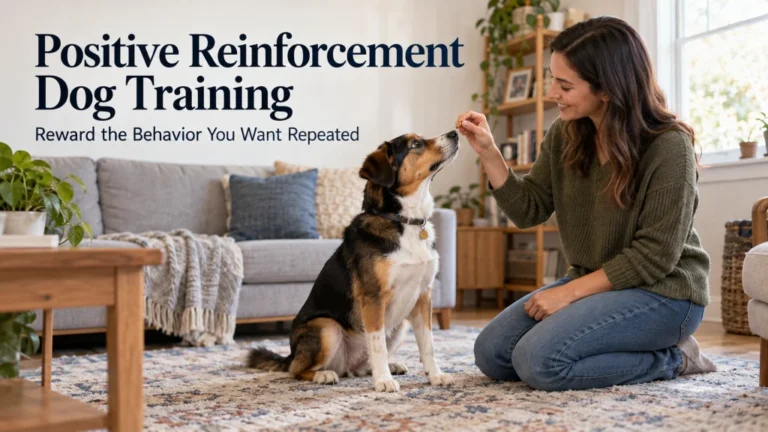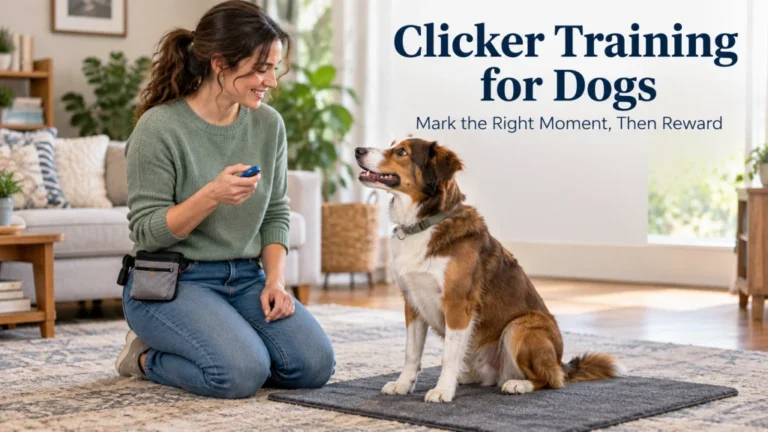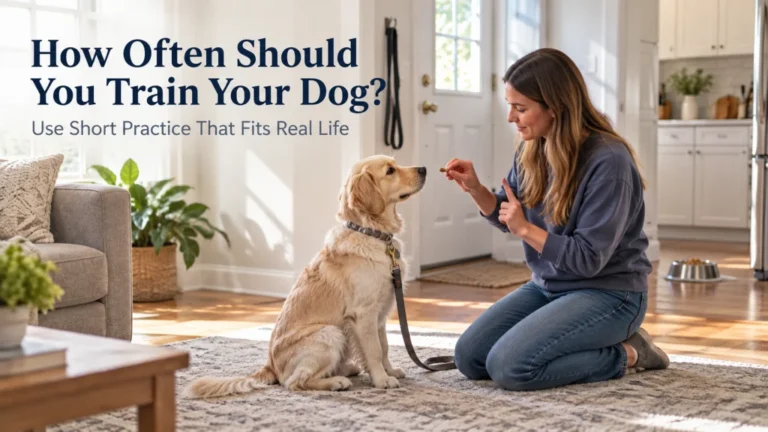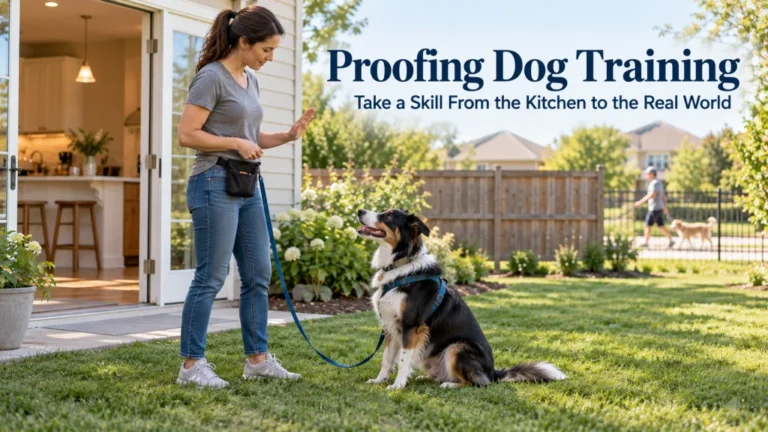
Dog training treats work best when their value matches the job, the environment, and what your dog actually wants at that moment. A reward that keeps attention in a quiet kitchen may be too weak around new smells, people, dogs, or movement, while a very exciting reward can be unnecessary for an easy familiar cue. Small rewards that are quick to eat usually make repeated practice smoother, but food is only one option when play, toys, attention, or access are more motivating. The practical goal is to build a flexible reward system that supports learning without ignoring portability, feeding, or health constraints.
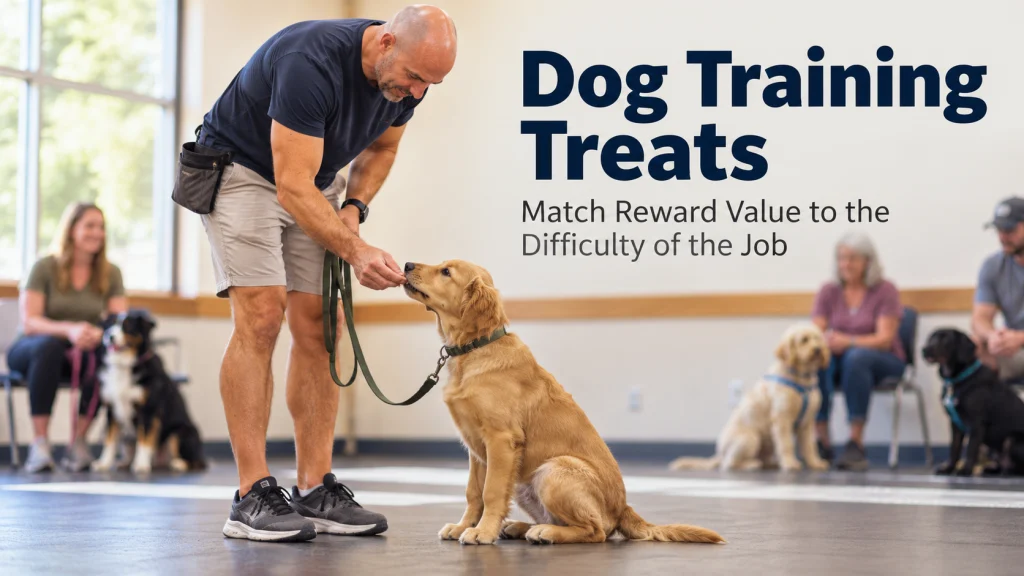
A reward that works at home can disappear outside
Dog training treats can seem valuable in the kitchen, then become almost irrelevant when you step into a distracting class. That does not automatically mean the dog is stubborn or that the training method has failed. The environment may simply be competing harder than the reward you brought. A practical dog training approach starts by noticing what changes the dog’s ability to respond, while basic dog training decisions become easier when the reward is matched to the actual difficulty of the situation.
I would treat reward choice as part of the training setup, not as a fixed shopping decision. Dog training treats need to be valuable enough to compete with the current environment, easy enough to deliver without interrupting the behavior, and appropriate for the dog’s broader feeding needs. A reward can move up or down in value depending on location, novelty, arousal, hunger, and the dog’s current preference. Once you stop assuming one treat should work everywhere, training becomes much easier to troubleshoot.
Let the dog determine reward value
A reward is useful because the dog wants it, not because the package looks premium or the ingredient list sounds impressive to a person. One dog may work eagerly for part of a normal meal at home, while another may ignore the same food as soon as the environment becomes more interesting. The useful question is not whether a reward is supposed to be high value, but whether it changes the dog’s willingness to repeat the behavior you are training. That fits the broader logic of positive reinforcement dog training, where the consequence has to matter to the learner.
Watch what happens after you offer the reward. A useful reward is taken readily, lets the dog return attention to the task, and keeps the training interaction moving instead of creating hesitation or conflict. If the dog repeatedly turns away from food, scans the environment, or chooses another activity, increasing the price of the treat is only one possible adjustment. You may also need to reduce distractions, simplify the behavior, change location, or use a different kind of reinforcement rather than assuming the dog needs a richer snack.
Build a low, medium and high value reward hierarchy
A simple hierarchy gives you options instead of forcing one reward to do every job. Start by listing foods, toys, games, attention, and access to activities your dog already enjoys, then observe how strongly the dog responds to each one in easy conditions. The labels low, medium, and high value are working categories, not permanent rankings. Treat the list as a practical inventory of what is available for routine work, harder repetitions, and moments when you need stronger reinforcement.
I would keep the hierarchy short enough to use in real life. You do not need a long catalog of treats, and a more expensive option does not automatically belong at the top. The point is to know what you can use for routine repetitions, what you can reserve for harder work, and what is motivating enough to compete when the task becomes difficult. Recheck the hierarchy when enthusiasm changes instead of assuming the dog should continue valuing the same reward forever.
| Reward level | What to test | Where it may fit | What to watch |
|---|---|---|---|
| Low value | Part of the normal meal or another familiar reward | Easy cues in a quiet familiar setting | The dog responds without needing something more exciting |
| Medium value | A more preferred food, toy, or brief game | Moderate distractions or newer skills | The dog stays engaged without becoming overexcited |
| High value | The strongest practical reward the dog reliably wants | Difficult environments or especially demanding tasks | The reward is still appropriate for the dog’s diet, arousal, and training goal |
Use the worksheet as a starting point, then let actual behavior update it. If a medium value reward suddenly stops working in a busy place, that does not make the hierarchy wrong. It tells you the environment changed the price of the job. Keep the hierarchy flexible enough to reflect that change without turning every harder session into a search for a new product.
Use small rewards that can be eaten quickly
Repeated training usually works more smoothly when the food reward is small enough to swallow without a long chewing pause. Large, crunchy, sticky, or awkward pieces can interrupt the sequence between one successful repetition and the next. That matters because reward delivery is part of the training rhythm, not a separate snack break. Small portions also give you more opportunities to reinforce behavior without making each individual reward unnecessarily large.
The right size still depends on the dog and the food. A tiny dog may need a much smaller piece than a large dog, while some foods crumble or require more chewing even when the piece looks small. I would prepare the reward before training rather than stopping repeatedly to break pieces apart after the dog has already succeeded. The practical test is simple: the dog should be able to take the reward comfortably, finish it promptly, and return attention to the next cue without struggling or searching the floor for crumbs.
| Reward characteristic | Effect on repeated practice | Better fit |
|---|---|---|
| Small and quick to eat | Keeps the sequence moving | Repeated cue practice and rapid reinforcement |
| Large or slow to chew | Creates a pause before the next repetition | Occasional reward when speed is not important |
| Crumbly or messy | Can pull attention toward the floor, hands, or pouch | Use only when the mess does not interfere with the task |
Fast does not mean rushed. The reward still needs to be delivered clearly and safely, and the dog should have enough time to swallow before you ask for the next behavior. The goal is a clean training loop, not a race. If the dog cannot take the reward comfortably and reset for the next repetition, change the portion or the food format.
Match reward value to the difficulty of the environment
A familiar cue in a quiet room and the same cue near moving dogs, new smells, traffic noise, or unfamiliar people are not the same job. The dog has more competing information to process outside the easiest setting, so the reward that worked indoors may no longer be strong enough. Raising reward value can help, but it should not be your only lever. Reducing distance from a distraction, making the exercise easier, or returning to a calmer location may be more effective than trying to outbid an environment that is simply too difficult.
Think of reward value and environmental difficulty as two sides of the same decision. If the dog can respond smoothly, you may not need your strongest reward. If attention falls apart, first decide whether the dog needs better pay, an easier version of the task, or less competition. A dog that will not take even a normally exciting reward may be telling you the setting is too intense for productive practice, so do not use food to push the dog closer to something that is frightening or overwhelming.
| Training setting | Reward starting point | Adjustment if engagement drops |
|---|---|---|
| Quiet familiar room | Low or medium value reward | Simplify the cue or check whether the reward is still wanted |
| Yard or familiar outdoor area | Medium value reward | Increase reward value or reduce competing activity |
| Busy or unfamiliar place | Higher value reward when appropriate | Create more distance, lower task difficulty, or leave if the setting is too intense |
The matrix is not a rule that every dog must follow. It is a way to notice when the training environment has changed faster than your reward plan. Your dog’s response remains the final check. Adjust the setting and reward together rather than treating either one as fixed.
Place the reward where it supports the behavior
Reward value gets attention, but reward placement helps clarify what the dog just did. If you ask for a stationary behavior and the dog has to stand up and walk toward you to collect the treat, the delivery can blur the picture you meant to reinforce. The same issue appears with position work, place training, loose leash practice, and any exercise where location matters. Deliver the reward where it supports the position or movement you want to make more likely.
That does not mean every treat has to come from the same hand or exact spot. It means the delivery should be intentional rather than an afterthought. Before you start, decide where the dog’s mouth should be when the reward arrives and whether that location supports the next repetition. When reward placement and timing agree with the behavior, the training message becomes clearer without needing extra verbal explanation.
Use toys, play or access when they are more reinforcing than food
Food is convenient, but it is not the only thing a dog may work to obtain. Some dogs light up for a toy, a short game, permission to sniff, access to the yard, a chance to move forward, or social attention. These rewards can be especially useful when food is not motivating in that context or when you want to reduce reliance on edible rewards. The same rule still applies: the dog has to value the outcome, and the reward has to fit the behavior you are trying to reinforce.
Nonfood rewards also have practical tradeoffs. A toy can create more arousal than you want for calm position work, a sniff break may be awkward when you need a rapid repetition, and access rewards require control over when the desired activity begins. I would choose them when they genuinely help the dog understand and repeat the target behavior, not simply because they sound more natural than treats. Useful options include the following:
- A brief tug or fetch sequence for a dog that strongly values play.
- Permission to sniff after a moment of leash slack or attention.
- Moving through a doorway after a calm wait.
- Access to a favorite resting place, yard area, or activity after the requested behavior.
- Praise or petting when the dog clearly seeks and enjoys that interaction.
Keep watching the dog’s response after the reward. If enthusiasm falls or arousal rises so much that the next repetition becomes harder, change the reinforcer or change how you deliver it. A reward is only useful when it improves the behavior you are trying to build. The format matters less than whether the dog values it and can return to the task in a useful state.
Keep training food inside the dog’s broader feeding plan
Training food is still food, even when every piece is tiny. If you do many repetitions, the amount used in training can become meaningful within the dog’s overall intake, especially for a small dog or a dog whose weight needs close monitoring. One simple option is to use part of the dog’s regular food for easier training when that food is motivating enough. Broader portion decisions belong with the dog’s normal feeding plan, not with a training treat article pretending to calculate an individualized diet.
I would pay attention to both quantity and nutritional role rather than focusing only on the word treat. A large share of extra foods can displace a complete diet or add energy the owner did not intend to add. If training volume changes, review what is being fed across meals, rewards, chews, and other extras instead of treating each category as unrelated. Dogs with weight concerns, medical diets, or other nutrition constraints need a plan that is coordinated with veterinary guidance rather than improvised around training.
Choose portable rewards for spontaneous practice
A reward hierarchy only helps if the reward is available when the useful behavior happens. For practice around the house, on walks, during arrivals, or in other ordinary routines, portability can matter as much as theoretical reward value. Food that melts, leaks, crumbles heavily, or requires preparation at the exact moment can be inconvenient for quick reinforcement. The best portable option is one you can carry safely, access quickly, and deliver without turning your pocket, hand, or training area into a distraction.
Think about where you will store the reward, how easily you can separate one small piece, and whether it stays usable under the conditions you expect. The same logic applies to toys: a compact tug or small ball may be easier to use than a large toy that takes over the whole interaction. I would rather carry a moderately valuable reward that is easy to deliver well than a supposedly perfect reward that is messy, inaccessible, or forgotten at home. Convenience is part of training reliability because delayed or awkward delivery changes the learning experience.
Know when dietary or medical constraints belong with the veterinarian
Reward selection becomes a different problem when the dog has a diagnosed medical condition, a prescribed diet, a known food sensitivity, persistent digestive trouble, or a weight plan that requires close control. In those cases, do not solve the training problem by casually adding richer foods or copying a generic list of human foods. The reward still needs to motivate the dog, but it also has to fit the medical or nutritional plan already in place. A veterinarian can help decide what foods, amounts, or substitutions are appropriate for that individual dog.
The same boundary matters when a dog suddenly stops taking food in situations where that change is unusual. Training difficulty, distraction, fear, fatigue, discomfort, and other factors can all affect willingness to eat, so one behavior should not be treated as a diagnosis. If the change is persistent, occurs alongside other health concerns, or conflicts with an existing medical plan, veterinary input is more appropriate than experimenting with increasingly rich rewards. Training should work around the dog’s health needs, not compete with them.
Final Thoughts: Pay enough for the job without turning training into a snack contest
Good reward selection is less about finding one perfect treat and more about matching reinforcement to the dog, the task, and the setting. Start with what the dog actually values, keep food rewards small enough to support smooth repetition, and raise reward value when the environment makes the job harder. Use placement deliberately so the reward supports the behavior you want instead of pulling the dog out of position. When play, toys, access, or attention work better, use them rather than forcing food into every training problem.
Then keep the reward system connected to ordinary life. Portable rewards make spontaneous practice easier, while the dog’s overall feeding plan sets the boundary for how much training food can reasonably fit. If medical, dietary, or weight concerns complicate the decision, bring the veterinarian into that part of the plan. The practical goal is not maximum reward value, but enough value to make the right behavior worth repeating under the conditions you are actually training in.
FAQs
🐕 What makes a dog treat high value for training?
A high value reward is one your dog strongly wants in that specific situation. The same food can be highly motivating at home and much less useful around strong distractions, so judge value by the dog’s response rather than the label or price.
🍗 Should I use the highest value treat for every cue?
Usually not. Easier familiar behaviors may work well with lower value rewards, while harder tasks or distracting environments may justify stronger reinforcement. Saving some options for difficult work also gives you room to adjust when the training challenge increases.
📏 How small should training treats be?
They should be small enough for your dog to take comfortably and finish promptly without a long chewing pause. The practical size depends on the dog and the food, so watch swallowing, chewing, crumbs, and how quickly the dog can return attention to the next repetition.
🎾 Can toys or play replace food rewards?
Yes, when the dog genuinely finds them reinforcing and the reward fits the behavior. Toys, play, sniffing, access, praise, or petting can all work, but the best choice depends on what the dog wants and whether the reward keeps the training clear.
🏠 Why will my dog take treats at home but not outside?
The outside environment may be more distracting, exciting, or overwhelming than the place where the dog learned the behavior. You can try a more valuable reward, reduce distractions, create more distance, or make the task easier instead of assuming the dog is refusing on purpose.
🩺 What if my dog has a medical diet or food sensitivity?
Keep training rewards inside the diet plan your veterinarian has recommended. Do not add new foods just because they are commonly described as training treats, and ask your veterinary team about suitable options when the allowed foods are limited.
References and Sources
- American Kennel Club food reward guidance: Supports reward hierarchy, environment dependent value, and the use of small rewards during training.
- American Kennel Club training reward guidance: Supports choosing reinforcers the dog values, reward placement, and the use of food, toys, play, and other rewards.
- American Kennel Club training treat guidance: Supports using small, quick eating rewards to keep repeated practice moving.
- VCA Animal Hospitals training treat guidance: Supports accounting for training food within the broader diet and using veterinary guidance when health or dietary constraints affect reward choice.