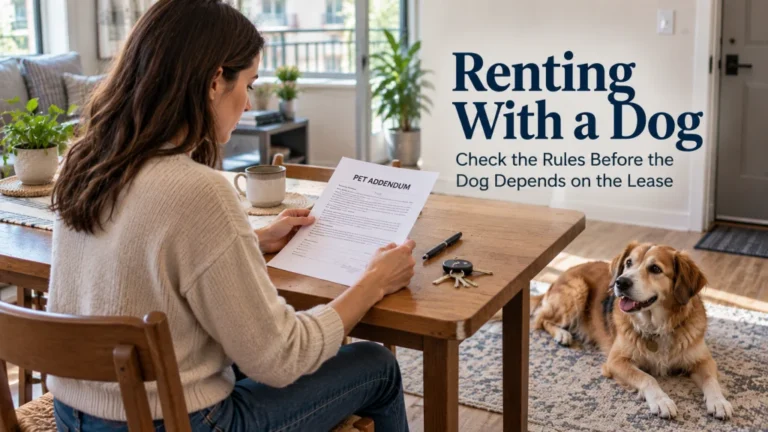
Asking whether you should get a dog is less about how strongly you want one and more about whether your ordinary week can support dependable care. A workable baseline means your housing allows a dog, the adults responsible for care agree on the plan, recurring costs are manageable, daily care fits the schedule, and backup care exists when normal life breaks routine. A problem that can be solved with a specific plan is different from a condition that still blocks responsible ownership. The goal is not to earn a readiness score, but to decide whether to proceed, solve a constraint first, or delay without guilt.

Wanting a dog and being ready for one are different questions
Wanting a dog answers why the idea is appealing. If you are asking should I get a dog, readiness asks whether anything in your current life would make dependable care fail on a normal workday, a tiring evening, or a disrupted weekend. Start with the larger before getting a dog decision, then compare your actual routine with the everyday responsibilities explained in caring for a dog. That shift keeps the decision grounded in what you can repeatedly provide, not in the version of dog ownership you picture on your best day.
A strong desire for a dog can coexist with a housing rule you cannot change, a schedule that has no care coverage, or a household member who has not agreed to the responsibility. Other problems may be real but solvable, such as arranging a reliable midday visit, changing how expenses are budgeted, or defining which adult handles specific tasks. I would separate those two groups before thinking about breed, size, age, or where a dog might come from. Readiness comes first because selection cannot repair a structural problem that is still unresolved.
Define what must be true for dependable ownership to work
Responsible ownership has repeating obligations, not just enjoyable activities. A dog needs an allowed place to live, daily care and interaction, access to appropriate exercise and mental stimulation, routine health care, supervision that fits the household, and a plan for absences. Those needs change with the individual dog, which is why a readiness decision should not assume one universal schedule or one universal monthly cost. Because that responsibility can continue for many years, readiness should account for foreseeable life changes rather than only the next season of your routine. Before choosing a dog, identify the conditions your life must satisfy regardless of the dog you eventually consider.
The useful question is whether the care system still works when motivation is ordinary. Picture a workday when you are tired, a weekend with errands, a household member who is unavailable, and a trip that requires someone else to take over. If the plan only works when everything goes right, it is not yet dependable. The ordinary week is a better test because it exposes gaps that a pleasant weekend can hide.
| Part of the ordinary week | What to check | What a weak plan looks like |
|---|---|---|
| Before work or school | Who handles feeding, bathroom access, exercise, cleanup, and setup before leaving? | The plan depends on extra time that rarely exists on busy mornings. |
| Middle of the day | What happens while responsible adults are away, and who can step in if the dog needs care? | No one is assigned, or the answer depends on an unconfirmed favor. |
| Evening | Can care still happen after commuting, family duties, errands, and other obligations? | The dog only receives attention when the evening stays free. |
| Days off | Does the routine include normal outings, chores, visitors, and time away from home? | The plan assumes every day off will revolve around the dog. |
| Disruptions | Who covers illness, overtime, travel, emergencies, or a sudden schedule change? | There is no named person, service, or affordable backup option. |
Use this check to expose the part of the week that needs a real answer, not to prove that your routine must look like someone else’s. A full time job, apartment, children, or existing pet does not automatically settle the decision in either direction. Each condition changes the logistics you must solve. Once the weak point is visible, test it directly instead of compensating with enthusiasm.
Test the major constraints one by one
Readiness becomes clearer when broad worries are broken into specific constraints. Time, workday coverage, housing, household responsibility, recurring costs, and backup care can each fail for different reasons. One problem may require a simple arrangement, while another may make ownership unworkable until circumstances change. Treating them separately prevents one easy area from hiding a serious gap somewhere else.
Do not try to solve these questions by finding a supposedly easy dog before you know what your life can support. Individual dogs vary in care needs, activity, behavior, health, and tolerance for a given routine, so selection should come after your requirements are clear. The point at this stage is to define what you can reliably provide and what you cannot yet guarantee. Then you can tell the difference between a flexible preference and a nonnegotiable ownership condition.
Time and repeating care
Look at the work that repeats every day rather than adding up one attractive block called dog time. Feeding, bathroom access, exercise, play, training practice, grooming or cleanup, supervision, and simple companionship all compete with work, sleep, errands, and family responsibilities. The exact workload depends on the dog, so avoid setting a universal number of hours as proof of readiness. If time is the unclear part of your decision, work through how much time a dog needs using your real routine rather than an idealized one.
Workday absence and backup coverage
A job does not automatically make dog ownership impossible, but the plan must explain what happens while you are unavailable. Commute length, schedule flexibility, other responsible adults, paid help, nearby support, and the needs of the eventual dog all affect whether a workday setup is workable. Do not assume that being home before and after work solves every midday need, and do not assume every dog requires the same arrangement. If this is your main uncertainty, evaluate having a dog while working full time before you proceed.
Housing permission and daily access
Housing is different from many other constraints because permission can be a hard stop. Verify the actual lease, building rules, landlord requirements, local restrictions, and any relevant limits before treating the home as dog ready. After permission is clear, look at practical access such as stairs, elevators, outdoor routes, shared spaces, noise exposure, and where routine care can happen. Apartment living itself is not the verdict, so separate rental rules for dog owners from the practical question of whether a dog can fit apartment life.
Adult responsibility, children, and resident pets
Everyone does not need to want the same tasks, but the responsible adults need a workable agreement about who is ultimately accountable. Children can participate in age appropriate care, yet the plan should not depend on a child carrying an adult’s responsibility for the dog’s welfare. Existing pets also change space, management, time, and compatibility demands, so adding another dog should not be treated as a simple multiplication of food bowls. Use the deeper guidance on getting a dog with kids or deciding when to get a second dog when either issue is central to your household.
Recurring costs and care when normal life breaks the schedule
Readiness requires room for ongoing care, not just an adoption fee or purchase price. Food, routine veterinary care, preventive care, training support, grooming or coat care, supplies, licensing where applicable, travel care, and replacement items can all enter the household budget depending on the dog and location. Instead of using one universal dollar threshold, list the categories you would be responsible for and check whether your budget can absorb both normal expenses and less predictable needs. The detailed dog ownership cost framework and care plan for times you are away can turn those two broad concerns into concrete decisions.
Stress test one plausible life change
A readiness plan should survive at least one change you can reasonably imagine, because your current routine is not guaranteed to stay fixed. Choose one plausible event such as a longer commute, a move, a change in household responsibilities, more frequent travel, or a reduction in schedule flexibility. Then ask which parts of care would still work and which would need a replacement plan. Include household health in that check: a new allergy concern, illness, injury, or reduced physical capacity can change who can handle walks, lifting, cleanup, or other repeating care. This is not a demand to predict every future problem, but it shows whether your setup has any margin.
For example, someone who currently works from home may still be ready if they have considered how care would work after a return to regular office days. Another person may rely on a rental arrangement that specifically prohibits the dog they hope to get, which cannot be solved by better scheduling. The first situation may be solvable with a verified care plan and budget, while the second remains blocking until housing changes or permission is secured. That distinction is more useful than calling both people ready or unready based on enthusiasm.
Key point: A solvable constraint has a specific, realistic fix you can verify before acquisition. A blocking constraint still prevents dependable care or lawful housing even after you consider reasonable alternatives.
Mark each constraint as resolved, solvable, or blocking
Once you have tested the major constraints, give each one a status based on evidence from your real life. Resolved means the condition already works and does not depend on an unconfirmed assumption. Solvable means there is a concrete action that can close the gap before a dog comes home. Blocking means the gap still prevents dependable ownership, so moving forward would require you to ignore a known problem.
This framework deliberately avoids a numerical readiness score. Five easy answers do not cancel one serious housing restriction, and one difficult schedule does not automatically defeat an otherwise workable plan if reliable coverage can be arranged. I would give the blocking item more weight than the number of resolved items because ownership succeeds or fails through the weakest required condition. Use the sheet below to decide what action belongs to each constraint.
| Constraint | Status | Evidence to check | Next action |
|---|---|---|---|
| Housing permission | Resolved, solvable, or blocking | Lease, building rules, landlord confirmation, local restrictions | Proceed only after permission is clear |
| Daily care time | Resolved, solvable, or blocking | Your ordinary work, commute, family, and sleep routine | Assign realistic care windows and responsible adults |
| Workday coverage | Resolved, solvable, or blocking | Actual availability of household help or paid care | Confirm coverage before relying on it |
| Household agreement | Resolved, solvable, or blocking | Who consents, who is responsible, and what each adult will do | Resolve disagreement before selection |
| Recurring costs | Resolved, solvable, or blocking | Local care costs and your current household budget | Create room for normal and unexpected expenses |
| Backup care | Resolved, solvable, or blocking | Named people or services that are genuinely available | Confirm at least one realistic fallback |
Do not mark a constraint resolved because you hope someone will help, assume a landlord will agree, or expect your future self to have more time. The status should reflect what is currently true or what can be made true before acquisition. If the evidence is uncertain, keep the item open. That makes the decision more cautious without turning uncertainty into automatic rejection.
Choose among proceed, solve first, or delay
Proceed makes sense when the required conditions are resolved and you can describe the routine, responsibility, housing, money, and backup plan without relying on wishful thinking. Solve first fits when the gap is specific and fixable, such as confirming care coverage, adjusting the budget, or getting written housing permission. Delay is the responsible answer when a blocking condition remains and there is no dependable workaround yet. None of these outcomes measures how much you care about dogs.
Delaying can protect both you and a future dog from a situation that you already know is unstable. It can also be temporary, because housing, work, finances, and household support can change. A solve first decision should include a clear finish line, such as confirmed permission or a verified care arrangement, rather than a vague promise to make it work later. Once the blocking and solvable items are cleared, you have a stronger basis for moving into selection.
- Proceed: required conditions are currently workable and verified.
- Solve first: a specific gap has a realistic fix that can be completed before acquisition.
- Delay: at least one required condition still prevents dependable ownership.
Keep this outcome practical rather than emotional. If you are disappointed by a delay, write down the exact condition that would need to change before you revisit the decision. If you choose solve first, verify the solution instead of merely planning to look for one later. If you proceed, carry the conditions you identified into the next decision instead of starting selection from appearance or impulse.
If you proceed, turn resolved constraints into selection requirements
Readiness does not tell you which dog to get. It tells you what your household can reliably support, and those limits should become requirements for the next stage. A schedule with limited flexibility, a home with specific access conditions, resident animals, household sensitivities, or a fixed care budget may all narrow what kind of dog is realistic. That is useful information because it prevents selection from drifting away from the life the dog will actually enter.
Write the requirements in plain language before you start browsing dogs. Examples might include a need for a dog whose known care needs fit the available routine, compatibility with the current household, manageable grooming demands, or a size and activity profile that fits the verified home setup. Do not use these requirements to guess that every dog of a breed, age, or size will behave the same way. Take the finished requirement list into choosing a dog, where individual fit can be evaluated in more detail.
| Resolved constraint | Selection requirement it creates |
|---|---|
| Workday coverage is limited but confirmed | Consider only dogs whose known care and adjustment needs can fit that verified coverage plan. |
| Housing has specific permission or access limits | Stay within the verified rules and physical access the home can support. |
| Resident pets are part of the household | Compatibility and introduction needs must be evaluated before commitment. |
| Care budget has a defined range | Avoid choosing a dog whose predictable routine needs already exceed what the household can sustain. |
This is the handoff from readiness to selection. The question changes from whether dog ownership can work at all to which individual dog can fit the conditions you have verified. That keeps the next decision specific without pretending readiness alone predicts a successful match. It also makes it easier to reject an appealing option that conflicts with a known requirement.
Final thoughts: readiness is a constraint decision, not a desire score
You do not need a perfect life to be ready for a dog, and you do not need to prove commitment with a score. You need a dependable plan for the conditions that everyday ownership will actually place on your household. Resolve what can be resolved, identify what still blocks care, and be willing to delay when a required condition is not yet workable. That is a more useful answer than a long pros and cons list because it tells you what must change next.
If your housing, routine, adult responsibility, finances, and backup care are all workable, move forward with those limits written down. If one area is still uncertain, verify it before choosing a dog rather than hoping the right dog will erase the problem. A good readiness decision can end with yes, solve this first, or not yet. What matters is that the answer matches the ordinary week you can really sustain.
Frequently asked questions
🐕 Am I ready for a dog if I work full time?
Possibly, but employment status alone does not answer the question. Check commute, time away, the eventual dog’s needs, available household help, and whether reliable care can cover the periods when you are unavailable.
🏠 Can I be ready for dog ownership in an apartment?
Yes, if dogs are actually permitted and the home gives you a workable plan for bathroom access, exercise, noise management, daily movement, and shared spaces. Apartment size by itself is not a complete readiness test.
💰 How much money should I have before getting a dog?
There is no single budget threshold that fits every dog or location. Build a local estimate for routine care and make sure you also have a realistic way to handle less predictable expenses before treating finances as resolved.
👨👩👧 Can children be responsible for most of a dog’s care?
Children can participate in suitable tasks, but a responsible adult should remain accountable for the dog’s care and welfare. If ownership only works when a child completes every assigned task without adult backup, the plan is too fragile.
🧳 What if I travel only occasionally?
Occasional travel still needs a verified care plan. Know who can take over, what that option costs, and whether it is genuinely available before counting travel as a solved constraint.
✅ Is there a dog readiness score I can use?
A score can hide the importance of a single blocking condition, so it should not replace a constraint review. Housing permission, dependable care, adult responsibility, finances, and backup coverage are better checked individually.
References and Sources
- American Veterinary Medical Association, selecting a pet dog: Supports checking household fit, housing, workday demands, daily care, and arrangements for absences before choosing a dog.
- American Veterinary Medical Association, responsible pet ownership: Supports treating time, money, long term commitment, appropriate care, and backup arrangements as ownership responsibilities.
- American Kennel Club, should I get a dog: Supports evaluating schedule, finances, lifestyle, and daily commitment before bringing home a dog.