Dog crate size should be chosen from the dog’s actual body and the usable interior of the crate, not from a weight label alone. A good home crate lets the dog stand naturally, turn without folding the body, lie down, and settle in a normal resting position. Puppies can often use a crate sized for expected adult growth when a secure compatible divider makes the current space appropriate. The fit should be checked again as the dog grows, changes coat, or shows that the original setup no longer matches how the body actually rests.
Start with the dog, not the box label
Dog crate size can look simple until a dog falls between two labels or has proportions that do not match the chart. A dog with a long back, a tall frame, or a deep chest can fit very differently from another dog in the same weight range. I would treat the printed range as a starting clue, then check the body that must actually stand, turn, and rest inside the crate. That approach starts with measurement and belongs inside the broader decision about choosing and using a dog crate, not inside a breed chart.
The same logic matters when the crate is only one part of setting up a home for a dog. The crate has to fit the dog, but it also has to work in the room, allow the door to open normally, and leave the usable interior unobstructed. A larger exterior footprint does not automatically mean more useful space if the shape, door position, or internal hardware reduces what the dog can use. The practical question is therefore not which label sounds right, but whether the specific crate gives this specific dog enough usable room for its current purpose.
Measure standing height and body length before comparing crate sizes
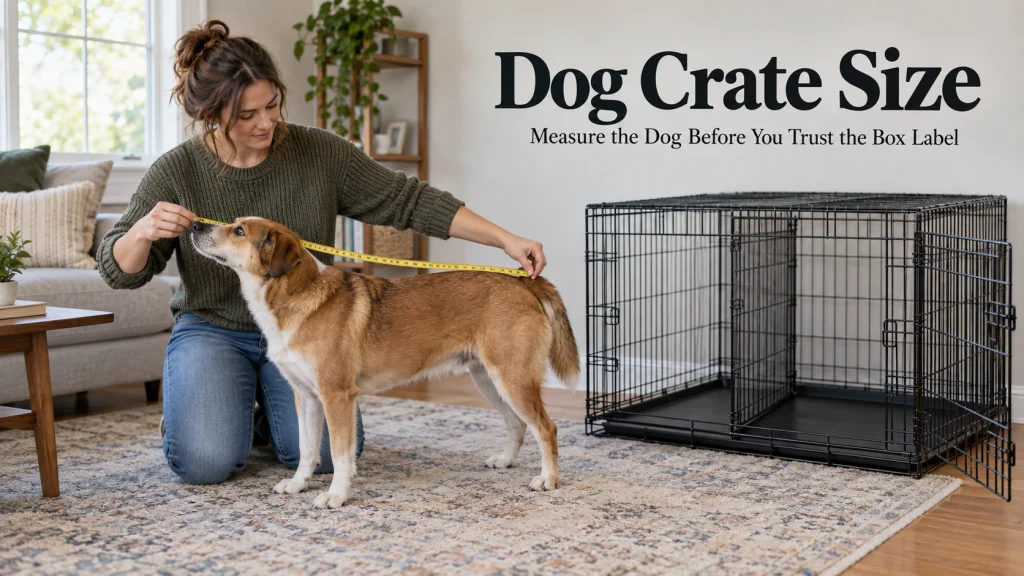
Measure the dog while it is standing naturally on a level surface rather than crouching, stretching toward food, or lowering the head. For length, place one end of the tape at the tip of the nose and measure to the base of the tail, where the tail joins the body. For height, measure vertically from the floor to the top of the head while the dog stands normally; if naturally upright ears are the highest point that would meet the crate roof, include that clearance in the fit check. Write both measurements down before opening product pages so a familiar brand label does not quietly become the decision.
Use a flexible tape or a piece of string that you can measure afterward, and keep it straight rather than following every curve of the body. If the dog will not stand still, take the measurement again instead of turning one rushed reading into a purchase decision. Compare the recorded body measurements with the listed interior dimensions, then remember that bedding, a raised lip, a divider, or an inward swinging door can reduce usable space. If a dog has a long body but moderate height, length may become the limiting dimension even when the height looks generous; if the dog is tall and compact, height may eliminate a crate that appears roomy on the floor.
- Stand the dog naturally on a level surface.
- Measure length from the tip of the nose to the base of the tail.
- Measure height vertically from the floor to the top of the head, then account for naturally upright ears if they need more clearance.
- Record both measurements before comparing crate listings.
- Compare those measurements with usable interior dimensions, not only the size name or weight range.
The procedure is simple on purpose because consistency matters more than creating a complicated formula. A rough guess beside the shelf is less useful than a repeatable measurement you can compare against several crates. The goal is not to chase the biggest number available or to turn one manufacturer’s allowance into a universal rule. It is to remove options that cannot accommodate the dog’s real body comfortably, then confirm the choice with movement and resting checks.
Check whether the dog can stand without ducking and turn without folding the body
A crate can pass a tape measure check and still feel wrong once the dog moves inside it. Watch whether the dog can rise to a natural stand without lowering the head, rounding the back, or staying partly crouched. Then watch the turn itself, because the dog should not have to compress the body into an awkward shape just to reverse direction. This movement check catches poor fit that a weight range cannot show.
Do the check with the crate set up as it will actually be used, including the divider position and ordinary bedding if bedding is appropriate for that dog. If the dog repeatedly brushes the roof, catches the body on a divider edge, or has to make a tight folded turn, the usable space is telling you more than the carton. A dog that enters readily can still be physically cramped, so willingness to go inside is not a substitute for checking posture. If the setup itself is interfering with movement, correct the physical obstruction before assuming the nominal crate size is the only problem.
Give the dog enough floor space to lie down and rest comfortably
Standing and turning are only part of crate fit because dogs do not spend rest periods frozen in one position. The floor should allow the dog to lie down without forcing the spine into a tight curve or leaving the body wedged against opposite sides. Some dogs curl naturally, while others prefer to rest on a hip or stretch farther through the front legs. A crate that fits only the smallest curled posture may not provide a comfortable home resting space.
At the same time, more empty floor is not automatically better for every situation. With a young puppy still learning where to eliminate, an oversized usable area can work against the management purpose of the crate, which is why a divider may matter. With a reliable adult dog using the crate mainly as a resting or household management space, extra room to change position can be reasonable. The right amount of floor therefore depends on both body fit and what the crate is being asked to do in the home. If bedding, divider placement, or door geometry is reducing usable room, review the dog crate setup before changing size alone.
Fit check: The dog should be able to stand naturally, turn without folding the body, lie down in a normal resting posture, and change position without being forced against the sides.
Compare internal dimensions, not only the product’s external footprint
Two crates with similar outside measurements can give the dog different usable interiors. Wall thickness, sloped panels, door frames, base pans, corner hardware, and divider placement can all take up space inside the shell. That is why external length, width, and height are not enough when you are deciding between close options. I would verify the manufacturer’s current internal dimensions whenever the listing provides them, especially when the dog is near the limit of one size.
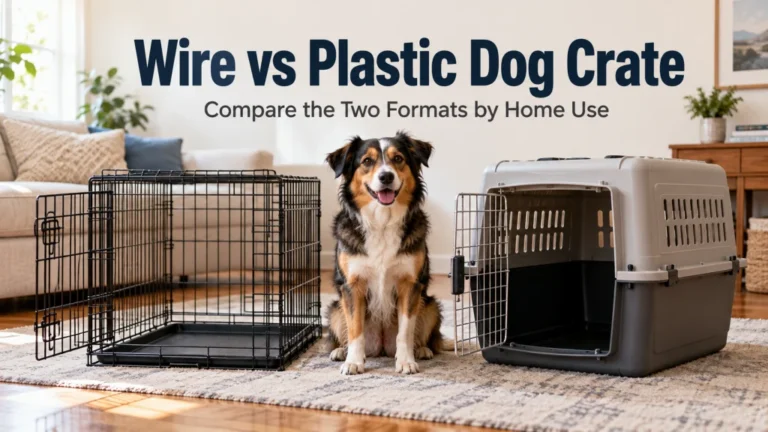
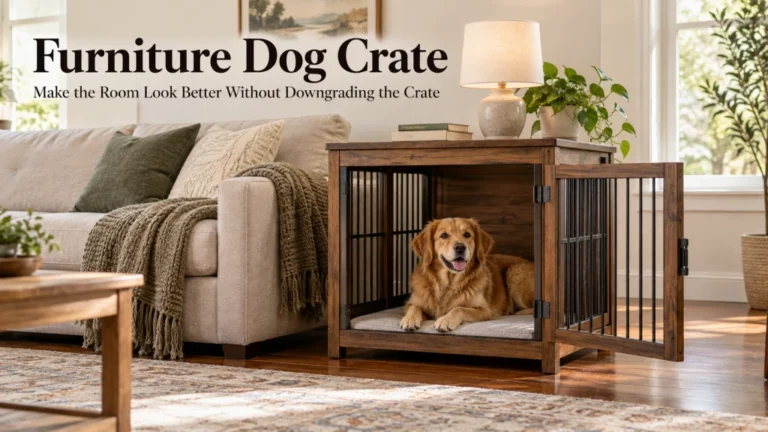
If only external dimensions are shown, treat that as incomplete information rather than assuming the inside is nearly identical. The same caution applies to a crate designed as furniture, a plastic shell, and a wire crate because each construction can use its footprint differently. Material and structure also affect cleaning, visibility, storage, and containment, so size should not be separated from the broader choice among types of dog crates. First confirm that the interior fits the dog, then compare the other tradeoffs that matter in the household.
Note: A product page can make the outside footprint easy to find while leaving the usable inside less obvious. Check the manufacturer’s specification page or manual before treating an exterior number as interior space.
| What you are checking | Why it matters | What to verify |
|---|---|---|
| Interior height | Determines whether the dog can stand naturally | Usable clearance after the base and top structure are accounted for |
| Interior length | Affects standing, turning, and resting posture | Usable floor length rather than the outside shell |
| Interior width | Affects turning and side lying space | Space between the actual inner walls or panels |
| Door opening | A dog can fit the interior but still have an awkward entry | Clear opening after latches and frame edges are considered |
The table should narrow the decision, not create a new scoring system. If one dimension fails the dog, a generous number somewhere else does not cancel that problem. The best fit is the option that passes the dog’s movement and resting checks together. That becomes especially important when two adjacent sizes both look plausible on a retail chart.
For an illustrative comparison, imagine a dog that measures 28 inches from nose to base of tail and 24 inches from floor to the highest point that needs roof clearance. One candidate crate lists a usable interior of 30 inches long, 20 inches wide, and 23 inches high, while the next size lists 36 inches long, 24 inches wide, and 27 inches high. The smaller option fails immediately because its 23 inch interior height is below the dog’s 24 inch standing requirement, even though its length may look close on paper. The larger option becomes the one worth checking in person for standing, turning, lying down, doorway clearance, and bedding space.
This example is not a universal size chart and the dimensions are not a recommendation for a particular dog or product. It shows how one limiting measurement can settle an adjacent size decision before weight labels enter the discussion. If both candidates clear the body measurements, use the dog’s actual movement, resting posture, divider needs, and the manufacturer’s current internal dimensions to break the tie. If neither candidate passes, move beyond those two sizes rather than trying to make the dog fit the chart.
Buy for expected adult size only when a secure compatible divider makes the puppy space workable
Buying one crate for expected adult growth can be practical, but only when the current puppy space can be reduced safely and predictably. The divider should be designed or approved for the crate system, fit securely, and leave no obvious gap or unstable edge that creates a snag or collapse concern. A makeshift barrier that merely looks about right is not the same as a compatible divider. If the manufacturer does not support a divider for that crate, I would not improvise one simply to avoid buying another size.
The adult size estimate also deserves humility, especially for a puppy whose adult breed mix or final proportions are uncertain. Expected weight does not tell you exactly how tall, long, or deep the adult body will become. Choose the larger shell only when the likely adult body fit makes sense and the divider can make the present usable area appropriate. Then keep measuring the puppy rather than treating the first divider position as a permanent answer.
| Choice | When it can work | What can make it fail |
|---|---|---|
| Smaller adjacent crate | The puppy fits now with comfortable movement and adult growth is not being assumed | The puppy outgrows height or length sooner than expected |
| Larger adjacent crate with divider | The shell suits likely adult proportions and the divider is secure and compatible | The divider does not fit correctly or leaves too much or too little current space |
This comparison is why there is no automatic winner between two neighboring sizes. The smaller option may fit the puppy perfectly now but have a shorter useful life. The larger option may be more practical over growth, but only if the divider makes the current interior workable. Use the dog’s body and the actual divider system to decide which tradeoff is acceptable.
Move the divider as the puppy grows instead of keeping the first setting too long
A divider solves only the space problem you set it to solve, so the starting position should not remain fixed while the puppy gets taller and longer. Recheck standing posture, turning room, and resting space as growth becomes visible. If the puppy has to duck, twist tightly, or press into the divider to lie normally, the usable section has become too small. Move the divider only far enough to restore comfortable function rather than opening the entire crate by habit.
That adjustment should continue until the divider is no longer needed for the crate’s current household purpose. The process is easier when the divider has clear secure attachment points and can be repositioned without bending or altering the crate. Do not cut, reshape, or loosely tie a divider into place if the system was not designed for that modification. Growth changes the answer, so puppy crate size is a repeated fit check rather than a single purchase decision.
| Progression stage | What the fit should look like | What to do next |
|---|---|---|
| Initial puppy setup | The puppy can stand naturally, turn easily, and lie down without a large unused area behind the body | Secure the compatible divider at the position that creates that usable space |
| Growth begins to reduce clearance | The puppy still fits, but headroom, turning room, or resting space is noticeably tighter than before | Measure again and move the divider back one secure position if the crate design allows it |
| Another growth step | The new divider position again allows a natural stand, easy turn, and normal resting posture | Keep that position only while it continues to pass the same fit checks |
| Full usable crate | The growing dog needs the available shell space and no longer benefits from a reduced section for the crate’s current home purpose | Remove the divider when the crate system and household use make that appropriate, then reassess the full interior |
This progression follows the puppy rather than a calendar. Puppies do not all change proportions at the same pace, and a thickening coat can alter how crowded the interior feels even before skeletal growth is obvious. Each divider move should restore the same functional checks rather than simply reveal a preset amount of floor. If the full crate still restricts normal standing, turning, or resting, the dog has outgrown the shell rather than merely the divider position.
Reassess the crate when body proportions, coat, or sleeping posture make the nominal size misleading
Crate sizing gets less reliable when two dogs share a weight but carry that weight differently. A tall narrow dog and a shorter broader dog may need different interior shapes even if a chart puts them in the same band. A heavy coat can also reduce practical clearance because fur compresses against the roof or sides before the body itself appears to touch. That does not mean adding huge amounts of space, but it does mean looking at the dog inside the crate rather than relying on the category name.
Sleeping posture can reveal another mismatch that standing measurements miss. If the dog consistently tries to extend the front legs, roll onto a side, or reposition but meets the wall immediately, the home crate may be functionally smaller than the label suggests. Recheck the interior after adding any mat that reduces headroom or floor clearance as well. The crate should support normal rest, not force the dog to adapt every comfortable posture to the container.
Use a larger home crate differently once house training is reliable
A crate that is appropriately managed for a young puppy does not have to remain equally tight for a reliable adult dog. Cornell notes that a larger crate with extra stretching room can be reasonable for a dog with reliable house training when the home crate is being used for management rather than early elimination control. That distinction matters because physical comfort and training management are related but not identical decisions. Once house training is reliable, the owner can give more weight to relaxed resting posture and position changes inside the home crate.
This page stops at sizing, so it does not teach the training steps that make a dog comfortable entering or staying in the crate. If the dog resists the crate, vocalizes, or cannot settle, do not assume a larger size will automatically solve a training or behavior problem. Review crate training a dog for the separate process of building comfort and routine. Size the physical space correctly first, then treat training as its own job instead of asking the crate dimensions to fix everything.
Keep travel crate sizing under the rules for transport
A home crate is not automatically the right transport crate just because the dog fits inside it comfortably. Vehicle restraint, carrier design, airline requirements, ventilation, secure closure, and dimensions required for transport can change what is acceptable for travel. Those conditions belong to the travel decision, not to a home sizing shortcut. Reusing the home crate rule without checking the relevant transport requirements can create a false sense that one fit standard covers every purpose.
If the crate will be used away from the home, identify the transport task before choosing the container. A short household rest setup, a vehicle setup, and an airline carrier can involve different constraints even for the same dog. Use the traveling with a dog guidance for that separate decision and verify the current rules that apply to the exact trip. Keep this page focused on usable home crate dimensions so the sizing logic stays clear.
Final Thoughts: measure the dog first and treat charts as a starting point
A crate label can narrow the field, but the dog’s body should make the final call. Measure standing height and length, confirm the usable interior, then watch the dog stand, turn, lie down, and change position. For a puppy, use expected growth carefully and rely on a secure compatible divider only when the crate system supports it. Recheck the fit instead of assuming the first size choice will remain correct through growth.
I would choose the smallest option that still passes the dog’s real movement and resting checks for the crate’s current home purpose, not the smallest box a chart says should work. If two sizes are close, internal dimensions, divider compatibility, body proportions, and the dog’s actual posture should break the tie. Once the crate’s purpose changes, repeat the decision rather than carrying the old answer into a new use case. That is how a crate size becomes a practical fit decision instead of a guess based on weight.
FAQs
📏 What size dog crate do I need?
Start with the dog’s standing height and body length, then compare those needs with the crate’s usable interior. The dog should be able to stand naturally, turn, lie down, and rest without being forced into an awkward posture.
🐶 Should I buy a puppy crate for adult size?
It can make sense when the likely adult body will fit the crate and a secure compatible divider can reduce the puppy’s current usable space. Keep measuring as the puppy grows because estimated adult weight does not guarantee final body proportions.
↔️ Is a bigger crate always better for a dog?
No. A reliable adult dog may benefit from more room to stretch, while a young puppy may need a more controlled usable area for household management. The purpose of the crate and the dog’s current body fit both matter.
🏠 Can two dogs with the same weight need different crate sizes?
Yes. Height, body length, width, coat, and resting posture can differ even when weight is similar. Measure the individual dog instead of treating a weight band as a guarantee.
✈️ Can I use home crate sizing rules for airline travel?
No. Travel can involve carrier, transport, and airline requirements that are separate from home crate comfort. Check the rules for the exact travel setup rather than reusing a home sizing decision.
References and Sources
- Cornell University College of Veterinary Medicine: Supports functional home crate fit, puppy divider use, and the distinction between tighter puppy management and more room for an adult dog with reliable house training.
- Petmate Academy: Supports measuring from the tip of the nose to the base of the tail and from the top of the head to the floor when sizing a home kennel.
- PetMD: Supports crate sizing based on measurements, functional movement checks, bedding clearance, and removable divider use for a growing puppy.